macro: imagining the future
'Scenario cultivation’ is a new buzzword in the delivery of the 15th 5-year plan. The policy aims to speed up the adoption of new technologies by testing and scaling them in real-world environments.
The goal is to create a seamless innovation cycle: a technology is developed, validated in a specific scenario, applied to the broader industry, and finally supported by updated regulations.
The policy focuses on opening markets and providing data access in the following sectors
- digital economy: AI, VR, and data applications for offices and entertainment.
- unmanned systems: logistics, tourism, and the low-altitude economy (drones and eVTOL).
- green and biotech: smart grids, green transport corridors, and bio-based materials.
- marine and manufacturing: deep-sea exploration, smart factories, and AI-driven industrial parks.
- social & livelihood: integrating digital tech into healthcare, education, and grassroots governance
In other economic moves, November saw simultaneous action to engineer consumption and apply aggressive fiscal triage. The 26 November 'Consumption Action Plan', which aims to build a 3-trillion-yuan market for 'smart' and 'green' goods, is the latest intervention to help consumers.
Running parallel to this consumption push was action to address local debt. On 3 November, the Ministry of Finance launched a dedicated Debt Management Department, for the first time centralising oversight of central and local liabilities under a single agency. The focus has shifted from simply rolling over debt to strictly managing local insolvency risks.
Beneath these policy moves, divergence grew in the 'two-speed' economy. While high-tech sectors like batteries and renewables surged, the property market remained in 'managed decline,' dragging down traditional heavy industry prices. Deep workforce anxiety remains: a record 3.7 million people registered for the national civil service exam in late November, seeking the perceived safety of state jobs.
trade: more ‘two-way’ trade with the world
October trade missed expectations as exports fell 1.1 percent and imports rose 1 percent. Dragged down by a strong RMB and weak consumption, shipments to the US plunged 25 percent from a year earlier, marking seven straight months of double-digit drops. While Beijing officially paused anti-US countermeasures (tariffs, sanctions, and export controls) following the Trump–Xi talks in Busan, these pauses are mainly limited to one year before review. Strict underlying mechanisms remain, allowing for quick reinstatement if tensions flare.
Tu Xinquan 屠新泉 University of International Business, noted that the ‘dual-circulation strategy’ is helping the PRC weather Western curbs by tapping alternative markets and deepening global supply chain integration. Concurrently, Beijing launched a C¥100–400 million funding scheme for 65 pilot cities to spur new consumer spending. However, Zhang Junkuo 张军扩 China Development Research Foundation chairman, warns that supply-side funding alone is not enough; the services sector needs deregulation and consumers need demand-side support, such as subsidies and better social security, to lift confidence.
other November developments
- Japan: tensions over Taiwan spilled into trade, leading to a PRC travel advisory, flight cancellations, and a halt on Japanese aquatic product imports
- G20: announced a green mining initiative with 19 nations focused on investment and tech exchange (financial details pending)
- agreements: concluded an FTA upgrade MoU with Georgia and an enhanced economic partnership with Tonga
- autos: tightened regulations on second-hand car exports to curb the sale of new cars disguised as used ones
energy: new landscape for renewables
Beijing is set to lean harder on wind and solar as the 15th 5-year plan nears. Planners are sketching out a power mix with far more renewable energy and tighter links between power, heat, fuel and industry. They want to move away from stand-alone pilot projects and bring in more cross-sector use, including in heavy industry and fields outside power. The tilt, as ever, is towards ‘quality’ growth, as flagged in two recent papers on renewables, aimed at ensuring the grid can take in about 200 GW of new capacity each year.
A report on renewables in 2024 shows record build-out, with green power now more than 50 percent of all installed capacity. Yet strain on use rates is rising. Three of 31 provinces missed their clean-energy targets, and the north still leads the south in the shift to low-carbon power.
ag: easing at the edges
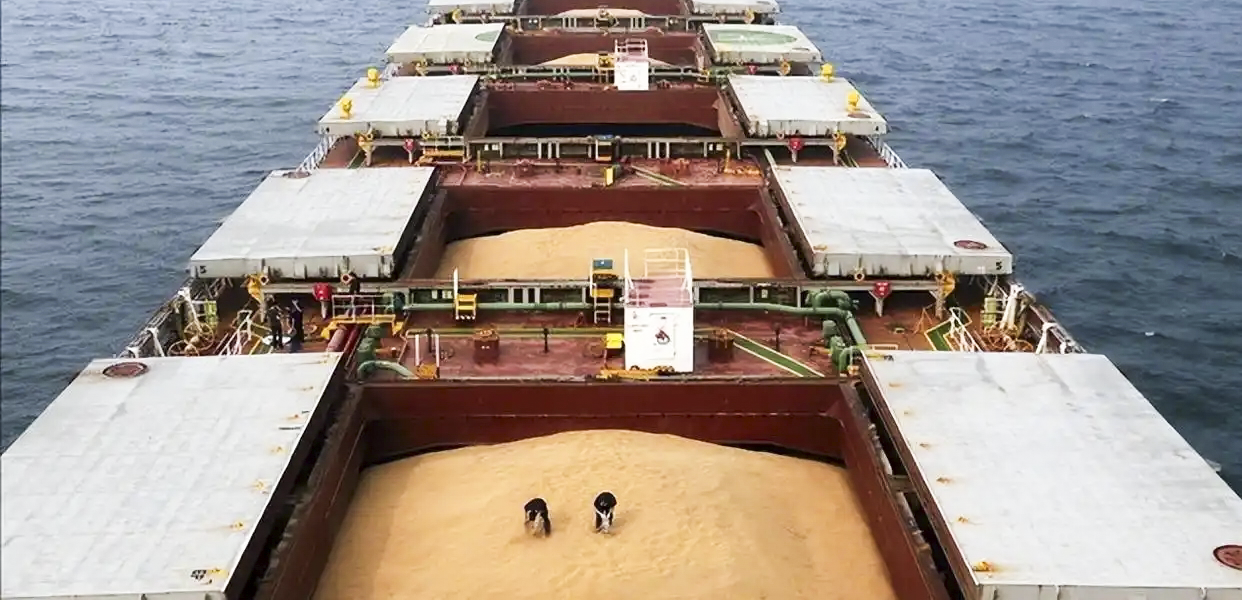
Beijing restored US soybean import licences for the US farmer cooperative, CHS, and others on 7 November, a slight thaw after months of strain. The price gap still rules the trade. Brazil’s beans, even after rising by about eight percent from summer to autumn, are cheaper than US beans once the thirteen percent tariff is added, so buyers stick with Brazil. COFCO’s pre-summit buys were small, and the bigger deals at CIIE went to Brazil. Soy remains core to protein security, says Huang Jikun 黄季焜, and narrow trade openings do not shift that reliance.
Safeguard talks on beef now run to 26 January, the second such delay. November trade slowed as importers waited and exporters marked down stock, with some South American beef facing tighter checks. The longer window stays within WTO rules, notes Shi Xiaoli 史晓丽. The delay lets Beijing track beef prices, weigh signals from key suppliers and test whether injury claims still stand.
MSS alerts on seed data theft in early November reflect the broader tone guiding ag policy.
scitech: internet infrastructure plans
Friction with the Netherlands over Nexperia has thrown the fragility of cross-border tech ownership into sharp relief. Beijing is now speeding up its long-held ‘Plan B’: a forceful drive toward technological autarky designed to cut reliance on foreign components. This pivot framed a November high-level meeting on domestic auto chips, where manufacturers were urged to localise their supply chains. The state now claims that the majority of silicon used in domestic EVs and ‘smart cars’ is already sourced from local firms.
Securing seats at global rule-making tables has become a priority for Beijing, extending its focus from manufacturing products to defining the standards that govern them. New UN-backed regulations for heavy-duty EV batteries and industrial 5G specifications now reflect ‘PRC-shaped’ testing protocols and factory playbooks, forcing global competitors to adapt to PRC technical norms.
Domestically, the strategy for the upcoming 15th 5-year plan focuses on building infrastructure ‘slightly ahead of demand’ to ensure capacity is in place before new industries scale up. This approach is already visible in a diverse set of trials, ranging from quantum technology and rural health broadband to a satellite internet roll-out designed to support smart parks and the emerging ‘low-altitude’ transport economy.
China carried out its first emergency space launch on 25 November, sending Shenzhou-22 to replace a damaged return capsule on the Tiangong station. The rapid mission, completed in 11 days, restored a safe way home for the three astronauts, demonstrating the ability to respond quickly to unexpected in-orbit incidents.
environment: tracing the source
COP30 logged modest gains on finance, just transition, trade and cross-border carbon markets. But the push for a formal fossil-fuel phase-out split the talks. Beijing and several others pushed back against the roadmap put forward by hosts Brazil.
Updated environmental monitoring rules, effective 1 January 2026, will for the first time require firms to work out and self-report their greenhouse-gas emissions.
Beijing also plans to integrate land, sea, air, and space tracking into a single digital, smart monitoring chain.
Beijing has set out quota plans for steel, cement and aluminium smelting for 2024–25. Framed as ‘steady and progressive’, the plan gives out free quotas tied to emissions per unit of output. Total caps and paid quotas will come in step by step, along with new fields such as chemical, petrochemical, aviation and paper-making.
governance: steady on strategic direction
Ahead of the formal unveiling of the 15th 5-year plan in March, senior officials are casting the plan as a bridge: it will keep the broad strategic course but allow measured shifts as domestic and external conditions change. At the provincial level, governments are drawing up local 5-year plans shaped by their own issues and strengths.
- Shanghai aims for further opening-up and international business facilitation
- Zhejiang prioritises artificial intelligence and rural ‘common prosperity’ pilot projects
- Guangdong focuses on stabilising national growth through domestic demand and industrial upgrading
- Beijing prioritises its capital functions over short-term economic expansion
social policy: tech in healthcare and education
As AI-linked jobs surge, Beijing is doubling down on 'AI + health'. It aims to build high-quality health datasets, roll out AI tools across hospitals, and set up national pilot bases for AI in healthcare by 2027. By 2030, it aims for AI support to reach all primary care centres, backed by formal standards and hubs that can compete worldwide in innovation and talent training.geopol: a Japan emergency
As PRC analysts predicted, PRC–Japan relations worsened after Sanae Takaichi became Japan's prime minister. In early November, she told Japan's parliament that a Taiwan emergency could be a 'survival-threatening situation' for Japan, one that could justify the use of collective self-defence. Her remarks drew swift anger in Beijing, which lodged protests and began to roll out countermeasures.On 24 November, US President Donald Trump spoke by phone with Xi Jinping. The two leaders, who met roughly a month earlier in South Korea's Busan, discussed trade, fentanyl, and Taiwan among other issues. A PRC commentator called Trump's wording regarding the PRC contribution to victory in WW2 and Taiwan as extremely rare in US statements and 'a major breakthrough.'
Beijing protested against Taiwan Vice-President Hsiao’s 7 November Brussels address, saying it undermined EU-China trust.