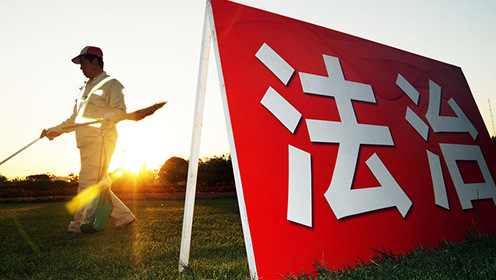
event
15 March 2015: National People's Congress (NPC) passes the amended Legislation Law to end recurrent miscarriage of national and local law-making. Enforcing consistency with central policies, it prevents arbitrary interpretation to serve narrow interests. Another link in the chain of Xi's restructuring of public power, the amended Law returns tax authority to the NPC while offering localities restricted law-making powers.
signals
- national legislation trumps, except in urban planning, environmental protection and cultural heritage. Prefectures gain legislative powers; megacity powers are curtailed
- local governments required to enact laws rather than issue 'normative documents' that often deviate from central directives
- local laws submitted to higher legislative bodies to ensure compliance with national law
- Supreme People's Court and Procuratorate interpretations are limited to specific clauses, and all must be sent to the NPC
- tax oversight by NPC in line with moves towards budgetary transparency
- taxes no longer based on temporary regulations like VAT, business, and consumption taxes
- token reference to public participation and law-making capacity
context
29 Dec 2014: abuse of local legislative power highlighted in Shenzhen—one of the cities originally enjoying the authority to enact legislation—as it clamps an annual limit of 100,000 licence plates, springing it on the public without warning, and effective immediately.
12 Jan 2015: MoF and SAT hike oil consumption taxes for the third time. Arouses criticism of the State Council's practice of adjusting taxes without NPC approval.
8 Mar 2015: Third Legislation Law draft rescinds NPC right to set tax rates. Fierce calls for a U-turn.
15 Mar 2015: Qiu He's 仇和 fall, former Yunnan deputy Party secretary and NPC delegate, signals local discretion and flexibility will be reined in.
outlook
- NPC does not have the framework for recording and reviewing local legislation, moves away from rubber stamp role will be slow
- CCP unlikely to grant NPC full flexibility on tax-related issues
- from this year, existing and new taxes (VAT, property tax, environmental tax) will be based on legislation not temporary State Council regulations
- less flexibility for megacities to respond to local issues
roundtable
prevent the expansion of legislative power from becoming an abuse of power
Ye Zhusheng 叶竹盛 | Beijing News
There are still loopholes for localities to abuse their power. The three areas—urban planning, environmental protection and cultural heritage—on which localities can legislate could encompass almost any reform. NPC is inadequately equipped for review; circuit tribunals and cross-district courts are too immature.
reconciling the conflict between reform and law and avoiding loss of legislative power
interview with You Quanrong 采访游劝荣 | The Paper
NPC oversight targets extra-legality and helps to strengthen rule of law. The NPC’s authority to interpret legislation, previously dead in the water, will now be revived at the expense of the Supreme Court and Procuratorate.
Liu Shangxi's reading of fiscal reform
interview with Liu Shangxi 刘尚希 | Chinese Central Government
Statutory taxation is slated for completion by 2020 as part of MoF’s ambitious fiscal agenda. In other areas, consumption tax will expand, the BT-VAT switch will target 'tougher' industries such as property and some services, and fees will be rationalised. Fees also need to be written into law, argues Liu.
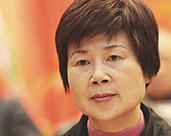
Chen Xiaohua 陈笑华 | Wenzhou Municipal People's Congress
A staunch advocate for local flexibility over centralisation and responsible for Wenzhou's legislature. The entrepreneurial hub has zealously sought local legislative authority for 27 years. Chen's response to Wenzhou's 2011 devastating debt crisis is local legislation to protect credit channels, now possible under the new Legislation Law. Local legislation, not 'normative documents', she argues, are necessary to encourage private enterprise and innovation.
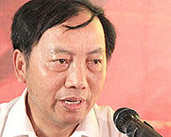
Liu Jianwen 刘剑文 | PKU Law School
A constitutionalist, Liu argues statutory taxation and budgetary transparency promote rule of law and limit administrative power. All taxes should be written into law by 2020, he asserts, starting with the property and environmental tax. He applauds increased legislative oversight in the new Budget Law that promotes more standardised and efficient financial management. Often called on to teach influential NPC policymakers basic tax principles, he has taken part in drafting teams for the Basic Tax Law, Financial Transfer Payment Law, and Individual Income Tax Law.
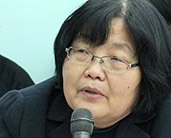
Zhao Dongling 赵冬苓 | NPC delegate
An amateur lawmaker, Zhao has exercised her duties with tenacity since assuming her NPC post in 2013. Unwavering in her critique of the State Council's mandate to levy tax based on temporary regulations, she is at the forefront of the campaign for advancing rule of law in taxation. When the more conservative third draft of the Legislation Law was presented to the NPC, Zhao successfully mobilised fellow delegates to thwart it. Personally thanked by Liu Jianwen on Weibo afterwards, she has credited herself with 'raising the issue'.