signal
A June 2015 NDRC announcement on drafting new anti-monopoly IPR guidelines, both industry-wide and -specific, signals a tougher stance against IPR holders. Follows April SAIC regulations on IPR violations.
intent
- strike a balance between strengthening IPR protection to boost innovation, and IPR enforcement to target monopoly interests that restrict development
- focus on IPR use in heavy-tech industries—information and communications technology, pharmaceuticals, medical devices, automobiles and agricultural machinery
- support Anti-Monopoly Law (AML) by better defining IPR violations and penalties
- include non-practising entities (NPEs) in enforcement. Market share may be calculated based on patents held, rather than produced goods
- provide industry-specific guidance to auto sector on technical issues, such as IPR and the after-sales market
- align with 'Made in China 2025' goal of promoting domestic manufacturing and innovation
- by introducing due process and transparency, deflect international criticism that China's anti-monopoly enforcement is politically-motivated
- bolster China's role in global anti-monopoly regulation, and challenge US 'high-ground' in anti-trust law
context
4 Jan 2013: NDRC fines Samsung, LG and four other foreign firms for price-related monopoly behaviour. It marks the first time foreign firms were investigated by domestic enforcement agencies.
9 Oct 2014: Xu Kunlin 许昆林 transfers from position as NDRC Price Supervision and Anti-Monopoly Bureau director to Price Department director. Xu was replaced by Zhang Handong 张汉东 31 Dec 2014 in a move widely seen as a transfer not demotion.
10 Feb 2015: NDRC fines Qualcomm C¥6 billion for abusing its market position to eliminate or restrict competition. ticker
27 Feb 2015: MIIT issues trial FDD-LTE licences to China Telecom and China Unicom, allowing them to operate 4G networks.
7 Apr 2015: SAIC releases ‘Regulations on prohibiting IPR violations to eliminate or restrict competition’, effective 1 Aug. ticker
3 Apr 2015: Jiangsu Price Bureau fines Mercedes-Benz C¥350 million for restrictive pricing. Investigation followed: Audi (Hubei), BMW (Wuhan), and Chrysler (Shanghai).
4 Jun 2015: NDRC is drafting anti-monopoly guidelines on IPR abuse, reports Economic Information. ticker
12 Jun 2015: NDRC announces anti-monopoly automobile industry guidelines are in draft. ticker
outlook
- anti-monopoly enforcement will not solve core issue of uncompetitive domestic firms
- expect Qualcomm-type cases to prevail in near future, especially NPEs such as Ericsson
- Xu Kunlin’s transfer may flag disapproval of his handling of the Qualcomm case, promising more discreet investigations in future
- transparency and due process in anti-monopoly enforcement unlikely. Media manipulation, agenda-steering and disregard for legal procedure are systemic issues
- effectiveness of separate NDRC, MofCOM, and SAIC guidelines diminished by overlapping jurisdictions
- SAIC and NDRC lack authority to interpret the AML; legal interpretation lies with the NPC. First clause of SAIC guidelines includes term 'stimulate innovation' which is inconsistent with the AML goal
- SAIC guidelines give firms inadequate direction, for example, no definition of 'just cause' that exempts them from anti-monopoly investigations; no inclusion of IPR licence agreements at risk of forming vertical monopolies
- SAIC and NDRC guidelines, while quick to enact, will prove less binding than legislative amendments or administrative decrees
- domestic medical devices firms, notably UMY, can go head-to-head with the 'big three' (GE, Siemens, Philips) following precedent set by Qualcomm case
- NDRC unlikely to follow through on promises to consult with MofCOM, SAIC, IPR, anti-monopoly experts, related organisation and firms
- AML amendments on the radar. Suggestions include eliminating difficult model for calculating illegal gains, introducing criminalisation of horizontal cartels as in US
feature
Xu Kunlin's recent interview defending his anti-monopoly record drew fire from his long-term critic Liu Xu 刘旭 Tongji University. Sentence by sentence, Liu demolishes Xu's grounds for avoiding due process, instead converting the case into a media spectacle. translation
roundtable
tackling 'unspoken rules' in the auto industry
Liu Xiaolin 刘晓林 | Economic Observer
NDRC anti-monopoly auto industry guidelines will make enforcement routine by regulating every part of the process, argues Shen Jinjun 沈进军 China Automobile Dealers Association, from registration to investigations to penalties. Industry-specific regulations will discourage monopolistic practices widespread in the industry, and discourage the media circus that was a feature of summer 2014. ticker
the truth about China's stakes in TD-LTE patents
Ding Aoxi 丁傲西 | Sina
Post Qualcomm, the media is focusing on the impact of lower patent fees in the industry, rather than developing domestic IPR. Four facts are being hidden from the public, a Sina report argues: TD-LTE handset manufacturers still have to pay Qualcomm royalty fees; manufacturers already enjoy lower preferential fees; prioritising TD-LTE standards has resulted in an uncompetitve market; phone manufacturers are incentivised towards multi-mode phones. China should engage more in the development of international standards; isolation is not an option. ticker
foreign patent-holders not to blame for high pharma costs
Fu Weigang 傅蔚冈 | China Times
Anti-monopoly enforcement in the pharmaceutical industry is unlikely to resolve artificially high drug costs, argues Fu Weigang 傅蔚冈. Patent trolls and IPR violations do not cause high prices, rather it is the state's price-forming mechanisms, and opportunism in the industry chain. Enforcement in the pharmaceutical industry will likely result in higher prices instead as companies seek to offset new compliance costs. Consumer interests need protecting. ticker
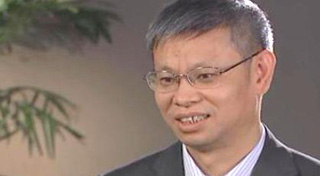
Xu Kunlin 许昆林 | NDRC Fixed Asset Investment Department and Price Department
NDRC veteran Xu previously led the Price Supervision and Anti-Monopoly Bureau (2008-14) and Price Department (2014-current). Having directed the first enforcement action after the Anti-Monopoly Law came into effect in August 2008, Xu again took a hard line in the Qualcomm investigation. He claims the NDRC's equal footing with US and EU counterparts as his legacy. An advocate of internal restructuring, he lobbied to upgrade the Price Supervision Department to the Price Supervision and Anti-Monopoly Bureau in 2011 and in 2015 redefined the Price Department's function from price setting to monitoring and forecasting, eliminating functional overlap. Xu is in favour of merging the three anti-monopoly enforcement agencies, and affording the new body more independence and authority.

Liu Xu 刘旭 | Tongji University IPR and Competition Law Research Centre
Expert on competition and EU law, Liu provides in-depth, erudite coverage on individual anti-monopoly cases. Admiring efforts to model China's competition law on the EU framework, Liu opposes deviation towards the more lax US antitrust model. He is a harsh critic of procedural and substantial flaws in China's recent anti-monopoly enforcement that, in his view, have been exacerbated by political motivation and the particular incompetence of Xu Kunlin. Two accusations stand out in his critique: anti-monopoly exemptions SOEs enjoy regarding mergers and bias against multinationals since 2014. NDRC began closely monitoring his online presence last year.
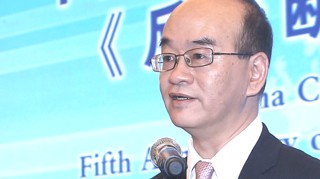
Huang Yong 黄勇 | University of International Business and Economics Competition Law Research Centre
Senior figure in Chinese legal community, Huang advises China's three enforcement agencies through his place on the State Council Anti-Monopoly Commission's expert advisory board. Playing a key role in the AML drafting process, Huang defends the AML but laments its poor implementation. It should be elevated to the status of China's 'economic constitution'. China needs a unified and higher-ranking enforcement agency, he argues, and more anti-monopoly interpretations and guidelines from legislative, administrative and judicial authorities. Ambivalent on SOE reform, Huang previously preferred breaking monopolies through enforcement alone, lately admitting top-level intervention is the only option.