
Economic questions continued to dominate April. Respected reformist Gao Xiqing 高西庆 stated current policy will see too many zombie firms survive, undermining policy rhetoric that would allow markets to kill them off. This was underpinned by more defaults of SOEs, and bleak export figures. Whether Tianjin’s or Henan’s efforts to restructure SOE debt will inform a national model remains to be seen. The surge of Chinese firms engaged in overseas M&As may well represent an overlap between ‘going global’ and capital flight.
The debt scare has spread to real estate. Loose central monetary policy to keep growth ticking at 6.5 percent has steered a flood of credit into tier-1 housing markets through unregulated loans. With leverage growing, analysts and regulators fear a bubble and a crash. Authorities have scrambled to clamp down on new financing platforms, with State Council setting a one-year timeline to get the industry in order. But loose money will not end soon. Much rests on whether government can keep up the balancing act.
Premier Li Keqiang 李克强 seemed to be regaining clout, with firm action following the Shandong vaccine scandal. But he soon took a hit when the Central Disciplinary Inspection Commission announced his alma mater, serving his power base, the Communist Youth League, would no longer be able to accept undergraduates. A quarrel between foreign policy doyen Wu Jianmin 吴建民 and Hu Xijin 胡锡进 Global Times editor-in-chief has highlighted a split between doves and hawks over foreign policy. This played out in reality, with China pursuing hard power in the South China Sea while stressing friendly ties with regional neighbours (Laos, Malaysia, Cambodia). Amidst this, the Foreign NGO Law was quietly passed, more accommodating than earlier drafts indicated.
featured analysis
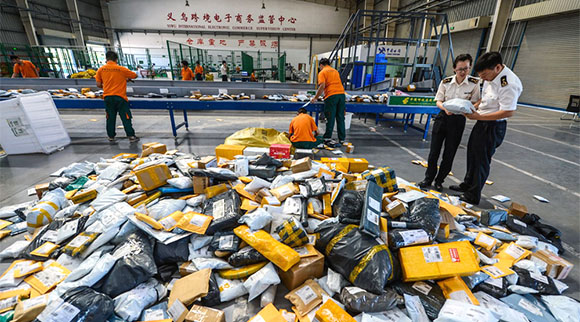
e-comm tax rules ain’t so bad
The new tax regime for direct retail imports is not a strike against foreign exporters, but a regulatory lever to build markets, and develop logistics chains and consumer protections. full post open access →
policy movers
can't put a name to the face? go to page footer
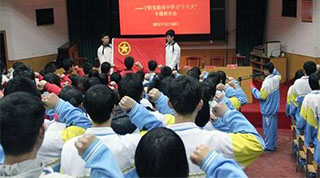
1. We started in 1920 as a Party wing to mobilise and prepare young people for Party membership. Since the 1980s, we have supplied the Party with a long line of leaders, including Hu Jintao 胡锦涛 and premier Li Keqiang 李克强. Xi Jinping 习近平, however, is targeting us for 'corruption' and 'redundancy'. The Central Disciplinary Inspection Commission censured us for ‘aristocratic’ and ‘bureaucratic’ style before ordering our organisation to be trimmed down. And on 22 April, it was announced China Youth University of Political Studies, the only college run by us, will stop admitting undergraduates for further ‘devolution’, as part of a wider cut to our budget. This unexpected development is a major blow to the Li Keqiang's power base, adding political uncertainty ahead of the 19th Party Congress.
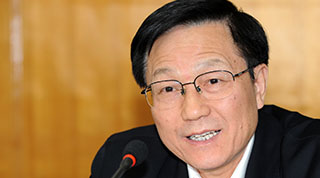
2. Before taking charge of the National Council for Social Security Fund (NCSSF) in 2013, I served as minister of finance and head of the State Administration of Taxation (SAT). During my four years in charge of SAT, I almost doubled central tax revenues; at NCSSF, I am responsible for increasing pension funds' investment returns. I have pushed to have more SOE assets transferred into the national pension fund, a proposal now supported at the highest levels, and proposed preferential interest rates for pension funds invested in deposits and government bonds. My role will expand when new pension fund regulations expanding NCSSF’s role take effect 1 May 2016.

3. We are a state-owned enterprise and world leader in metals and mineral exploration and trading. We were set up in 1950 and are headquartered in Beijing. We swallowed another SOE, Metallurgicla Corp, to concentrate the industry following a period of low commodity prices and profitibility. In 2015, we signed a 15-year exploration contract with ISA for the polymetallic nodule mining area of Eastern Pacific Ocean, covering an area of over 72,740 square kilometres. We will be entitled to preferential mining of the area after exploration contracts expire in 2030.
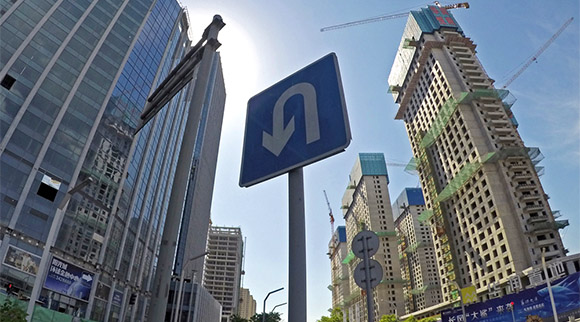 unregulated deposit lending is spurring a housing bubble in tier 1 cities
finance
mid april position:
- debt-for-equity swaps: what’s in it for banks?
end april position:
- housing bubble fears: authorities clampdown on internet financing
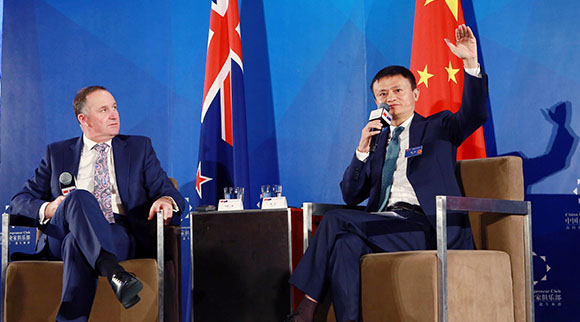 China’s foreign policy is testing regional links
geopolitics
mid april position:
- foreign policy spat: divisions made public
end april position:
- new foreign trade normal: global M&As increase
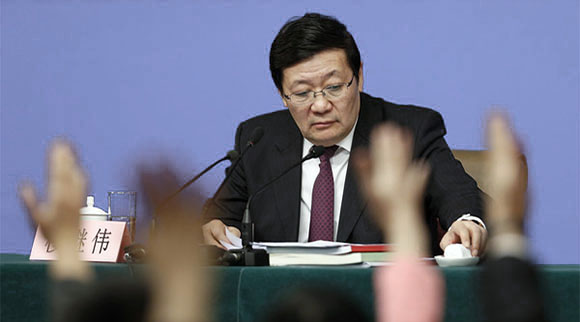 Finance minister Lou Jiwei 楼继伟 has crossed agency boundaries to call for revisions to the 2008 Labour Contract Law
society
capital weighs in on labour
Finance minister Lou Jiwei 楼继伟 has crossed agency boundaries to call for revisions to the 2008 Labour Contract Law. With lower growth, and the state moving to reduce enterprise burdens, expect changes to the law in favour of business as soon as end 2016. full signal client access →
mid april position:
- health reform: pharma rules to catalyse change
end april position:
- urban tournament system: cash and land incentives to urbanise
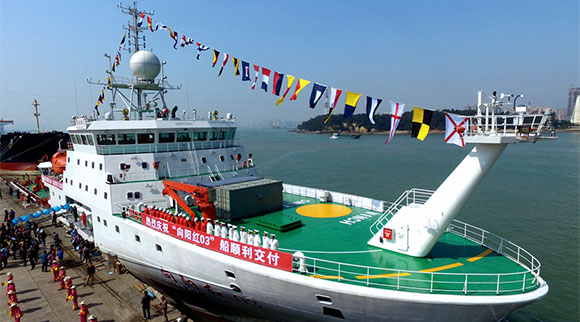 Xiang Yang Hong 03 advanced research vessel launches off Xiamen, to undertake deep sea and seabed exploration and research
agriculture and marine
seabed law: mining for maritime power
The new seabed law, effective 1 May 2016, reinforces China’s maritime power strategy by increasing deep-sea exploration and exploitation capacity, and raising its institutional voice in governing the global commons. full signal client access →
mid april position:
- fishing respawned: more regulation
end april position:
- inflation horizon: adapting nuclear technologies
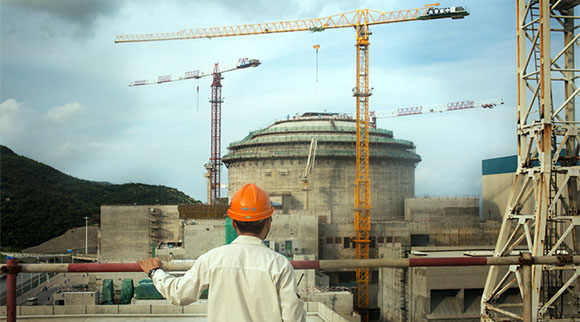 civil nuclear capacity is booming
trade and industry
mid april position:
- central funds: more money for new industry
end april position:
- civil nuclear: smarter and safer
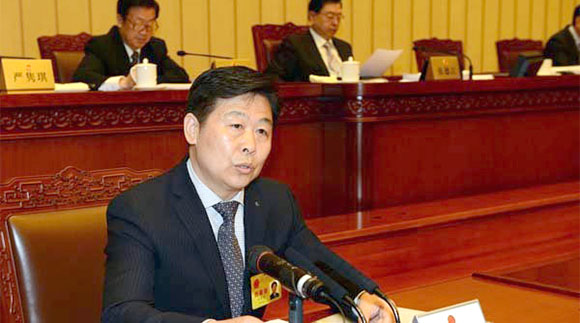 NPC deputy cheif Xu Xianming briefs the session on the last draft of the Foreign NGO Activity Management Law
governance
mid april position:
- dying softly: courts to link zombies with private capital
end april position:
- property rights: debate over lease renewal
policy ticker highlights
Foreign NGO Activity Management Law passed
NPC Standing Committee | 28 April
NPC Standing Committee passed the controversial Foreign NGO Activity Management Law, delayed since 2015, which puts foreign NGOs under the supervision of the Ministry of Public Security. Foreign NGOs that operate legally were in the clear, say NPC officials; foreign infiltration is different, however, as a threat to national security.
pension system shifting toward individual accounts
Beijing Business News | 25 April
The long-term goal of lowering pension contribution rates is to shift toward personal accounts, says Zheng Bingwen 郑秉文 CASS. Lowering enterprise burden is only a short-term goal; eventually, the system must shift away from the overburdened first pillar—basic pension funds—toward ‘pay more get more’ accounts, says Zheng.
pork plan will increase price fluctuations
CNR | 21 April
Instead of stabilising pork prices, the new ‘National hog production and development plan (2016-20)’ will increase price fluctuations, notes Li Guoxiang 李国祥 CASS Rural Development Institute.
first floating nuclear power station to be assembled
Tencent | 20 April
China Shipbuilding Industry Corporation’s (CSIC) announced that Bohai Shipbuilding Heavy Industry will be responsible for constructing and assembling China’s first floating nuclear power station. CSIC still needs construction approval from NDRC.
patchy results in the ‘new foreign trade normal’
Economic Observer | 17 April
Sun Yue 孙乐 Economic Observer asks what the overseas survival rate of Chinese firms is in the ‘new foreign trade normal’. The long-standing depressed state of foreign trade figures has finally eased, says Sun. According to customs statistics released 13 April 2026, exports grew 18.7 percent in March, ending or reversing previous negative growth, the first positive growth in 9 months.
VAT to be split evenly between centre and local areas
Economic Information Daily | 13 April
VAT revenue will be shared evenly between central and local authorities, rather than the current 75:25 allocation
selected texts of the month (clients only)
finance
- monetary policy should prioritise economic growth over the housing market
- housing investment creates rather than combats inflation
- we should not compromise deleveraging for the sake of reducing capacity
society
- high labour costs not to blame for economic woes
- major imbalances in the Labour Contract Law impede economic activity
- revisions must take worker and business viewpoints into account
trade and industry
- end of the low-tax era for overseas purchasing
- what’s the future of cross-border trade under the new system? Listen to large e-commerce enterprises
governance
marine
lexicon

Unifying food retailers’ purchasing, processing and delivery systems to reduce costs and increase efficiency, the ‘central kitchen’ will boost food safety as well. CFDA launched the program in 2010 and continued to issue licences to distributors. Dispensing with multiple providers and different locations for processing, all restaurants and food retailers are now to use a unified distribution and delivery system, reducing manpower and costs but increasing controls

Aiming to build capacity ensuring year-round adequate supplies of non-staple foodstuffs in cities, the ‘shopping basket’ includes meat, aquatic products, eggs, milk, fruits and vegetables. Launched by the Ministry of Agriculture in 1988, the project focused on improving the diversity and abundance of non-grain food. Marketisation became a central preoccupation in 1993. State Council imposed new requirements for the following 5-year round in 2010, with more stress on sustainability. 2016 is likely to alter the focus in favour of food safety and quality
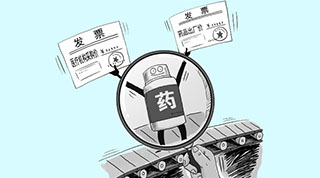
Following drug price reform, only two receipts may be issued by pharma supply chains: (1) from production to distribution; (2) from distribution to retail. Pilots were launched in Guangdong, Sichuan and Fujian in 2013; premier Li Keqiang proposed a national-level system in his 2016 health reform goals. Designed to cut drug prices by increasing transparency (and eliminating unnecessary middlemen whose transactions add receipts at every stage), it will likely drive most small producers or on-sellers out of the market, and consolidate the pharma industry toward existing large firms
in the media
China Passes Law Putting Foreign NGOs Under Stricter Police Control
NPR News | 28 April
David Kelly, a director of research at the Beijing-based firm China Policy, which has advised foreign NGOs on how to deal with Chinese government regulation, says the law's net effect is bad, but hardly unexpected. China's government has been tightening the screws on Chinese and foreign NGOs for several years.
Feature: China’s Retail Revolution Hots Up
Public Affairs Asia | 20 April
According to a report by China Policy, a firm that monitors and analyses Chinese government policy, the new tax regime merely formalised “ecommerce trade under the import tax system”. China Policy said the new regime was meant to address imports that were overwhelming the postal and parcel delivery systems, circumventing quality controls and slipping through “inadequate quarantine supervision for milk powder, food and nutritional supplements entering China.”
China trade: exporters weigh new import rules
The Australian | 18 April
China Policy, a leading analytical agency established in Beijing by Australians David Kelly and Philippa Jones, says in a paper about to be published and made available to The Australian, that while it may have been portrayed otherwise in Australia, “the new tax regime for direct retail imports is not a strike against foreign exporters, but a regulatory lever to build markets, and develop logistics chains and consumer protections”.
‘Chairman of everything’: Is China’s President Xi making like Mao?
The Australian | 9 April The Australian research director of China policy, David Kelly, a visiting professor at Peking University, says those who fear a cult of Xi driving a new cultural revolution would do well to ponder the fate of Yuan Shikai (1859-1916), who succeeded Sun Yat-sen to become republican China’s second president, and then had himself enthroned as the Hongxian Emperor.
quiz answers:
1. CCP Youth League 共产主义青年团
2. Xie Xuren 谢旭人 National Council for Social Security Fund
3. Minmetals 中国五矿集团公司