roundup from our portfolios
'Stabilising' the economy, promised in the December 2021 CEWC, is driving fiscal policy. More tax and fee cuts have shored up private firms, and local government bonds have been issued faster. The roll-out of monetary policy, as reported by the PBoC, gave no hint of any dramatic moves on the horizon. Housing prices performed better in January, but developers still face wipe-out. Restrictions have been mildly eased for real estate financing: loan caps for affordable rental housing projects were removed and lending for M&As restricted. Yet state developers are the primary beneficiaries, given the weak finances of most private firms.
China's abstention from the UN security council resolution condemning Russian aggression in Ukraine attempts to avoid reputation damage and protect the security of its international assets. Trade is also at stake as export credits, tax cuts and other sweeteners continue to be offered to boost exports.
CBEC (cross-border e-commerce) pilot zones were expanded for a 6th round to 27 new cities and regions, covering third- and fourth-tier cities in the hinterland. Giving consumers more choice, an updated list of CBEC retail imports added 29 items including tomato juice, ski and golf equipment. CBEC firms are urged to set up their own platforms and overseas warehouses, localising global operations and boosting data capture. More supporting infrastructure and novel regulations are however needed.
The anomaly of skier Eileen Gu 谷爱凌 competing for China in the Winter Olympics sparked feuding over what it means to be ‘Chinese’. As she competed in the halfpipe, the public was shocked by a horrendous case of local female trafficking. The commotion fuelled debate on women's rights and the upcoming amendment to the ‘Women’s Rights and Interests Protection Law’. Social justice under a closed political elite is once again under the spotlight. All this sets the scene for get-togethers across the PRC on International Women's Day, 8 March.
SpaceX and Blue Origin’s high-profile missions have spurred Beijing to reinvigorate its space industry: in a quinquennial white paper sketching the space exploration program, the State Council portrays a Beijing keen to commercialise high-precision mapping, space tourism, satellite internet services (like Starlink) for ocean-going ships and civil airliners, and space biopharmaceuticals.
MoE has started the second cycle of the World Class 2.0 initiative announcing an overhauled world-class universities list highlighting basic STEM and frontier research that will support cutting edge science and tech, not least the space program.
Provinces currently set rules for their power sectors; interprovincial trading is minimal. A unified power market by 2030 is pledged, its preliminary set-up in place by 2025. With Xi Jinping’s blessing in November 2021 and now a concrete timeline to boot, steps to unify will pick up speed. A national market promises efficiency, security and decarbonisation—dubbed a ‘win-win-win’ by pundits. Renewable power, which, per new guidelines, should meet all incremental energy demand and begin replacing fossil fuels ‘at scale’ by 2030, will be absorbed in higher volumes under a unified national system.
First announced in November 2021, a recently issued 5-year plan for ag and rural modernisation is another step towards modernising the sectors by 2035. Transition from small- to large-scale and mechanised agriculture is as ever deemed necessary. Changing the game, the priority now is ‘high-quality’, offering consumers more choice. The ag and rural sectors are to be equipped with techniques, models and governance. The State’s No. 1 Document, as usual rural-focused, dropped 22 February, reiterating rural revitalisation messaging of the post-COVID period.
A 5-year plan for enhancing rural voc ed and aged care promotes a rural aged care safety net and improves rural voc ed by providing better online education in partnership with agribusinesses, ag science universities and research institutions.
Province-level ‘Two Sessions’ conclaves ended early February, issuing official reports. Almost all underline safety (above all in industrial production), welfare, and natural disaster threats. The interests of commerce get a little new TLC, not least better markets allocation of production factors, anti-monopoly and law-based market regulation.
Lawyers’ fees are included in the scope of anti-monopoly and promoting fair competition. Standard fees must now be declared, and, for a minimum 12 months, held constant. The dominance of large legal firms will not be affected, but the market for legal service providers will increase.
job opportunities
If you want to work at the leading edge of policy analysis on China, please join our team! Please see our careers page or contact hr@policycn.com for information.
'six stabilities, six guarantees' 六稳六保 liù wěn liù bǎo
 six of one, half a dozen of the other paint a smile on the soaring economy
- employment
- financial sector
- foreign trade
- foreign investment
- domestic investment
- expectations
- employment
- basic living needs
- corporate operations
- food and energy security
- stable supply chains
- normal grassroots governance
featured analysis
 labour on the move
factoring in data and R&D
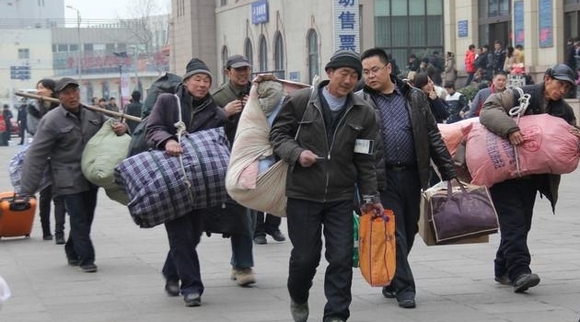
As the economy slows, a major reallocation of land, labour and capital aims to inject new growth momentum. Xi’s new plan, a historic first, sets a clear roadmap, but entrenched hierarchies that stifled progress in the past will remain. full post open access →february policy movers
policy professionals in and out of the establishment
Gao Erji 高尔基 | Caixin Media vice president
Naturalising overseas-trained athletes on a mass basis is, claims Gao, a test of the PRC’s attractiveness to international talent, applicable to other struggling fields. In quest of medals, more global talent, not least of overseas Chinese, may ‘return’. But reaching national goals beyond individual trophies entails a more inclusive and open narrative for the naturalised ‘returnees’.
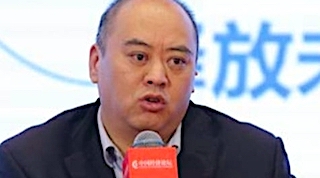
Peng Xiaobo 彭小波 | iSpace 星际荣耀 chairperson
Rather than compete with the state, says Peng, iSpace hopes to complement it. Commercial aerospace firms focus on cost-effectiveness, efficiency and innovation, he says. This includes investment in reusable flights, consolidating comparative advantage, and leveraging based on PRC manufacturing capabilities. Unlike semiconductors and other IT industries, commercial aerospace has an unbroken domestic supply chain and a full suite of engineering skills. This means it remains competitive with US rivals, he argues, even if they emerged years before iSpace and other Chinese space startups. State support propelled growth over the last few years, adds Peng, pointing to the civil-military fusion strategy and related state agency support.
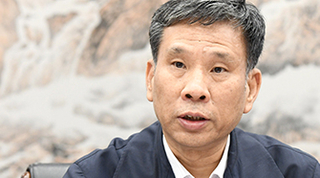
Liu Kun 刘昆 | Minister of Finance
Discussing fiscal policy direction for 2022, Liu noted MoF will be proactive, strengthening cross-cycle adjustments, and focusing on the ‘six stabilities and six guarantees’. Proactive fiscal policy is twofold: precision and sustainability:
- precision entails supporting such sectors as high-tech manufacturing, SMEs and innovative tech firms via tax and fee cuts, plus financial support for grassroots
- sustainability entails balancing necessary fiscal spending without going overboard and creating risk
policy ticker highlights
gems from our feed of policy releases and domestic debatemacroeconomy
expansionary fiscal policy should prioritise deficit rise
Jiemian | 10 Februarytrade policy
the 6th round of cross-border e-commerce pilot zones announced
State Council, Comnews | 10 Februaryscience and innovation
5-year plan for pharma involves medical insurance regulator
Ministry of Industry and Information Technology, Sina Finance | 11 Februaryenergy and environment
experts say a unified power market will enhance energy security, renewables
Caixin, Jiemian, People's Daily | 28 January
context: The two major priorities influencing PRC energy policy are energy security and decarbonisation. They are often in tension, but setting up a unified national power market system will create synergies between the two, both enhancing consumption of renewable power and ensuring that supply and demand are optimised on a larger scale.
agriculture
ag and rural sector to be fully modernised by 2035
State Council | 11 February
context: Ag production will still be dominated by smallholder farmers in the long term. Their underdeveloped production modes and weak anti-risk capacity are at odds with the need to feed the huge population. Starting from a low base, a comprehensive modernisation campaign will be rolled out to equip both ag and rural sectors with advanced techniques, operational models and governance practices.
governance
security the focus of local governance in 2022
Caixin | 15 February
context: Beijing has called for maintaining stability and governance improvement. Production safety is the focus of both, echoing Xi Jinping’s holistic view on national security. However, local governments’ accident prevention and national disaster response are still lagging.