
services trade is set to be a growth driver in the 15th 5-year plan; inflows also fit under Beijing's ‘institutional opening’ rubric
Against foreign and domestic downsides, services trade is now beckoning as an underused driver of the economy.
Importing twice as many services as it exports—mainly outbound tourism and education—the PRC currently has a notable services deficit. But Beijing does not see the trade balance in binary terms. Setting sights on long-term growth, it views the sector as a ‘multiplier’. Services exports support goods trade and value-added jobs in the slowing labour market; imports help bring in tech know-how and market discipline.

Services trade is tied to the domestic economy, and Beijing aims to expand and upgrade both. Services create 1.6 times the jobs of manufacturing, following a 2024 NBS estimate. Domestic barriers and local protectionism hinder foreign entry, limiting growth, as closed-off services markets tend to advance more slowly, adds Li Jun 李俊 MofCOM Research Institute. The deficit shows strong PRC demand for advanced services like finance, insurance and tech, critical to new productive forces and high-quality development, explains Zhang Yansheng 张燕生 Academy of Macroeconomic Research.
Growing at twice the pace of goods since the global financial crisis, global services trade makes up one-third of advanced economy exports. Keen to join the ranks, Beijing has been boosting the sector: support for export and consumption of services is expanding; meanwhile ‘institutional opening' is reducing domestic barriers. Accounting for only one-tenth of PRC trade, services outpaced goods growth, posting double-digit gains annually since 2021.

key sectors: guidance and support
Planning new priorities for services, the 2024 Third Plenum stressed further opening and a focus on ‘innovative areas’. A 2024 State Council Opinion, regarded as the centre’s latest game plan for services in the new era, followed by flagging several key domains such as
- services that help goods trade and advanced manufacturing
- global transport, R&D, testing and maintenance, etc.
- travel services
- export of professional services
- finance, consulting, design and certification, etc.
- traditional Chinese services exports (martial arts, Chinese medicine and catering)
- services imports
- productive services, consumption, medicine and entertainment
- green and low-carbon service
The Opinion places more weight on services exports, signalling more help for this area. The second batch of the services trade guidance fund, announced in June 2025, will likewise aim mainly at services exports, not least those listed as key areas by top-level documents such as the 2024 Opinion, above.

With capital coming to the fund from biotech firms and tech-focused cities, it is expected to prioritise support for health tech, the digital economy, cross-border e-commerce, and associated logistics. PEdaily.cn reports that the fund may also invest in high-tech, cultural and Chinese medicine services exports. The fund positions itself as a ‘patient capital provider’, helping the long-term development of industry champions with overseas revenue. In June 2025, HAIZOL, a PRC online sourcing platform for OEM custom parts and components, finished its Series B+ funding with investment from the services trade guidance fund.
services champions
More coordination is needed between services trade, goods trade and outward investment, argues Wang Xiaohong 王晓红 China Centre for International Economic Exchanges. Their synergy helps the PRC leverage its manufacturing strengths, bolster productive services and find chances in the growing global capacity cooperation trend.
Productive services, featuring high value-added, talent, tech and capital intensity, determine a country's position in the global value chain, explains veteran economic strategist Huang Qifan 黄奇帆 China Institute for Innovation and Development Strategy. As PRC manufacturing upgrades, appropriate services are critical, and they must catch up, notes Bai Ming 白明 MofCOM Research Institute.
PRC IT and high-tech service outsourcing are growing as well. Executed contracts spiked 21 percent in 2024, with KPO (knowledge process outsourcing) leading, increasing by 29 percent. PRC service outsourcing is upgrading from basic tasks to high-value services like AI algorithm development, industrial design and tech commercialisation, summarises Xing Houyuan 邢厚媛 China Service Outsourcing Research Centre. Proactive targets have been set for digitally delivered services, now accounting for about 40 percent of total services trade and serving as a growth driver.
Cultural services are another growth engine for PRC exports, rising by 32.5 percent in 2024. Online games, digital publishing and online streaming grew 37 percent, while overseas film and TV copyrights spiked 29 percent. Besides exports, Beijing should pay attention to other forms of services, notes Jiang Xiaojuan 江小涓 University of Chinese Academy of Social Science. She points to inbound cultural tourism, outbound performances and exhibitions and ‘dual-cross services flows’.
Tourism helps foreigners better understand the PRC, notes Jiang. Bai Ming 白明 welcomes recent measures easing entry, saying inbound tourism will be a focus for PRC services trade. Outbound tourism is likewise encouraged–new visa-free agreements have tilted towards pushing PRC travellers to BRI partners. In a post-pandemic rebound, it is now the largest sector in services trade, spiking by 12 percent y-o-y, reports MofCOM H1 2025.
‘institutional opening’ is critical
Supporting services exports is simple; opening to imports is harder, as it links to broader socio-economic rules. This calls for a higher level of ‘institutional opening’, notes Li Jun 李俊, explaining some notable challenges like
- local regions have limited autonomy to open market access to services
- opening to services is a ‘systemic process’, requiring coordination in personnel, capital, data and other domestic policies
- PRC domestic rules and systems are yet to align with global advanced standards
- some sectors are sensitive to national security
Citing the case of a foreign-invested hospital, Li points to regulatory issues beyond market access, including those related to doctors, medicines, medical equipment and health insurance. A gap remains between the nominal and actual openness of the services sector, he adds. Services regulations are not clear-cut, making barriers subtler and harder to remove, adds Zhou Nianli 周念利 University of International Business and Economics China Institute for WTO Studies.
Beijing continues to explore services reform via small-scale initiatives. Recent moves include
- FTZs (free trade zones)
- replicating eight Shanghai FTZ services pilot measures in cross-border fund management, fintech, cross-border payments, data compliance and financial infrastructures
- reforms to digital trade rules
- service sector pilot now covers 20 cities
- adding nine cities and 155 missions in April 2025
- allow wholly foreign-owned hospitals in select cities like Beijing, Tianjin and Shanghai
- national and FTZ negative lists for cross-border services
- covering professional qualifications and services, finance and entertainment
The ultimate goal is that every sector not explicitly forbidden should be gradually opened for foreign entry and private participation, suggests Lian Ping 连平 China Chief Economist Forum. The point here is to be ‘gradual’, as the PRC still has a long way to go in opening services.
external headwinds as catalyst
While trade conflict with the US has so far been about goods, the services sector is not immune. US tech restrictions drag on PRC services trade, prompting Beijing to strengthen ties with other partners, warns Li Jun 李俊. Taking the cues from official pronouncements and plans, service cooperation briefs were signed with BRI, BRICS and SCO states. Progress has been made–services (IT, retail and business) are now the next biggest component of PRC overseas investment after manufacturing.
Amid rising protectionism, services trade can be a sturdy growth pillar as it faces fewer traditional trade barriers, enthuses Mei Xinyu 梅新育 MofCOM Research Institute. Concurring, Zhang Monan 张茉楠 China Centre for International Economic Exchanges declares a new era is dawning for PRC services. Trade war, she says, has motivated Beijing to bolster the sector for greater global connections.
But Trump’s tariffs on Hollywood films show the trade war can just as easily spill into services, cautions Zhang. Similarly, Ren Yi 任意 online commentator contends–citing unnamed official sources–that Beijing can retaliate against Washington’s tariff moves by leveraging its large services trade deficit with the US and curbing imports. To do this, the PR must double down on diversifying its services trade and strengthening domestic capacities.
Given its key role in long-term growth and hedging against US risks, services will remain central in blueprints for the next era–it was already listed as a standalone NDRC research topic for the 15th five-year plan.
Confidence is high. Services trade essentially comes down to people, and the PRC has an abundance of service providers and consumers, above all in health, eldercare, education, and tourism, declares Bai Ming 白明. There are ample opportunities in these areas for cooperation with foreign firms, he adds.
services trade visionaries

Zhou Nianli 周念利 University of International Business and Economics Institute of WTO researcher
Going forward, the PRC will open up more important and sensitive sectors like healthcare, telecommunications and finance, predicts Zhou. To manage the associated risks, Zhou suggests strengthening domestic industry competitiveness and improving relevant rules and regulations. This could involve exploring the use of trade remedy measures (anti-dumping, countervailing and safeguard measures) in services trade to hedge against shocks, she suggests.
Zhou received her PhD in Economics from Wuhan University in 2006 and joined the University of International Business and Economics' Institute of WTO Research in the same year. An expert in digital services trade and regional trade arrangements, she is a well-known contributor to economics and trade journals and has led state-funded research projects.
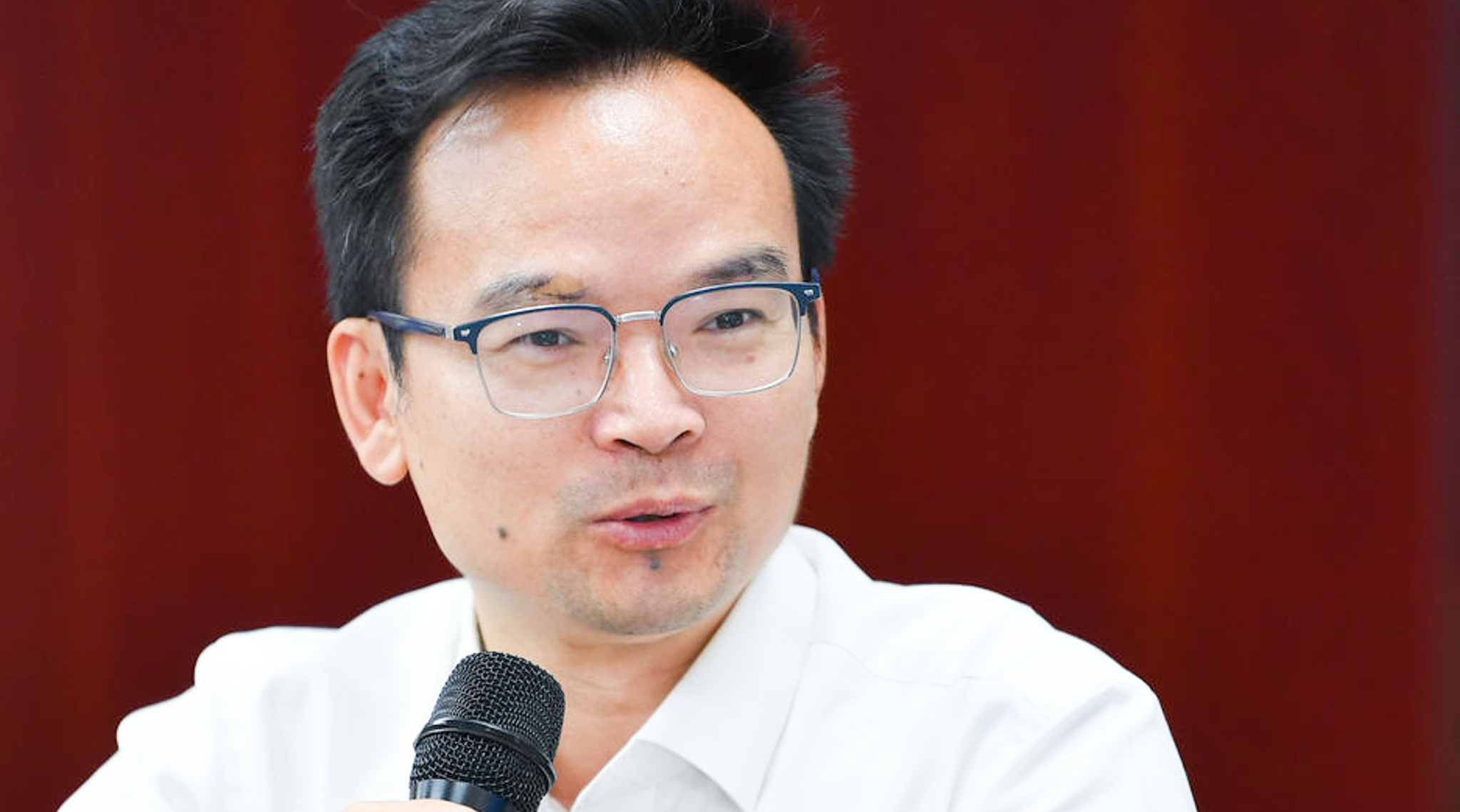
Tu Xinquan 屠新泉 UIBE (University of International Business and Economics) WTO Research Institute director
To address behind-the-border regulatory challenges for services trade, the PRC needs to deregulate and create a more rational governance regime, argues Tu. Unlike manufacturing, service industries lack unified international standards, says Tu, noting that Beijing should actively align domestic standards with international practices and foster greater global cooperation in this regard.
Holding a PhD in international trade from UIBE, Tu works on trade policy, WTO, state procurement and Sino-US trade relations. A 13th Beijing Political Consultative Conference member, he is on MofCOM’s Economic and Trade Policy Advisory Committee and has conducted research for the China Social Science Foundation, and the Commerce, Education and Finance Ministries.

Li Jun 李俊 MofCOM Research Institute International Trade in Services department director
Both ‘bringing in’ and ‘going global’ are key for PRC services, declares Li, which includes opening up in education, medicine, advanced-tech and eldercare. Competitive PRC services like software, cultural entertainment, and e-commerce should be supported to go abroad, with a focus on brand-building, he adds. To synergise manufacturing and services, Chinese finance, logistics and professional services should follow and support PRC manufacturing’s overseas expansion, proposes Li.
Trade strategy and theory veteran Li has contributed to projects on services export strengthening strategy, IP royalty indicators, a country report on trade in TCM services, and a guiding catalogue on key services export areas. He teaches international commerce part-time at Renmin University.
context
03 Jul 2025: Shanghai FTZ reform experiences (including eight items in services trade) to be promoted nationwide
09 Jun 2025: more details about the second batch of the services trade guidance fund released
18 Apr 2025: service sector opening pilots expanded by MofCOM to add new cities and missions
29 Nov 2024: pilot scheme for wholly foreign-owned hospitals initiated
28 Nov 2025: State Council released Opinions to boost digital services
02 Sep 2024: State Council released Opinions to plan new priorities for services trade
21 Jul 2024: The Third Plenum Resolution emphasised further opening in services and focusing on ‘innovation and upgrading’