2023 No. 1 Document—how is it shifting policy?
- outputs are urged to break records
- oilseeds (soybean, canola, etc.) are to expand
- rural industries are to be supported to create jobs
‘A competitive ag sector’ is clearly not how Beijing sees the rural economy post-COVID. But a strong call for it is delivered by the State Council’s No. 1 Document, published 13 February. The text echoes the Central Rural Work Conference (see cp shift: CRWC: grain first), prioritising grain production. As the economy loses fat fast, ‘unprecedented’ change sees the rewarming of the concept of sannong ('three rurals': rural economy, society and people), a framework of the 1990s to refocus on all aspects of rural life.
Food supply, as expected, still tops the agenda. While expecting a 650 million tonnes annual grain output as in previous years, the target has been raised by another 50 million tonnes, albeit without a clear timeframe. Growth potential lies in the southern regions capable of multi-cropping rice, plus projects to boost the corn yield.
After nearly four decades, an old ideal of dunliangtian 吨粮田, or ‘farmland outputting over a tonne of annual grain per mu (~15 tonnes per ha) has resurfaced. It remains a freakish outcome achieved here and there via successive planting. In 2022, the state’s average tonnes per ha of wheat, corn and rice were 5.85, 6.45 and 7.05. Maximising output is deemed outdated. Replacing it with sustainable use of resources and tech inputs, however, adds yet another challenge.
Having seen results in 2022, expanding soybean and oilseed production will stay on the agenda this year, coupled with developing new feed formulas using less oilseed. Promoted activities include
- soybean-corn intercropping
- soybean-grain rotation in the northeast and Huang-Huai-Hai Plain
- canola-rice rotation
- winter fallow fields producing canola
But Beijing’s inter- and multi-cropping directives are neither welcomed by the farmers nor the expert community. Early rice crops are low quality and unprofitable, and intercropping of corn and soy is impractical due of the lack of specialised machinery to make it viable.
A buzzword in 2022, but first appearing in the 2023 No. 1 Document, the 'great food' strategy calls for broadening the food sources, turning to grasslands, forests, deep-water mariculture and microorganisms for products previously overshadowed by grains. In addition, forage grass and silage grain will be supported, bolstering the supply of conventional feed grain.
employment: a shared theme in the weak economy
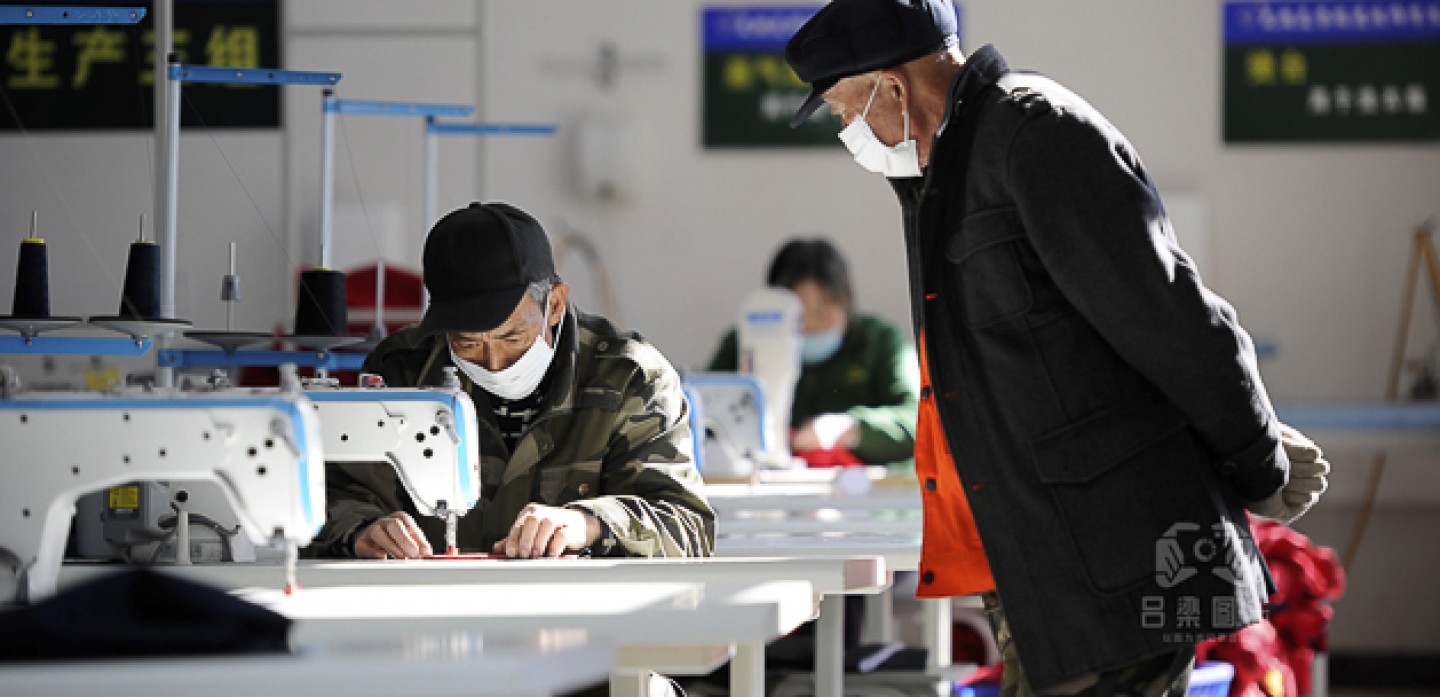
‘Comprehensive rural revitalisation’, the Document’s title is rendered ironic by economic setbacks. In the post-lockdown economy, rural employment ranks second only to food security. As in non-rural sectors (see cp policy shift: sustained recovery depends on jobs), employment projects to be promoted include
- eastern and western provinces to work together, the former having created jobs for over 30 million migrant workers
- welfare-to-work projects and welfare targeting poverty
- the 'dewdrop project' for vocational education in rural areas
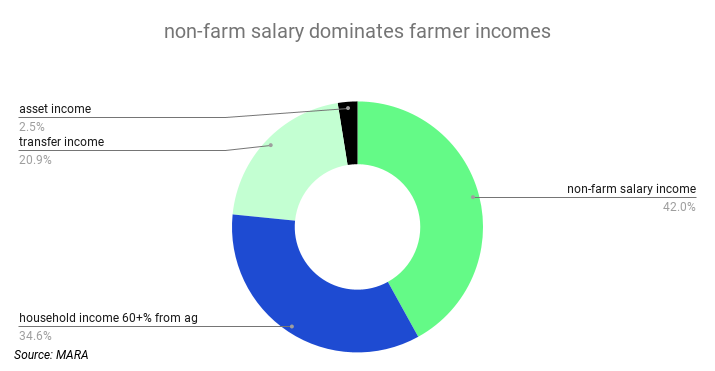
Non-farm salary accounted for some 42 percent of farmers’ income in 2022. Such job opportunities assume healthy rural industries. The proportion of rural revitalisation subsidies earmarked for industrial development will rise over 60 percent to patch up weak links such as technology, facilities and marketing. Tertiary industries, above all e-commerce, logistics and tourism services, are expected to fuel local growth.
County-level reform is equally essential, amplifying the economic and social impacts of county towns. Nearly a third of 910 million PRC urbanites live in towns or urbanised areas at the county level. Urban-rural barriers there need breaking, turning the towns into local industrial, employment and public service hubs.
Despite contributing to only 2.5 percent of farmers’ income, passive income generated by rural collectively-owned assets is thought to have excellent growth potential, given continuing reform to clarify property rights and improve business models or benefit-sharing mechanisms. The image of ‘three blocks of land’ san kuai di 三块地 is central to serial reforms. Annual tasks include
- adhering to a second round of farmland contract extensions for another 30 years, voluntarily merging scattered household lands
- checking homestead plots, ensuring living conditions, cracking down on illegal land utilisation and revitalising idle land
- piloting the marketisation of collectively-owned construction land
Ensuring momentum in poverty areas is the aim. Rural people rely on transfer payments for some 20 percent of their income. A wide range of support remains necessary for them to independently earn sustainable incomes. The percentage may be even higher among low-income groups.
who is shifting policy?
Wu Hongyao 吴宏耀 | Ministry of Agricultural and Rural Affairs Party leadership group member
Food supplies and farmers’ income are eternal themes for rural work. Growth will depend on new ag operators incorporating small farmers into their operations, says Wu. For those agreeing to leave the land, smoother transfer protocols are needed to enable moderate-scale modern farms. Service and production outsourcing are solutions for those remaining on the land, ensuring efficient and mechanised operation. The No. 1 Document lists ways to activate idle rural assets, such as leasing, providing service and equity participation with assets to increase collective incomes.
Joining the MARA Party Leadership Group in a March 2018 rebuild, Wu has helped draft the last five No. 1 Documents. Deputy director of the office of the Central Rural Work Leading Group, he has also been vocal on cracking down on rural ‘mafias’ of cadres and their relatives.
Ye Xingqing 叶兴庆 | State Council Department of Rural Economy Development Research Centre director
This No. 1 Document marks the beginning of the long haul of building a competitive ag sector. ‘Competitive’ for Ye entails
- sufficient food supplies to support development
- modern infrastructure to improve productivity
- new operators and longer value chains creating benefits and sharing them with small farmers
- resistance to disasters, climate change and global market volatility
- competing with overseas producers with lower production costs
Primary sector worker numbers peaked in 2002, implying future growth of per capita ag resources, e.g. land. The conventional PRC production model, dominated by small farmers, will remain for a while. Maximising the potential of smallholdings with modern tech and management needs better answers.
Ye, a vocal commentator in state media, held senior ag policy research positions at two State Council agencies before appointment in 2013 as director of the DRC’s Rural Economy Research Department. His broad interests span ag tariff and subsidy policy, rural growth models, migrant workers and rural governance, focusing on rural economic institutions.