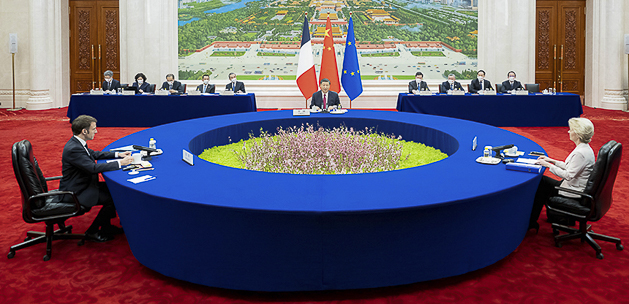
Ahead of her visit to Beijing alongside French President Macron, EU President von der Leyen commented on Xi Jinping’s recent trip to Moscow in an incisive statement that has been widely cited, not least in the PRC. Most telling for her were Xi’s parting words to Putin on the steps of the Kremlin
There are changes right now, the likes of which we have not seen for a century. And we are the ones driving these changes together.
What were the ‘changes’ that Xi thought he and Putin were ‘driving together’? For von der Leyen, the ‘world order’ was about to change in Xi’s and Putin’s own interests. Ukraine was a potent irritant, with NATO and Europe's support hardening by the day.
Seeking the highest available moral ground, Xi Jinping and his administration place Beijing’s intentions beyond reproach. In this case, China cannot accept the ‘China responsibility’ theory, and viewing bilateral relations solely from the perspective of the Ukraine crisis is shortsighted (Global Times, 8 April 2023).
This is displayed in the platform from which Xi has launched a series of ‘global’ policy frameworks in recent years: the Global Development Initiative, the Global Security Initiative and the latest, the Global Civilisation Initiative. While finding new content in any of them is a stretch, it is clear that powerful narratives of civilisation are at play.
civilised man’s burden
China’s preoccupation with ‘culture’ wenhua and ‘civilisation’ wenming has important sources in language. The two terms are motherhood values, harmless, not to say exemplary, as in most languages. In Chinese, they carry extra flavour in their use of the character wen. Originally used for the decorative motifs found on plants and animals, wen later stood for ‘cultivated’, ‘polite’ (spitting in public is bu wenming, ‘uncivilised’) and eventually ‘peaceful or civil’ as opposed to wu, ‘warlike or military’.
These linguistic facts count for little in modern usage, which has over the generations converged, not least in politics and law, with many global concepts and buzzwords. If ‘civilisation’ were a cricket ball or baseball, we would say it came with a heavy spin—a political spin. Conservative legal scholar Tian Feilong 天飞龙, Beihang University, insists that China and Russia cannot give up their sovereignty and civilisation and 'resign themselves' to the hegemony of the US and the West. Ding Gang 丁刚 former People's Daily senior staffer, finds that Beijing ‘underestimates the West’s political, economic, military, financial and many other strengths, their tenacious will to ensure the post-war order and maintain Western civilisation’s dominance’.
If the meaning of a word is how it is used, 'civilisation' in the PRC (and Russia) converges closely with archaic notions of ‘empire’: an unbounded, self-sufficient source of unique, unquestionable values, primed for others to emulate. Civilisation is code for mastery on the world's stage with which Chinese people are urged to identify and which can be shared under present circumstances with Russia.
Fudan professors' misgivings
In marked contrast with Tian Feilong’s or Ding Gang’s ’new era’ thinking are two professors at Fudan University’s renowned International Relations Institute: iconoclastic IR theorist Tang Shiping 唐世平 and Russia specialist Feng Yujun 冯玉军. For them, there is little to share in Russian and Chinese identities.
Tang writes that ‘support for the overall international order has been shaken, and the stability of the system as a whole has become fragile.’ Bluntly calling Russia a ‘second-rate country,’ Tang says it has seen its image decline sharply since war broke out last spring. So while Russia remains a key partner, Tang sees far less future for identifying with its giant neighbour to the north, which has already lost influence in Central Asia and Central and Eastern Europe.
Feng Yujun is more qualified, lamenting China’s failure to understand Russia’s historic weakening, the two powers' asymmetric diplomatic and strategic capabilities, and calling out China's closeness to Russia as an ‘unexpected negative'. Foreign incursions by Russia tip its fate in a monumental way, argues Feng, once again with no prospects for shared identity.
Russia confronts this fatal point by reaching back to a 19th-century debate between pro-Western factions and a ‘Slavophile’ vein of thought guided by the Orthodox church. China should think twice about their shared histories; Feng lists imperial autocracy, governance by officials, weak peasant economies and collectivist tendencies that eased the way to industrialisation.
China now needs to reappraise its partner’s national mentality, which holds at its core what Feng calls ‘an impulse to expand’ stemming from a sense of insecurity, and a belief that the outside world is hostile.
civilising missions
PRC analysts typically agree with Beijing that Russia is an inevitable trade, tech and finance partner and holds the advantage in all three. Even in security and defence, Russia looks to them ever more a client of China. Ideological and value convergence is another matter.
No matter how tempting it is to build a case for it, to many in the PRC commentariat, the strategic pluses are ever more outweighed by minuses.
PRC propagandists now shun the early heyday of Soviet-Chinese relations. Stalin is openly accused of wrong-footing Beijing into the Korean War, leaving it weakened and ultimately in need of Western support. Mao Zedong himself then broke violently with the Soviet Union, accusing it of rapacity and sabotage; all of this compounds centuries of Czarist invasion and dismemberment.
Still worse, Russia’s apostasy from Marxism-Leninism and the whole Communist project is no mere blot on its record: this is an entire pillar of Xi’s legitimacy, seen in his claim that while ‘...the Soviet Communist Party had more members than we do, nobody was brave enough to stand up and resist’ [the Soviet Union’s fall]. This has implications for civilisation and identity: if Marxist-Leninist communism was rejected by the Russian body politic, does any shared civilising mission result from Beijing’s bonding with Moscow?
There is an answer: the two are bonded by opposition to the US and its claims on human rights, freedom, democracy, and rule of law that threaten to rob Russia and China of their manifest destinies. Not everyone in the PRC deems opposing these US claims to be enough.
While civilisation is generally seen as a benign value, its use to soften Beijing–Moscow relations does not exhaust its potential in other domains.
The ‘civilising mission’ claimed in times past by Beijing’s latest European guest, France, depended on where you sat in the system. Algerian, Vietnamese or Laotian intellectuals may have come to see it favourably, but many did not.
The PRC denies any such sense of mission, but its actions at the UN and other international organisations, and above all, Xi Jinping’s words of farewell to Putin in Moscow, offer a different construction.
who's moving policy?
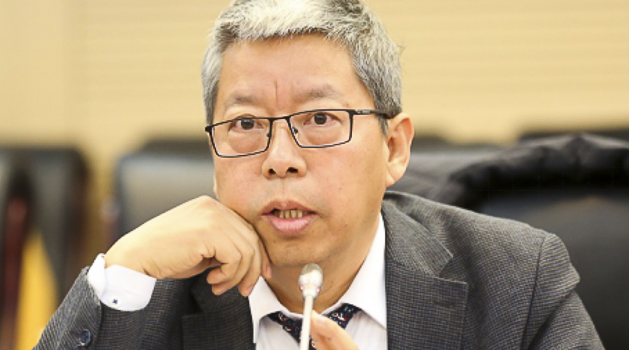
Xu Poling 徐坡岭|CASS Russian Economy Department director
The Russia-Ukraine conflict and the sanctions regime that came in its wake profoundly changed the course of trade and international divisions of labour. The application of ‘national security’ to trade has, argues Xu, disrupted global supply chains, reshuffling them (the US now trades less with the PRC than with Europe and the UK). Weaponising the USD has raised the profile of gold and the RMB. Xu notes that industry and supply chains play a huge role in protracted wars such as the Ukraine–Russia conflict; this is cause, he adds, of further US decoupling, protectionism, ‘friend-shoring’ and ‘near-shoring’.
Director of the Russian Economic Research Department at the CASS Institute of Russian, Eastern European and Central Asia Studies, Xu holds a master's and PhD in Economics from Liaoning University. He works on the Russian economy, PRC-Russia trade and diplomacy.
Tang Shiping 唐世平|Fudan University School of International Relations and Public Affairs distinguished professor
Accepting Russia’s importance as a partner, Tang argues that as the conflict with Ukraine drags on, there are fewer areas for the PRC to draw value from Russia. Its influence in Central Asia is fading. And due to the Ukraine conflict, Tang foresees a gloomy and uncertain decade coming. But he predicts that the risk of war is fading elsewhere. Stressing that peace and development are PRC priorities, Tang calls on it to join with others to constrain the US from stirring up conflict. The PRC must avoid being drawn into a military confrontation.
Working with the EU on the Ukraine-Russia conflict, the PRC can, he urges, align its interests with Europe and deepen cooperation, lowering the chances of a hostile US-EU alliance. Cooperation with Asia, Latin America, the Middle East and Africa should also be fostered.
Tang pursues geopolitics, PRC foreign policy and security strategy. A molecular biologist by training, he holds a master's in International Relations from Berkeley. His multidisciplinary approach typically blends concepts from the natural sciences, psychology and social evolution.
Feng Yujun 冯玉军|Fudan University Institute for Strategic and International Security professor
Feng has long been sceptical of Putin’s Russia. After its 2014 Ukraine incursion, he claimed that Beijing ‘held an objective, impartial stance on the Ukraine crisis throughout’, stressing that it valued ‘Ukraine’s sovereignty and territorial integrity’. In 2015 following Russia’s sudden eagerness for BRI (Belt and Road) funding to make up for its failure to keep up with energy, tech and military ‘revolutions’, he urged forming 'a unified system and rules… making the BRI more prudent, rational and objective.’ Meanwhile, he noted, Russia lacks sufficient strength and coherent strategy in East Asia, yet is great at mobilising conflicts of all parties to gain maximum benefit. This notes Feng was exemplified in Russia’s expectation of benefiting strategically from COVID, supporting his general view that its war on Ukraine 'was by no means an isolated incident but an important link in its empire-rebuilding strategy’ and that the traditional mode of 'two-on-one' confrontation is not in the interests of either the US, Russia or the PRC.
Feng is director of the Centre for Russian and Central Asian Studies at Fudan University, Shanghai, and former director of the Russian Institute, Chinese Academy of Modern International Relations (CICIR). Graduating from Hebei, Jilin, and China Foreign Affairs universities, Feng took bachelor’s and master’s degrees in history, and a doctorate in law.