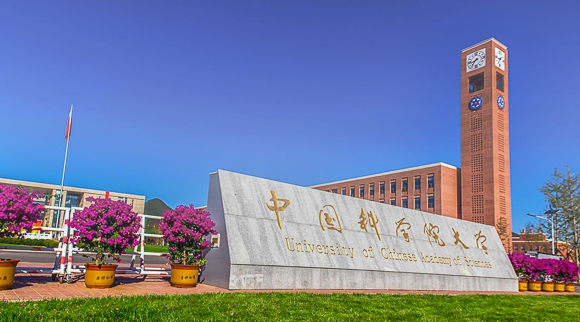
The state is promoting competition among researchers and research institutes to better align R&D with the market.
China’s state-led research infrastructure is among the world’s largest. C¥1.76 tn was invested in science and technology in 2017. But research productivity is disappointing, said Wang Zhigang 王志刚 Minister of Science and Technology in June 2018. Responding to intensifying calls for technological self-reliance fuelled by US–China tension and the need for new growth drivers as the economy is under pressure, Wang blamed spatial and sectoral overlap, inefficient incentive structures and poor links with commercial partners. These structures and links are the focus of a new phase of sci-tech funding reforms, launched in 2014 but accelerating this year.
This aims to make public research institutes (PRI) more sensitive to long-term industry and business needs. Previous reforms focused on patent output; the current round proposes a broader range of key performance indicators, along with more substantial streamlining and deregulation to promote strategic thinking and competition among researchers and research institutes.
These reforms have top level backing. Recent steps follow an unprecedented visit by President Xi Jinping and three politburo members to the joint congress of China’s top academies for science (CAS) and engineering (CAE) in May 2018. In his speech Xi called for sci-tech self-reliance, incentives for talented researchers, greater international cooperation and institutional reforms. These reforms are intended, said Xi, to cut red tape and give companies a greater role in improving research output value.
impact on PRIs: from structural to project-based funding
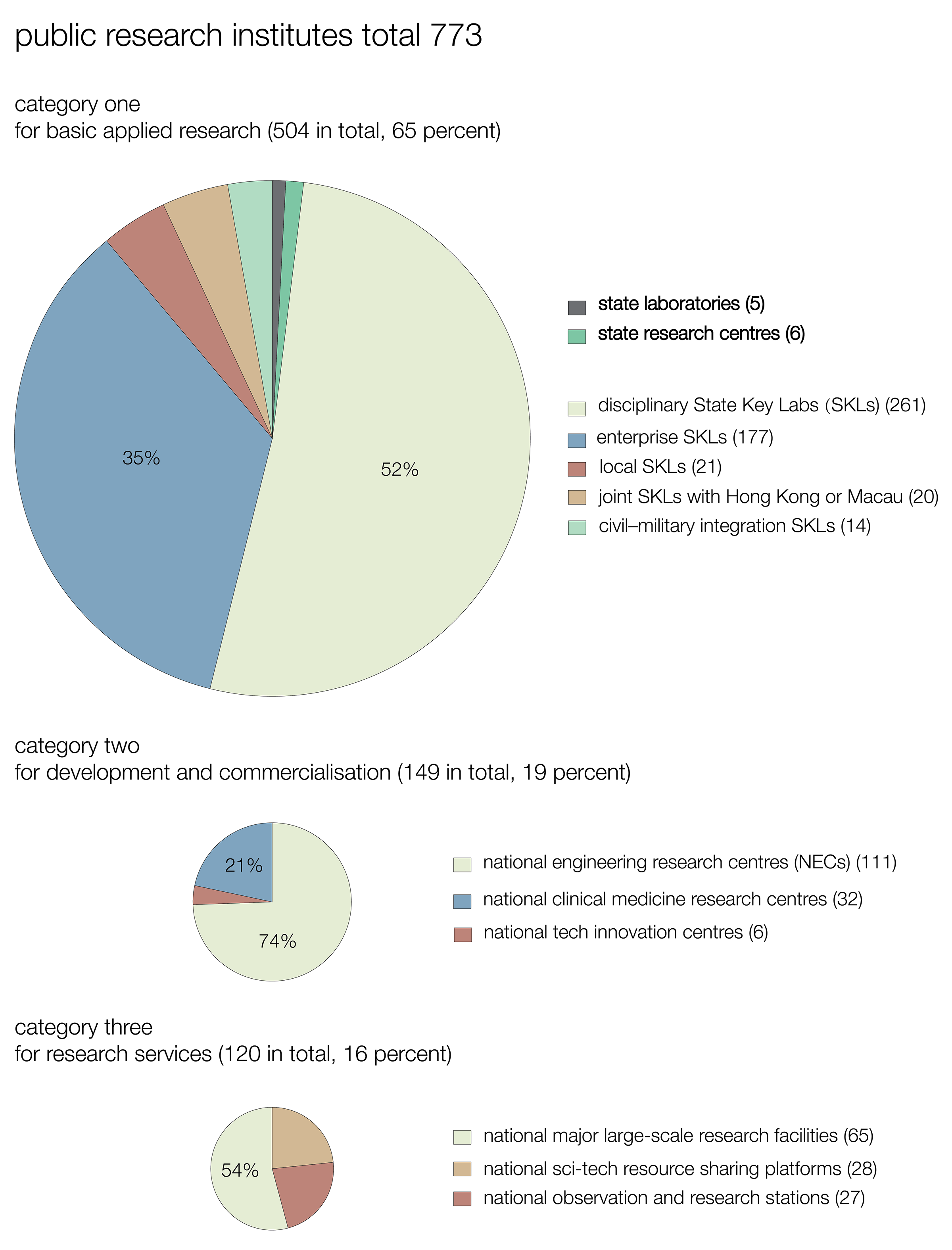
Ministry of Science and Technology’s (MoST) August 2017 'Plan for consolidating national sci-tech and innovation bases' aims to make PRIs more creative, flexible and globally connected. It organises PRIs in a three-tier hierarchy, with funding now being adjusted accordingly. Sitting at the top of the hierarchy, state labs receive ‘generous and stable’ funding, says Chinese Academy of Social Sciences (CASS). The others rely on research grants and funding from provincial governments and private sector partners.
In July 2018, State Council reduced inspections and streamlined funding application and allocation procedures. Next steps include further streamlining filing and reporting procedures, performance evaluations linked to differentiated compensation, and making universities and research institutes instead of state ministries responsible for regulatory compliance, says Li Yin 李荫 MoST vice minister. Summarising policy trends, CAS officials, many of whom direct PRIs, say research institutes are looking at
- less administration: five-yearly inspections and annual spot checks
- greater autonomy over budgets, research commercialisation and human resources
- improved evaluation and third-party oversight
- increased policy support, especially for enterprise labs, including R&D expenditure deductions, income tax rebates and subsidies
- an exit procedure for long-term underperforming institutes
engaging industry and adopting market principles
The last four years of reform placed academics in charge of identifying cutting-edge research, replacing bureaucrats. Now, new measures seek to give industry a greater role in identifying commercially valuable projects. Lack of corporate investment in basic research keeps China reliant on foreign core technologies, says Miao Wei 苗圩 MIIT minister: whereas in the US, EU and Japan, 20 percent of funding for basic research comes from the private sector, in China the figure is only 1.5 percent. The state is trying to increase this by
- encouraging SOEs to spend on R&D
- increasing tax incentives
- arranging and supporting industry–education–research institute collaborations through entrepreneurial State Key Labs (SKLs), national innovation centres and a range of other platforms
The state is also supporting R&D indirectly through the market for research findings. MoST set up a framework for public-private partnerships with the State Development and Investment Corporation (SDIC) to support technology maturation and commercial applications, as well as sci-tech services in testing and certification, legal consulting, intellectual property (IP) services, training, and marketing, explains Huang Wei 黃卫 MoST vice minister. MoST and SDIC also set up a National Science and Technology Transfer Guidance Fund in 2014. It has invested C¥10 bn in 161 projects, launched 14 sub-funds and manages C¥24.7 bn, says Wang Huisheng 王会生 SDIC president.
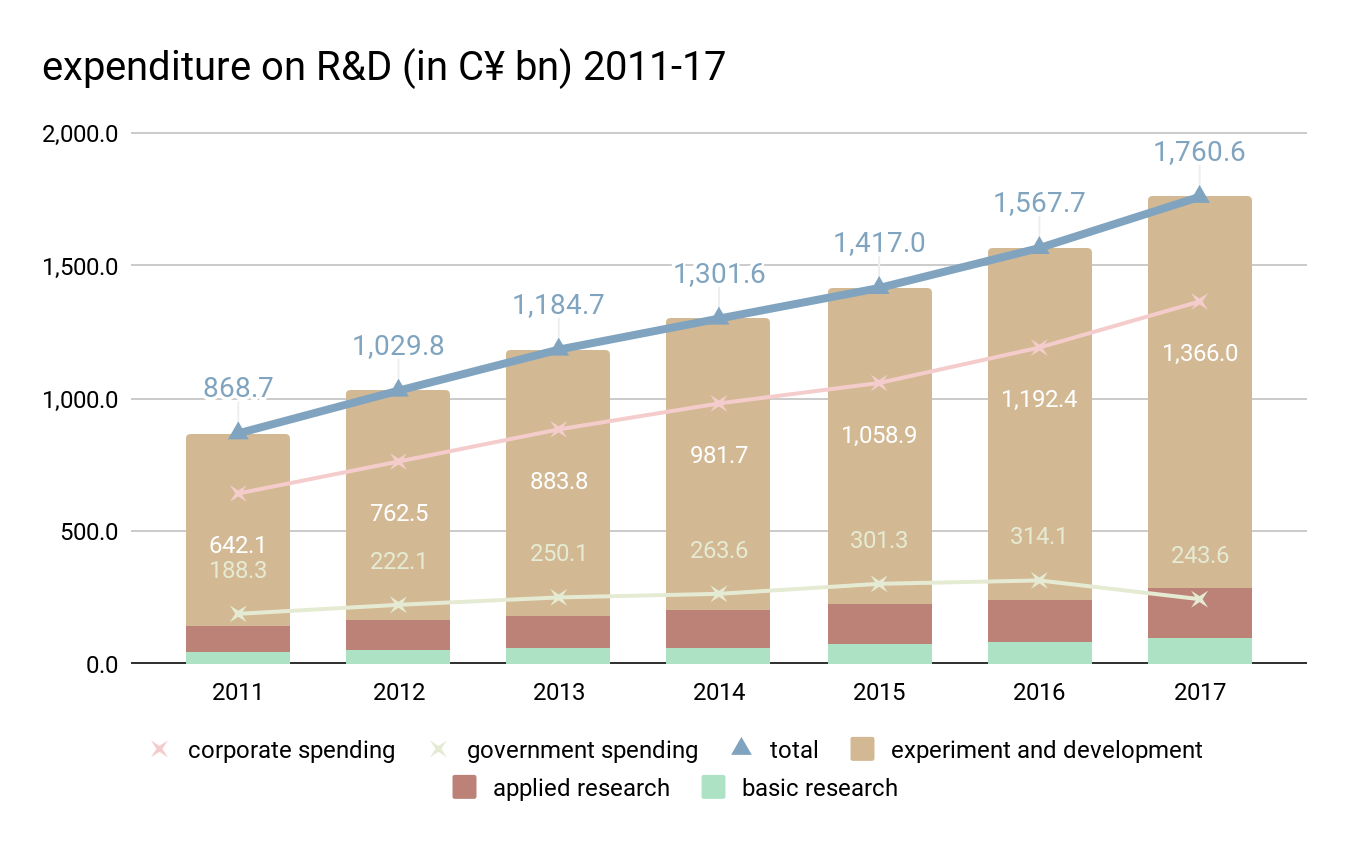 NSB data shows support for basic research is a growing but modest portion of R&D investments. Direct government spending dropped to 2013 levels in 2017. click to enlarge
impacts for researchers: from quantity to quality in evaluations
State Council issued a set of guiding opinions in July 2018 that envision an evaluation regime for projects, individuals and institutions. It will introduce flexible rules, streamlined procedures, peer review and payment-by-results programs by 2020. Ministry of Human Resources and Social Security (MoHRSS) followed in September with a plan to reform the hierarchy of natural science researchers, making evaluations more open-ended and delegating authority over them to universities and research institutes. Both moves followed an open letter from the Natural Science Foundation of China from 11 June (outside link) that warned reviewers to remain focused on research content rather than applicants’ titles and past awards. CAS analysts also called for reducing the quantity and improving quality of award and talent programs, to make them better indicators of academic excellence. MoST’s ‘Thousand Talent’ and Ministry of Education’s ‘Yangtze River Scholar’ programs issued new guidelines a few months later.
Others, like Tsinghua professor Xiao Guangling 肖广岭, argue for bolder measures, like anonymous peer reviews. China is not ready for anonymous peer reviews, warned Yang Liying 杨立英 CAS Natural Science Library: in a China that has yet to transition fully from a kinship to a rule-based society, they would open the doors to nepotism. Deregulation and reduced inspections may exacerbate longstanding problems: in July 2017, California-based academic journal Tumor Biology retracted 107 articles by Chinese authors due to fake peer reviews, and in June 2018 Shandong Changlin Machinery, which houses an SKL, filed for bankruptcy when a hydraulic pressure pump it claimed to have developed was revealed to be a repainted product by Japanese firm Kawasaki.
Taking these issues seriously, State Council issued a new academic code of conduct in May 2018; cracking down on abuse and misconduct is central to new policies. Cutting red tape, adds Fan Lihong 樊立宏 CAS Institute of Strategic Studies, does not mean reducing supervision of misbehaviour. Commenting on the new evaluation criteria, Fan argues the state wants to make administrative interventions more effective by
- selecting examiners and inspection targets randomly, and publishing inspection reports
- using big-data-backed information disclosure platforms
- setting up an academic credit system, similar to the social credit system; the state already started using blacklists in 2014
aligning research with industry needs since the 1980s
The new evaluation regime is part of a trend away from patent output as the overriding yardstick of commercial achievement. That focus has encouraged PRIs and universities to prioritise applied over basic research, says sci-tech policy advisor Wu Shouren 吴寿仁 Shanghai Institute of Population Science and Family Planning vice director. The approach also discourages researchers from sharing data and findings, and affects resource allocation. These and other challenges are clear in the history of CAS, China’s largest PRI.
Chinese Academy of Sciences (CAS) 中国科学院
A ministry-level agency headquartered in Beijing, CAS had a C¥66.78 bn budget for FY2017, outspending Ministry of Sci-Technology. 55 percent of this budget comes from central government, with another 37.6 percent from competitive state research grants. As of June 2018, it employed over 71,000 employees in 104 subordinate institutes, 100 state key labs, 12 regional branches and 3 affiliated universities with 64,000 students.
CAS first adopted market principles in the 1980s, which mainly helped academic businessmen accumulate wealth. When current director Bai Chunli 白春礼 took office in 1996, there was little progress on genuine innovation, streamlining R&D administration or ensuring technological self-sufficiency and talent stock. In 2013, Bai presented a suite of new policies, from promising employees higher salaries, better research conditions and higher social status, to encouraging frontier experimentation, streamlining funding and improving administrative institutions. Bai also addressed bureaucratic segregation, reorganising CAS into
- centres of excellence in basic science
- R&D centres in areas of commercial potential
- organisations managing large-scale scientific facilities
- joint research sites with local development
After finishing reforms in 2020, CAS is meant to serve as a bastion of knowledge and skills capable of defending the country against tech shocks.
outlook: a utilitarian approach to science and technology
Several commentators argue that in order to flourish, science needs curiosity, freedom to experiment and respect for scientific truths, not nationalism and financial incentives (see round table below). Nevertheless, the state’s approach to science and technology will remain highly utilitarian and top-down. US–China tension has further politicised the issue, says MoST minister Wang, justifying state intervention and increasing the likelihood of growing state investment in science and technology, not just in basic research but also in areas where the market could step up.
Knowing they can rely on state-funded research, most firms will only gradually increase their R&D spending. Industry–education–research integration platforms will serve to redirect public funding to areas deemed valuable by leading enterprises, mostly SOEs. A number of firms, mostly in IT, will continue to position themselves as innovative leaders, benefitting from 2030 megaprojects, smart city pilots and a broad range of talent programs. Competition over research funding will increase between CAS-affiliated institutes and world-class 2.0 universities.
The state will focus on
- drafting a national sci-tech mid- to long-term development plan (2021-35)
- improving IP regulation
- developing world-class universities
- improving talent recruitment and settlement
- improving scientific literacy of the general public
An effective industry-science link, argues Wu Shouren, goes beyond ‘technology’ competitiveness (the ability to innovate) to include ‘capacity’ competitiveness (the ability to absorb and exploit knowledge), highlighting
- diffusing knowledge and technology, to build a knowledge-based economy, promote innovation-driven growth and close rural-urban and rich-poor divides
- balancing state-market relations
- promoting entrepreneurship and capital markets to encourage financing and commercialisation
- investing in human capital, including education, labour and health
- networking between stakeholders in the national innovation system, bonding homogenous groups and bridging heterogeneous groups like PRIs and firms
what are the experts saying?
‘China needs scientific mind and critical thinking’ Liu Yadong 刘亚东 Science and Technology Daily editor-in-chief | Science and Technology Daily
Unlike tradition, convention, religion and custom, a scientific spirit involves critical thinking, the pursuit of truth, scrutiny, rationality, pragmatism and experimentalism, says Liu. But nearly a century after the watershed 1919 May Fourth Movement, China still struggles to fully embrace scientific theories, methods and attitudes, he laments. The lack of original innovation, theoretical breakthroughs, basic research and frontier studies can be traced back to this absence of a scientific spirit, says Liu. This is also behind rampant misconduct by intellectuals and the general public's anti-intellectualism.

‘reduce the amount of talent programs to curb job-title inflation’ Li Xiaoxuan 李晓轩 and Xu Fang 徐芳 Chinese Academy of Sciences (CAS) analysts | Bulletin of Chinese Academy of Sciences
Job-title inflation has infiltrated every corner of the sci-tech innovation system, they argue. A myriad of state-funded skilled labour incentive programs generate a ‘title stickiness’ in state universities, national research institutes, enterprises labs and engineering centres, say Li and Xu. Reform should reinsert market mechanisms into allocation of human resources.

‘sci-tech stagnation is caused by politics’ Tan Qingming 谈庆明 CAS professor | Caixin
Increasing sci-tech spending will not create real innovators or entrepreneurs, nor will it help China catch up and become a sci-tech superpower, argues Tan. The problem, he finds, is not financial but political and institutional. Policymakers consistently mix up science and technology, judging scientific research by how useful technological inventions are. But they are different: technology aims to create products that solve problems and improve material life, while science pursues truth and fundamental knowledge. The Enlightenment’s belief in reason, autonomy and intellectual liberty never took root in Chinese academia, says Tan, lamenting that science continues to serve politics.
context
16 Oct 2018: MoST unveils two SKLs in Macau
16 Oct 2018: MoST completes a one-month restructuring based on State Council’s new drawing
21 Sep 2018: Ministry of Education updates rules for the ‘Yangtze River Scholar’ program
17 Sep 2018: Ministry of Human Resources and Social Security seeks public feedback on a plan to reform the hierarchy of natural sciences researchers in academia
11 Sep 2018: State Council issues ‘Plan for MoST responsibilities, organisation and staff’
5 Sep 2018: National Leading Group for Sci-tech System Reform and Innovation System Construction holds the first meeting since the 18th Party Congress
8 Aug 2018: State Council announces the formation of a National Sci-Tech Leading Group
3 Aug 2018: 62 sci-tech experts are invited to advise top leaders at Beidaihe praise Party
25 Jul 2018: State Council issues ‘Measures on improving sci-tech administration and R&D output’, ruling to streamline approval for research projects, standardise R&D spending, reduce numbers of talent programs and improve professionalism of inspections
24 Jul 2018: MoST reports slight drop in R&D spending in fiscal year 2017
13 Jul 2018: President Xi Jinping calls for enhancing state-led innovation and top-down planning, with priority given to specific sectors at the Financial and Economic Affairs Commission’s second meeting
4 Jul 2018: Premier Li Keqiang reiterates the necessity to hand authority over sci-tech programs back to scientists and researchers during State Council executive meeting
3 Jul 2018: State Council issues ‘Opinions on deepening reform of evaluation schemes on sci-tech projects, research individuals and institutions’, aiming to set up an efficient, individual-based and performance-driven evaluation regime by 2020
26 Jun 2018: Ministry of Justice (MoJ) releases a draft amendment of ‘Regulations on state science and technology awards’ for public consultation, which includes major revisions on reducing the number of awards, unifying selection processes and improving oversight. Foreigners will also be eligible for sci-tech awards under the new arrangement
25 Jun 2018: MoST and MoF issue ‘Opinions on consolidating state key laboratories (SKL)’, bringing more restrictive criteria on research output, governance, profit making and incentive mechanisms of SKLs
11 Jun 2018: NSFC publishes an open letter denouncing research project reviewers’ obsession with titles, honours and seniority
31 May 2018: MoST announces ‘Several opinions on cultivating technology markets’, aiming a C¥2 tn gross domestic technology turnover by 2020
31 May 2018: MoF announces a new tax incentive policy which allows 80 percent of spending on R&D entrusted to a foreign entity to be deducted from corporate income tax
30 May 2018: State Council issues ‘Opinions on academic integrity’, bringing a new academic code of conduct (COC) to fight plagiarism, intellectual property infringement, sci-tech funding fraud and peer-review fraud
28 May 2018: President Xi Jinping highlights sci-tech institutional reform at the biennial meeting of the CAS and CAE
22 May 2018: MoST reposts ‘guiding opinions on engaging foreign experts in national sci-tech projects’ (originally issued on 20 dec 2017), following President Xi Jinping’s promise to 24 Hong Kong-based science and engineering academicians on non-discriminatory access to central sci-tech research funding
21 May 2018: MoST reports operational statistics of disciplinary SKLs, enterprises-affiliated SKLs, central-provincial co-founded SKLs and national engineering research centres
9 Feb 2018: MoST releases policies for universities and research institutes from Hong Kong and Macau to participate in sci-tech R&D programs in the Mainland
26 Feb 2018: State Council issues ‘Guiding opinions on promoting category-based performance evaluation’, highlighting an evaluation method that involves peer reviews and incorporates reviews from both the market and public
31 Jan 2018: State Council issues ‘Opinions on enhancing basic research’, bringing more resources to long-term fundamental research projects in areas of national interest
24 Oct 2017: MoST issues ‘13th 5-year plan for optimising the structural layout of national sci-tech innovation bases'
25 Aug 2017: MoST issues ‘Plan for optimising and integrating national sci-tech and innovation bases’
9 Jun 2017: MoST issues 'Technology market development 13th 5-year plan’, which calls for, by 2020, developing a C¥2 tn national technology market, setting up 600 technology transfer agencies, 300 innovation bases and nurturing 10,000 sci-tech agents and managers
30 Aug 2016: State Council issues ‘sci-tech innovation (STI) 13th 5-year plan’, comprehensive guidelines on making China a powerhouse of research and innovation. The policy covers a wide range of topics, from upper-level foundational research and mid-level technology innovation to lower-level extension and industrialisation; it also mentions sci-tech financing, mass entrepreneurship support, and service provision
24 Sep 2015: State Council issues ‘Implementation plan for sci-tech institutional reform’, outlining an overarching vision of R&D system reform which seeks to balance state dominance and market vitality
3 Dec 2014: State Council issues ‘Plan for deepening management reform of research projects and research funding under central budget’, calling to improve project application processes and resource allocation, foster oversight and combat rent-seeking
31 Mar 2014: State Council issues ‘Several opinions on improving the management of research projects and research funding under central budget’