Policymakers are trying to close a massive rural credit gap through institution building, collateralising rural assets, and fintech.
credit where credit’s due
New agribusiness operators, designated modernisers of agriculture, need money. Since the household responsibility system was launched in the early 1980s, China’s average farm size has hovered around half a hectare. Scaling up requires expensive investments in professional farming equipment, but China Academy of Social Sciences (CASS) in August 2016 identified a C¥3 tn rural credit shortfall. Key challenges, the CASS report found, are farmers’ lack of collateral, and high transaction costs for banks serving rural populations.
New agribusiness operators control 40 percent of arable land and employ 13 to 19 percent of the rural labour force. Central policy is failing them, admitted the Deepening Reform Leading Group in April 2017. In late May, State Council and the CPC General Office urged action on a laundry list of regulatory demands including a lengthy section aimed at expanding credit and loans. Institution building, collateralising rural assets, and promoting financial innovation, form the focus of these measures.
institution building
The national rural credit guarantee system, on the policy agenda since 2015, is a stopgap measure to solve the rural collateral problem. Provincial-level agencies will guarantee loans, and national counterparts re-guarantee them, reducing banks’ exposure to risk. This provides confidence in place of a credit rating system, and capital in place of collateral. It aims to take advantage of the lending multiplier effect while still meeting WTO obligations against direct subsidies to farmers. The National Credit Guarantee Union, set up in 2016 to underpin the system, was finally declared ‘open for business’ with C¥6 bn in central government funding in May 2017.
But whether and when the system can truly begin operating is unclear. Credit guarantees reduce banks’ exposure, but do not of themselves make loans profitable. Some banks may continue to shy away, fearing high default and low success rates; others may extend credit with little or no review of those applying for loans, shifting the lion’s share of risk onto the government-backed guarantee agency.
collateralising rural assets
Agricultural machinery and land rights could also be used as collateral. However, since machinery is considered moveable or personal property, rather than real estate, mortgaging it is complex. Pilots allowing farmers to take out loans for farm equipment with the equipment itself as collateral are due to be extended nationally, and expanded to allow machinery to be used to secure loans for other purposes. Progress is expected this year.
Turning farmers’ land assets into collateral is even more challenging. Rural land is collectively owned at the village level—a unique approach that is poorly enshrined in law. Rural residents are given the right to farm a small plot of land for a contract period of 30 years; until recently, mortgaging the right to use that land was impossible. New agribusiness operators generally hold leases that grant them land management rights, derived from farmers’ contracting rights. In 2015, a series of pilots were launched allowing rural landholders to mortgage their land management rights and village homestead land rights; 232 farmland mortgage pilots and 59 homestead land mortgage pilots are ongoing.
The slow, costly work of certifying rural land rights is proceeding nationwide. But cumbersome paperwork discourages farmers from using their land rights as collateral, and banks involved in pilots have struggled to value rural land, due to the lack of clear appraisal mechanisms, or a functioning rural land market to set prices. Absent clear valuations, financial institutions doubt their ability to seize rural land if farmers default, let alone monetise it. Dealing with this requires brick-and-mortar, professionally-staffed financial institutions, rare at local levels.
financial innovation
The 2016 central doc no 1 favoured internet finance as a solution for the first time, broadened in the 2017 version to include all ‘fintech’. PBoC provides incentives for banks lending to farmers, and traditional financial institutions are exploring online and fintech models, but are feared too rigid to move quickly into the space.
Private sector-led models are competing to fill this vacuum. E-commerce firms like Taobao and JD Group already have financial data on farmers and agribusinesses that buy and sell online. Using that data as a proxy credit rating, they offer farmers small loans more quickly and efficiently than pilot rating systems for new agribusiness operators. So far, these loans only finance deals on the platforms themselves, but there is room for growth, if profitable.
One factor limiting these models is the lack of tech savvy rural residents. According to one CEO of a rural fintech startup, WeChat and Alipay penetration rates are in single digits in some areas; it is a struggle to verify identities and financial information, let alone generate a credit rating. Addressing these challenges, JD recently announced plans to open half a million brick and mortar stores at the village level by 2022. These will provide machinery, irrigation systems, seeds, pesticides, livestock feed, and other farm supplies, which may be financed on-site.
Other hurdles include high costs for getting and managing customers, and patchy regulations governing rural fintech startups. Repayment schedules for other sectors are not always feasible for agribusinesses, as calves and saplings purchased on credit may take years to give milk and bear fruit. Still, farmers have largely welcomed fintech options, noting they provide better service, a faster lending cycle, and a far simpler application process than traditional institutions.
Another approach involves large food companies going to bat for the farm operators that make up their supply chain. Leading livestock company Mengyang Group teamed up with Alibaba subsidiary Ant Financial Services Group to provide loans for around 200 of Mengyang’s sheep farmer suppliers. Providing them with a guaranteed buyer, Mengyang mitigated the risk to Ant Financial. People’s Insurance Company of China also extended insurance against natural disasters or diseases, further reducing Ant’s risks.
settling up
While the credit guarantee system offers a quick fix to push credit to farmers, in the medium term, a mortgage-based approach is needed. Fintech reflects an innovative and largely private-sector driven response to a massive market opportunity; though less predictable than government plans, it has strong potential. As new agribusiness operators take over from small farming households, their access to credit will make or break the rural sector.
roundtable

Kong Xiangzhi 孔祥智 | Renmin University School of Agricultural Economics and Rural Development
A leading expert on farmers’ co-ops, he helped draft the 2007 Farmers Professional Cooperatives Law, defining clear legal guidelines for them for the first time. The law is under revision this year. Kong argues new agribusiness operators should lead efforts to scale up and modernise the rural sector. He calls for more access to professional services, including proper banking and finance, as well as advance order contracts and corporate + farmer partnership models.

Zhang Xiaoshan 张晓山 | Chinese Academy of Social Sciences (CASS)
Based at CASS Rural Development Research Institute since the early 90s, Zhang advises senior policymakers, including the State Council, on the rural cooperative economy. He argues recent farmland reforms, including efforts to collateralise land rights, are insufficient to increase capital flows into the rural sector, as they do nothing to clarify how long such rights will be held. This leaves significant uncertainties for any scaled-up players in the sector. Reforms have instead prioritised the interests of current farmland contract holders, he says. According to Zhang, clarifying the role of village collectives is key — these entities technically own farmland but are ‘extremely vague’, lacking legal personhood, organisation or business registration categories, and tax certificates.
Agricultural Development Bank of China (ADBC) 中国农业发展银行
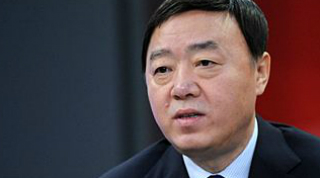
The primary vehicle for government led agriculture finance, ADBC also manages capital for agricultural subsidies on behalf of the state. Xie Xuezhi 解学智 (pictured), a fiscal policy veteran, was appointed as board chair in early 2015; the policy bank subsequently embarked on a series of reforms aimed at supporting medium-to-long term rural financing needs. In response to the shortfall in rural credit identified by CASS in 2016, ADBC set an ambitious five-year target to issue loans of C¥3 tn in rural areas; C¥2 tn of these loans will be targeted at poverty relief. To support attempts to collateralise rural land, the bank is accepting contract and management rights as collateral in pilots ongoing in some of the least developed provinces including Hunan, Yunnan and Guizhou.
context
31 May 2017: CPC General Office and State Council announces a lengthy list of measures to improve loan access
28 Apr 2017: Wang Yang 汪洋 vice premier calls for improved province-level credit guarantee systems and establishing city and county level rural credit guarantee agencies
18 Apr 2017: Deepening Reform Leading Group sets goals for wider access to credit and loans for new agribusiness operators
18 Apr 2017: National Agricultural Credit Guarantee Union holds first shareholder meetings and announces financial details
23 Mar 2017: National Development and Reform Commission (NDRC) includes diversification of rural finance sources and models, including private capital, aimed at ‘three rural’ in 2017 agricultural supply side reform agenda
6 Feb 2017: 2017 central doc no 1 replaces ‘online finance’ with a call for rural fintech
21 Dec 2016: rural finance reform highlighted as one of five top priorities for central rural work conference
29 Nov 2016: State Council issues ‘Opinions’ on supporting migrant workers rural entrepreneurship, including calls to clarify rural property rights as a mortgageable asset and include ag machinery as collateral
17 Nov 2016: NDRC issues national rural economic development 5-year plan (2016-2020)
1 Aug 2016: CASS publishes ‘three rural’ online finance development report identifying C¥3 tn rural finance gap
19 May 2016: National Agricultural Credit Guarantee Union set up
24 Mar 2016: PBoC clarifies details on rural housing and farmland mortgage pilots via interim measures for pilot implementation
27 Jan 2016: 2016 central doc no 1 includes online finance and agricultural credit guarantee system for the first time
5 Jan 2016: State Council issues 5-year plan for inclusive finance, calling for rural credit guarantees and innovation in the financial sector to serve farmers and small business owners
August 2015: State Council issues guidelines for rural housing and farmland mortgage pilots