signal
State Council forbids making housing purchase a condition of granting migrants residence entitlements in small and medium-size cities, exposing tensions between central and local policy agendas.
intent
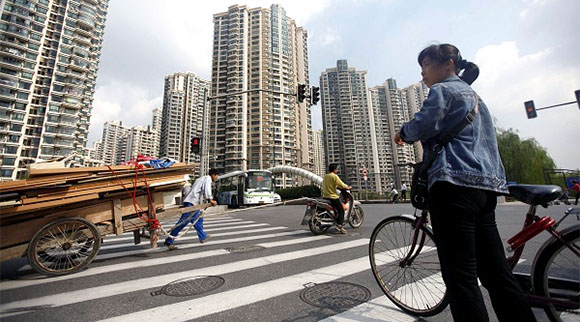
The central government still relies on the hukou system, a pre-reform era legacy, to manage population flows to the largest cities, but it does not want hukou rules to impede small and medium-size city urbanisation.
The State Council Opinion issued on Spring Festival eve detailed measures to progress new-style small-town urbanisation. A hallmark of the Xi Jinping 习近平-Li Keqiang 李克强 administration since 2013, this policy is central to efforts to transform cities and the countryside. It aims to
- rebalance population away from the largest cities
- move rural hukou holders into small and medium-size cities
- make room for more efficient land usage and encourage new rural industries
- soak up housing oversupply
This agenda has already faced strong headwinds
- opportunities and social services in small and medium-size cities are constrained and average incomes low
- many elderly resist abandoning rural entitlements and communal lifestyles
- property values are unlikely to rise due to oversupply
- local governments have prioritised housing construction over developing viable economies to generate revenue, contributing to urban blight
Linking residence entitlements to buying housing will slow urbanisation. Central leaders fear 'shallow' migration—disengaged residents and stagnant urban economies. This also undermines state efforts to package urbanisation as a renewal of its social contract with the rural heartland.
outlook
The ban on tying residence entitlements to buying housing highlights tensions between central and local governments. Increasingly restrained financially, the latter prioritise dissolving housing oversupply in the short-term over broader urbanisation goals. They will resist devoting funds to accommodate new residents.
Oversupply remains a high priority for the centre. It wants, however, to avoid localities hijacking the urbanisation agenda. Hence, urbanisation needs to be supported by other policies that directly address housing. Among those recent and anticipated are
- lowering minimum deposit rates and taxes for housing purchases
- promoting new loan and mortgage tools for homebuyers
- expanding preferential tax and land policies for rental housing
- increasing restrictions on buying housing in tier-one cities
- expanding publicly subsidised housing
Ministry of Land and Resources’ forthcoming ‘linking land and people’ policy could realign some central and local incentives. Allocating more new construction land to cities that urbanise more migrants and decrease housing stock will open up a new revenue source. However, by both rewarding cities that take on new migrants and penalising oversupply, it further blurs the line between housing and urbanisation policy.
context
21 Feb 2016: PBoC and other ministries raise the deposit interest rate for the public housing fund to encourage more people to save money to buy housing
19 Feb 2016: MoF reduces deed and business tax for homebuyers, encouraging home upgrading and longer-term ownership
4 Feb 2016: minimum deposit threshold lowered to 25 percent for first-time home buyers and 30 percent for second home buyers for non-tier-one cities
23 Jan 2016: MLR plans to use its ability to approve new construction land to reward cities with more urbanising migrants
30 Dec 2015: MoF and State Administration of Taxation release ‘Notification on tax preferences for public rental housing’
18-21 Dec 2015: Central Economic Work Conference calls for lowering housing inventory via urbanisation, expanding public rental housing to residents without local hukou, and removing housing purchase restrictions
20-21 Dec 2015: Central Urban Work Conference proposes policy measures to encourage peasants to buy housing in urban areas in exchange for urban social services
12 Dec 2015: Beijing releases draft of points-system for hukou, giving priority to younger, highly educated migrants
21 Oct 2015: State Council releases draft ordinance to provide non-local workers with residence permits that would grant equal access to services
30 Mar 2015: mortgage restrictions relaxed to boost home buying in small cities
30 Jul 2014: State Council releases the landmark document ‘Opinions on further reforming the hukou system’. It calls for
- eliminating distinctions between urban and rural hukou
- establishing residence permit system
- fully liberalising hukou system in small towns, gradually relaxing restrictions in medium-size cities, and maintaining strict controls in large urban centres
- moving 100 million people from rural to urban areas by 2020
March 2014: ‘New urbanisation plan: 2014-20’ released, the blueprint for China’s urbanisation strategy. In addition to steering growth away from high-profile megacities toward smaller cities or regional clusters, so-called ‘people-centred’ development stresses the need to not just get people off rural land but to ensure that they can access quality public services in urban areas. It also calls for developing industry outside major urban centres to attract residents and decrease reliance on megacities.
roundtable
shifting from ‘shallow’ to ‘deep’ urbanisation
Qiu Baoxing 仇保兴 | People’s Daily
‘Deep’ urbanisation should replace the rapid urbanisation of the past, giving priority to sustainability and long-term residency, says Qiu Baoxing 仇保兴 MoHURD former vice minister. It is ‘shallow’ because residents have no registration and no stake in the community. Addressing this problem requires transforming urban areas into flexible and sustainable hubs that prevent suburban sprawl and housing bubbles.
interpreting the linkage of migrant workers and excess housing
Yang Shaogong 杨绍功 | Xinhua
Granting urban services to migrants must be given priority over reducing overcapacity, cautions Yang Shaogong 杨绍功 Xinhua commentator. ‘Effective demand’, highlighted in the Central Urban Work Conference, must be boosted through long-term residents rather than getting short-term urban dwellers to rent homes. This entails thinking in terms of ‘new urban residents’ rather than ‘migrant workers’. Relying on migrants to buy enough housing is unrealistic given the size of excess inventory.
new-style urbanisation can help structural adjustment in the housing market
Wang Junling 王俊岭 | People’s Daily
Recent urbanisation-friendly policies by PBoC, MoF and MLR might further widen the urban-rural and city-township wealth gap in the short-term, says Liu Xiaochuan 刘小川 Shanghai University of Finance and Economics. High housing prices and stocks, together with local government reliance on selling land for revenue, widens gaps between areas. New-style urbanisation, adds Liu, should not be used to bail out the housing market. Rather, it must focus on improving social services and boosting development for its own sake. Only in this way can smaller cities attract new residents.
in the spotlight
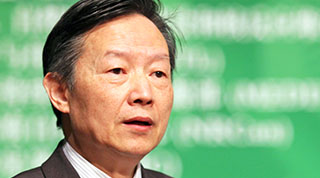
Qiu Baoxing 仇保兴 | former MoHURD vice minister
With a career in urban planning and administration, including as mayor of Hangzhou, Qiu has been an advocate of ‘eco-cities’ and a critic of ‘urban bloat’. Once Housing and Urban-Rural Development vice minister, he represents a contingent of reformist officials who deplore the tendency for lofty central initiatives to be pressed into the service of narrow outcomes.
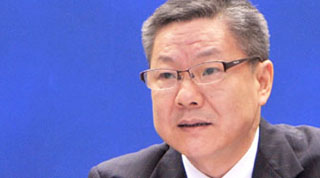
Lu Kehua 陆克华 | MoHURD vice minister
Promoted to vice minister in March 2015, Lu led an official contingent to travel to Meishan, Sichuan, to research how to ‘guide and encourage rural residents to move into cities and towns, promote healthy development of the property market, and accelerate new-style small-town urbanisation’. During the visit, he praised Meishan’s efforts to subsidise urbanising peasants as a national model. Lu is also involved in efforts to promote ‘sponge cities’, another prominent MoHURD effort to retool urban design.

Liu Neng 刘能 | Peking University
Professor in the Institute of Sociology and Anthropology, Peking University, Liu works on adapting Ulrich Beck’s ‘risk society’ paradigm to contemporary China, applying it to local issues like food safety and corruption. One of several in his Institute working on the ‘hollowing-out of rural society’, Liu cautions against demonising local governments, pointing to the origins of many of their policy choices in central initiatives.