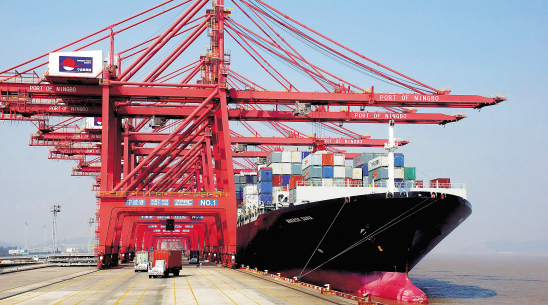
International enthusiasm for the AIIB is challenging US, EU and Japanese domination of the international financial order. At home, accusations that reform has stalled are soothed, without ceasing to simmer. A multi-front battle to centralise control over incorrigible localities and SOEs remained the unifying theme of March’s Two Meetings. The detainment of senior provincial Party official Qiu He 仇和 signals an official break with GDP-led urban development, while the MoF redoubled its effort to erode the shady financial arrangements underpinning this model. Note also the dog that failed to bark: a central SOE reform plan has yet to see the light of day. ‘It’s time to dismantle the Party-state Ltd’, asserts veteran reformer Wu Jinglian 吴敬琏.
featured story
tournaments of a regional tiger
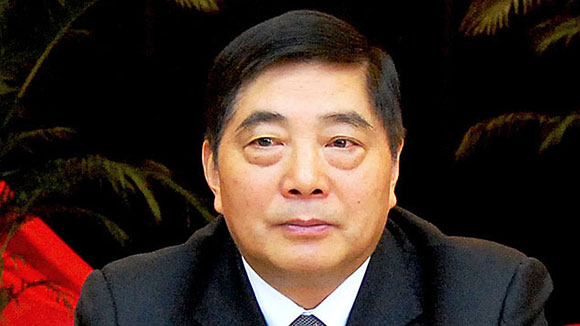
As the National People’s Congress wound up on 15 March 2015, the detention and investigation of Qiu He Yunnan deputy Party secretary and NPC member, was announced by the Central Discipline Inspection Commission. Taken down on the now routine charges of ‘serious discipline and law violations’, Qiu joins a long line of officials deemed corrupt.
Much about Qiu He is in fact far from routine, not least the massive barrage of commentary on his career. This is appearing in official and unofficial media of right, left and centre. Inferior in status to the similarly fallen Bo Xilai 薄熙来, a ‘Red Inheritor’ or princeling, Qiu is if anything more archetypal. As People’s Daily, Global Times and other official media wasted no time in pointing out: Qiu sums up an entire growth model. full post open access →
policy movers
can't put a name to the face? go to page footer
1. I eased developed country fears over AIIB governance. While ADB vice president, I'm known among developing countries as a troubleshooter in Southeast Asia. My daughter, an associate professor at LSE, is attracting attention as an astute commentator on China's economic policies.
2. I am a screenwriter drafted into the NPC in 2013. I caused a major stir at China's nearly dead legislature by successfully rallying my fellow delegates to thwart the third Legislation Law draft rescinding NPC right to set tax rates.
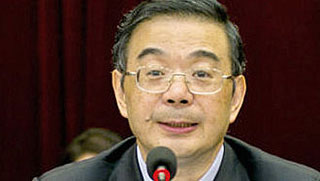
3. I push hard to move resources into the court system and change the image of China's judiciary as unqualified, incompetent and servile to authority. While nodding to Party loyalty, I am gaining a reputation for striving to keep arbitrary interference at bay, particularly at the local level.
governance
law-making law: legal monoculture masks centralisation
Another link in the chain of Xi’s restructuring of public power, the amended Law returns tax authority to the NPC while offering localities restricted law-making powers. full post client access →
judicial agenda: indicating East while turning West
Supreme People’s Court revised fourth 5-year reform plan affirms the Xi administration’s ambition for a more centralised, autonomous and professional judiciary. What needs to be done is clearer than ever, what can be done, less. full post client access →
Li Keqiang’s policy show
Just as NPC’s relevance seemed to be sinking lower, it managed a surprise backflip: a four-day battle over its tax powers. An amendment to the Legislation Law was passed: it is the NPC, not the MoF, that sets tax rates. full post client access →
centralising power in a hollowing economy
Xi has served notice that cavilling intellectuals will get short shrift. He will act to ensure that blame for environmental failures—dramatically highlighted this week by former CCTV journalist Chai Jing’s 柴静 blockbuster documentary Under the Dome—is sheeted to his minions, not his regime. full post client access →
Xi Jinping left with a world to win
Among a platoon of PLA senior officers falling to corruption charges in March, most riveting was Guo Zhenggang 郭正钢, son of Guo Boxiong 郭伯雄. A former PLA general and loyal colleague of Xu Caihou 徐才厚, the elder Guo’s long-mooted fall now seems certain. The unease among PLA officers can be imagined: with two top brass labelled corrupt, winning public confidence becomes harder than ever. full post client access →
geopolitics
text and subtext on the Silk Road
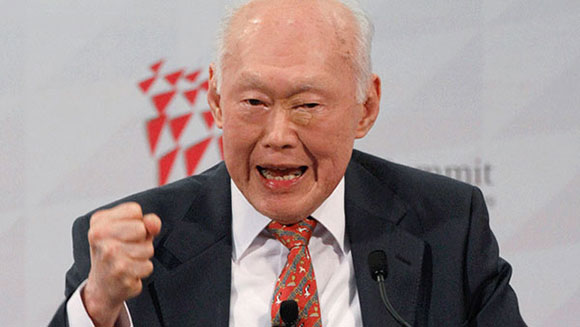
The CCP unabashedly studied Lee Kuan Yew‘s rule over Singapore for three decades. On Lee’s death the most Beijing could do was describe its ties as a business affair. Omitting the word ‘friendly’ in its eulogy, China’s MFA took aim at his firm pro-US position. full post client access →
policy ticker
Wu Jiandong 武建东: electricity reform modest ambitions more realistic
Huanqiu | 26 March
Fu Weigang: red tape detrimental to new manufacturing strategy
Southern Metropolis Daily | 24 March
Liu Shijin: QE will not solve deflation
Phoenix Media | 22 March
MoF: localities can swap C¥1 trillion maturing debt
China Securities Daily | 12 March
changes to pension funding and retirement age released under ageing population pressures
MoHRSS | 11 March
selected texts of the month (clients only)
governance
- prevent the expansion of legislative power from becoming an abuse of power
- reconciling the conflict between reform and law and avoiding loss of legislative power
- Liu Shangxi’s reading of fiscal reform
- Mr Qiu, please stay behind after the meeting
- new courts: guardians of the law and platforms of reform
- dilemma of judicial quotas
- what kind of cross-district jurisdiction is this?
- the National People’s Congress: brief account of its woes
geopolitics
- Singapore-China relations after Lee Kuan Yew
- with the UK joining the China-led AIIB, is the US far behind?
- short of opening fire, what can China do about Myanmar?
- ‘NGOs’ from China should help African civil society
- ‘one belt one road’ throws the spotlight on foreign policy under-resourcing
- a BRIC on the Road: India
- the diplomatic priority in 2015—implementation
economy
- nothing normal about the ‘new normal’
- investment along the silks roads helps local economies in the medium- to long-term
- 2015 economic goal: an uphill battle
- how will China’s manufacturing industry survive 2015?
- manufacturing moving overseas is a phony issue
energy and environment
lexicon
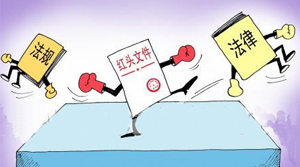
Formal, official documents that are often employed by localities with no legislative authority to pass rules that are tantamount to law. Easily enacted or rescinded, these ‘red-headed documents’, as they are also known, are usually subject to the whim of current leaders and may flagrantly violate national law or citizen rights.
in the media
born red
The New Yorker | 30 March
China will struggle to meet growth target, says premier
The Guardian | 17 March
one line in Chinese Premier Li’s speech hints at Beijing’s battle to connect on social media
Sydney Morning Herald | 7 March
China’s National People’s Congress will leap to President Xi’s command
The Australian | 5 March
China’s president Xi Jinping presents China by the numbers, again
Sydney Morning Herald | 1 March
quiz answers:
1. Jin Liqun 金立群 Asian Infrastructure Investment Bank secretary general
2. Zhao Dongling 赵冬苓 NPC delegate
3. Zhou Qiang 周强 Supreme People's Court president