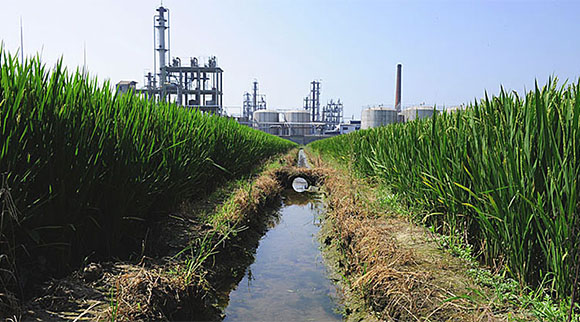
A new tax regime on polluters will replace pollution fees on 1 January 2018. It will supply legal form but little change in application.
no fees, please
The current pollution fee system is both too flexible and unclear. The new regime seeks to address these issues with legal teeth. However, to avoid major economic disruption, it is heavily based on the current one, though leaving space for future adjustments. Like the fee system, the tax targets enterprises directly emitting pollutants. It is different, however, in that it
- divides construction and industrial noise emissions
- adds solid waste as a pollutant (pollution fees on solid waste ceased in practice in 2005)
- taxes heavy metals more than other water pollutants
- gives more incentives to enterprises, with
- 25 percent tax reduction for emitting 30 percent less than national or local standards
- 50 percent reduction for emitting 50 percent less
Some areas will be tax exempt
- small-scale agricultural production
- motor vehicles, ships, aircraft and other mobile sources
- urban sewage treatment and waste disposal
- solid waste utilised in compliance with standards
- other cases approved by State Council
Floor tax rates are the same as current pollution fees
- air pollutants: C¥1.2 per pollutant equivalent
- water pollutants: C¥1.4 per pollutant equivalent
- solid waste: C¥5-1,000 per tonne, depending on type
- noise: C¥350-11,200 per month depending on decibels
To factor in local environmental and developmental needs, localities can set rates up to ten times the floor rates for air and water pollutants. Pollutant equivalents are used to weigh the severity of different pollutants’ environmental impact. For example, one kg of general dust would equal 0.25 pollution equivalents; one kg of chlorine gas would equal 2.94. Depending on the local rate, this means dust emissions would be taxed between C¥0.3 and C¥3 per kg, and chlorine emissions between C¥3.5 and C¥35 per kg.
Polluters will continue to be legally responsible for environmental damage on top of tax paid. Penalties for falsifying emissions data will be harsh, with a potential 15-year sentence.
keeping it local
Under the pollution fee system, ten percent of fees go to central government, and 90 to local environmental protection bureaus. All tax revenue, however, will flow into general local budgets to incentivise implementation, says Wang Jianfan 王建凡 Ministry of Finance (MoF) Tax Policy Department director, a major problem for the current system. However, the law does not specify how revenue should be allocated, nor how local environmental protection bureaus will replace the income from pollution fees, an important income source for them. If revenue is not given a special purpose, says Zhang Yuzhen 张玉珍 National People’s Congress (NPC) delegate, it would damage current environmental protection funding without securing an alternative.
muddying the water
Local tax bureaus will collect tax, with environmental protection bureaus to assist with technical monitoring. Prefectural and provincial governments are responsible for coordination.
Local tax bureaus have higher legal authority than the environmental protection bureaus which collect pollution fees. However, both sub-provincial tax and environmental protection bureaus are under a sub-provincial vertical management mechanism, notes Xinhua, leaving little space for prefectural and provincial government to coordinate. Lack of clarification on the information sharing mechanism between bureaus could also erode trust, says Li Wanfu 李万甫 State Administration of Taxation. Deprived of the right to collect revenue, environmental protection bureaus may not be incentivised to cooperate. There is also a lack of clarity on who is responsible for mistakes in tax collection or for legal cases filed by taxpayers convicted of breaking the law. These issues make details on cooperation necessary before rollout is possible, says Liu Jianwen 刘剑文 Peking University.
a law by any other name
The law has been criticised for lack of ambition; given its similarity to the fee system, it is arguably more a pollution tax than a full environmental protection tax. Jia Kang 贾康 China Academy of New Supply-Side Economics chief economist, notes that
- tax rates are too low; despite flexibility, the law sets the upper limit, leaving no space for local governments to set higher rates, as some currently do
- depending on the tax rate, pollutant discharge taxes can be below pollution control costs; enterprises would rather pay the pollutant charge than manage pollution
- exemptions to the tax are significant polluters
- carbon dioxide is not taxed; this could have supplemented the carbon market officially launched in 2017, particularly for small, dispersed pollution sources that are not easily managed under the carbon market
Unlike the issue of unclear responsibilities discussed above, these more deep-seated problems are unlikely to be addressed before 2018 rollout. As current taxable items are all pollutants, some experts argue the law should be named the Pollution Law. However, the law’s name signals broader intention and leaves space for greater coverage in the future, argues Liu Jianwen 刘剑文 Peking University. This could include a light pollutants tax and a carbon tax, he says.
profiles
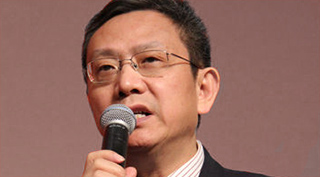
Jia Kang 贾康 | China Academy of New Supply-Side Economics chief economist
Jia has served as taxation advisor for Beijing, Shanghai, Fujian, Anhui, Gansu, Tibet and Guangxi governments, and participated in drafting the 11th, 12th and 13th 5-year plans. Though a long-term promoter of the Environmental Protection Tax Law, Jia argues the final version of the law lacks ambition: rates are too low, and five areas are exempt. The government should find an appropriate opportunity to tax these areas, too. A carbon tax should also be levied, he says, to reflect the social cost of these emissions and make the law tougher and more effective.
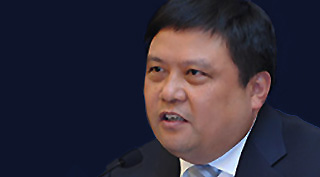
Wang Jianfan 王建凡 | Ministry of Finance Tax Division director
Tibet Autonomous Region Finance Department deputy director before taking up his current post, Wang has participated in drafting multiple tax reforms, including the import tax, fuel tax and real estate tax. The shift from fee to tax is necessary to overcome inefficient execution and interference from local governments and different government agencies, says Wang. Additional implementation regulations and tax collection measures are still needed, however, to guarantee smooth rollout of the new law, he says. On the provincial level, preparation work, such as setting tax rates, establishing clear cooperation mechanism between tax and environmental protection bureaus, transferring taxpayers’ information and setting up an information sharing platform are also essential, according to Wang.
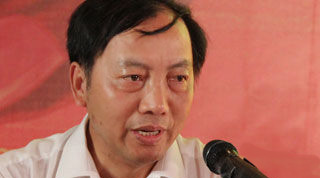
Liu Jianwen 刘剑文 | Peking University Finance and Taxation Law Research Centre head
Often called on to teach influential NPC policymakers basic tax principles, Liu has helped draft the Basic Tax Law, Financial Transfer Payment Law, and Individual Income Tax Law. A staunch constitutionalist, Liu argues for statutory taxation (taxation-by-law) and budgetary transparency to promote rule of law and limit administrative power. He lauded increased legislative oversight in the Budget Law for promoting more standardised and efficient financial management. Statutory taxation will not hinder fiscal reform, he says, as the legislative process will help establish and clarify reform goals. All taxes should be written into law by 2020, he asserts, starting with property and environmental taxes.
context (since previous cp.signal)
5 Jan 2017: State Council issues ’13th 5-year energy saving work program’ promoting the environmental protection tax to improve energy efficiency
27 Dec 2016: NPC Standing Committee passes the Environmental Protection Tax Law
26 Dec 2016: Supreme People’s Court and Supreme People’s Procuratorate issue an interpretation on applying the Criminal Law against polluters
4 Nov 2016: Lou Jiwei 楼继伟 MoF minister calls environmental tax an important part of a modern financial system
2 Sep 2016: NPC Standing Committee calls for comment on Environmental Protection Tax Law until 5 Oct 2016
29 Aug 2016: NPC Standing Committee begins reviewing the Environmental Protection Tax Law
11 Jun 2015: Ministry of Environmental Protection calls for comment on the Environmental Protection Tax Law until 9 Jul 2015
13 may 2016: State Council issues ‘Opinions on building an ecological protection compensation mechanism’, calling for environmental protection tax legislation development to speed up
8 apr 2015: State Administration of Taxation submits environmental protection tax draft plan to State Council