signal
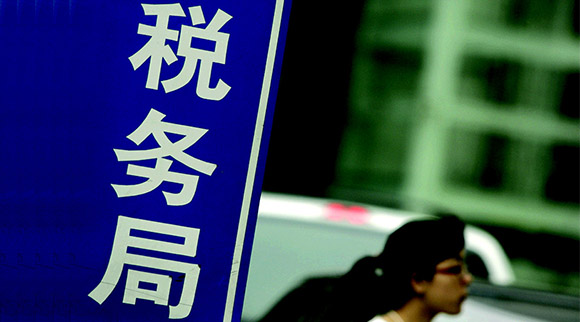
The shift from arbitrary pollution control fees to a tax framework signals China's strengthening response to polluters. The draft Environmental Protection Tax Law (EPT Law) released 10 June 2015 by MoF, SAT, and MEP also points to a transition from a whack-a-mole approach using administrative decrees, to a legal framework that allows for more rational arbitration of interests.
intent
Invoking the 'polluter pays' principle, the tax encourages heavy polluters to factor externalities into production. Taken alongside other moves in the emerging ecotax framework and likely to come into effect 2016-17, it will:
- replace existing fees with a heavier tax. Fees, imposed since 2003, have been ineffectual at curbing pollution. They are:
- arbitrarily levied and misappropriated by environment protection departments for other uses
- too low and inconsistent; Beijing fees, for example, are set 9 times higher than Hebei
- waived in the case of heavy polluters, who pay disposal fees to sewage treatment plants (Water Pollution Prevention and Control Law)
- crudely calculated: EP departments have frequently charged according to mass balance methods rather than more sophsticated monitoring processes
- provide a matrix of taxes according to pollution category: air and water pollutants to be based on set value per pollutant; solid waste on tonnage rates; noise pollution on decibels above the standard
- subject 14 key industries (inc. thermal power, steel, cement) to stricter supervision of pollution data
- penalise firms that exceed total emission amounts or concentration standards (double/triple tax levied)
- reward those polluting at less than half the concentration standard (tax levied reduced by half)
in a step backwards concessions will apply:
- carbon dioxide emissions omitted from tax scope; other key emissions included—sulfur dioxide, nitrogen oxides, COD, ammonia nitrogen (TAN), dust (but the framework allows for later introduction)
- agriculture, auto, and waste treatment industries exempted
outlook
stronger pollution control promised by the tax will be ineffective without concomitant fiscal reform:
- local governments still lack adequate capital; little progress on fiscal transfer reform following feb revamp to central-local tax sharing system
- absent effective fiscal transfers, path dependencies will persist: locally-determined arbitrary fees likely to reemerge
- the public lacks trust in state as manager of revenue; misgivings over tax collection and use remain high
EPT law:
- EPT focuses on restricting polluting activities to the exclusion of other relevant concerns, e.g. resources protection: the anti-pollution function of the tax should be clear
- agency interests militate against cooperation and information sharing between local tax (collection) and EP departments (data verification)
- enforcement through the stronger agency (SAT) should improve compliance, but only if MEP is properly compensated for income loss through cancelled fees, otherwise expect usual foot dragging
a strengthening ecotax framework
- resource tax: 'market-based'
9-10 Oct 2014: MoF, SAT, and NDRC release three notices on resource taxes to come into effect 1 Dec 2014:
- coal resource tax to be calculated based on price rather than production states MoF and SAT. The tax rate to be decided by provincial governments (2-10 percent). Price-based taxes subjects coal use to increasing disincentives
- to clean up irrational fees, MoF and NDRC state coal, crude oil and natural gas would no longer be subject to resource compensation fees
- resource tax for crude oil and natural gas to increase from 5 to 6 percent states MoF and SAT
30 Apr 2015: resource tax on rare earths, tungsten, and molybdenum to be based on price not volume from 1 May, stipulates notice from MoF and SAT. So as not to increase the burden on firms, tax rates will be reasonably set at: 7.5-11.5 percent for light rare earths; 27 percent for medium-heavy rare earths; 6.5 percent for tungsten; 11 percent for molybdenum.
- consumption tax: 'needs expanding' (separate to VAT)
12 Jan 2015: oil consumption taxes raised for the third time by MoF and SAT, following hikes on 29 Nov and 13 Dec 2014. Questions asked whether revenue will be used as promised—for fighting pollution and climate change—or to bulk up state revenue as oil prices take a nosedive. Implemented through administrative decree sidelining the NPC.
10 Mar 2015: consumption tax expansion slated for fiscal agenda up to 2020 according to MoF think tanker Liu Shangxi 刘尚希. Currently covering only 14 items, the tax as it stands is insufficient. It will be expanded in 2016 to include energy-intensive, high-polluting, and high-end consumer goods and go through due process via the NPC.
- VAT: 'mixed signals'
12 Feb 2014: preferential VAT policy for large hydropower firms extended but diluted by MoF and SAT. Up until end 2015 enjoying rebates if VAT burden exceeds 8 percent, the standards will be set at 12 percent until end 2017. Other clean energy industries also enjoys VAT breaks, PV for example.
12 Jun 2015: VAT directory on resources-based products and labour services announced by MoF and SAT that introduces a 30 percent and 50 percent tax on waste water treatment and water recycling, previously tax-free services.
10 Aug 2015: resumption of a 13 percent VAT on fertiliser from 1 Sep announces MoF. Moves target overcapacity and excessive use of a major pollutant.
- carbon tax: 'on hold'
13 Aug 2014: introducing a carbon tax would affect the competitiveness of China's industries and stunt growth, argues Jia Kang 贾康 former MoF Fiscal Science Research Institute director, at a time when the growth rate is in decline. Reconsider when the economy stabilises.
February 2015: as part of NRDC's coal cap project, guidelines on fiscal policy measures appropriate for curbing carbon consumption released by MoF Research Institute for Fiscal Science. A roadmap, it suggests: coal resource tax reform in 2015; environmental protection tax 2016; low-rate carbon tax 2019.
roundtable
a rational carbon tax and trading system for the power industry
Gui Junsong 桂俊松, Fu Yuewen 傅玥雯 | China Energy News
Command-and-control regulations such as EIAs, strict emission standards, emission caps, and efficiency targets are strangling the power industry. Rather than overburden firms with overlapping pollution control measures, turn instead to market mechanisms, suggests Wang Zhixuan 王志轩 China Electricity Council. A carbon tax would rein in consumption and production, but is not feasible in the current economic climate. A carbon trading system is superior, but improvements need to be made on: pilots, permit allocation, and the legal framework. ticker
MoF expert recommendations on resource tax reform
Zhang Xiaoyun 张晓云 Su Jingchun 苏京春 | China Economic Times
MoF Research Institute for Fiscal Science experts provide specific recommendations on resource tax reform: collect the tax at the central level but optimise the revenue-sharing system to balance centre-local relations; gradually expand the tax to cover natural resources such as land, forests, grasslands, mountains, marine areas; levy the tax based on price not volume so the tax burden increases as resources become more scarce; collect tax in special-use accounts and earmark revenue for use in environmental protection; use resource tax reform to prompt price reform. ticker
VAT on waste water management harms PPP
Waste water treatment and water recycling are no longer tax-free. A 30 percent and 50 percent VAT will be collected on those services from 1 July; investment return rates will likely fall by 10 percent and profits by 10-20 percent. Almost two-thirds of the 4,000 waste water treatment companies in China receive no financial support from government, so the new tax will hit hard. This will negatively impact industrial innovation and discourage PPP in waste water and solid waste treatment, complains Xue Tao 薛涛 Tsinghua University, tight local government fiscal budgets are unlikely to stretch to offsetting the VAT. ticker
in the spotlight
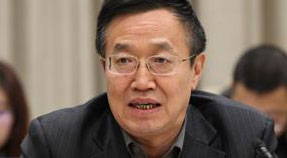
Su Ming 苏明 | MoF Research Institute for Fiscal Science
MoF Research Institute for Fiscal Science deputy head, Su works alongside Liu Shangxi 刘尚希 on fiscal policies relating to rural, energy and environment issues. An economics PhD, Su has directed over 60 ministerial research projects, including cooperating with international financial institutions on fiscal and tax policy levers for SME development and CDM mechanisms. He advocates that environment protection tax revenue should be included in the general budget because ear-marking revenue for environment protection purposes will only increase administrative costs. Resource tax reform targeting upstream sectors is more pressing than a carbon tax at present. Introducing a carbon tax by 2019 would encourage Chinese exports by exempting them from carbon tariffs levied by developed countries.
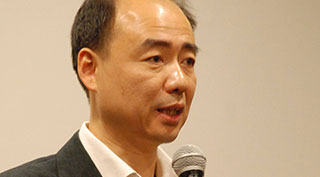
Ma Jun 马军 | Institute of Public and Environmental Affairs (IPE) director
Well-known environmentalist, Ma has been reporting on the underside of China's rapid economic growth since the 1990s. His book China's Water Crisis (1999) was the first domestic publication on the country's pollution crisis, putting him on the global map. Founding IPE in 2006, Ma made it onto Time magazine's 'most influential' list the same year. Urging efforts to improve environmental data transparency in China, his institute has developed a national water and air pollution map, a Pollution Information Transparency Index (PITI), and an app that provides real-time air pollution data to the public. In contrast to Su Ming, Ma argues a carbon tax should not be levied on top of other existing taxes—it will exert too much pressure on firms—rather the whole ecotax system needs re-adjusting. Ever the sceptic, Ma argues the central government did not include carbon emissions in the Environment Protection Tax Law to ensure it moves forward smoothly. In future, environment protection expenditure should be publicised and further thought given to rationally dividing expenditure between pollution control and law enforcement.
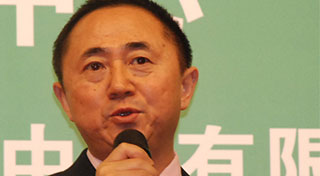
Wang Canfa 王灿发 | China University of Political Science and Law
Environmental law expert Wang has led drafting of many environmental laws including the Water Pollution Abatement Law. In 1998 he set up the Centre for Legal Assistance to Pollution Victims (CLAPV) tasked with providing free legal consultation to pollution-related victims. In 2001 he rolled out a program to provide training for judges and lawyers on environmental law. Singled out in Time's 2007 'Heroes of the Environment' feature, Wang is glad that the Environmental Tax Law will help to improve public awareness, but doubts it will have much further impact. Tax reform deprives MEP of pollution fee revenue so they have little incentive to proactively implement the Law. Carbon emissions should be, but are not, taxed under the draft Law. In any case, the cost of pollution abatement far exceeds that which environment protection tax revenue can contribute.