signal
A new central strategy ‘linking people, land and money’ better incentivises local governments to realise ‘deep urbanisation’: offering full urban entitlements to new residents, while limiting urban sprawl and soaking up housing oversupply.
intent
Adopted in the State Council’s March 2016 Government Work Report, ‘linking people, land and money’ is now integral to realising central urbanisation goals. This strategy directly connects a local area’s construction land quota, centrally redistributed funds, and infrastructure grants to how many new residents it urbanises with full access to public services (‘deep urbanisation’).
Pilots ‘linking land and people’ offered urbanisation incentives to local governments, but only addressed part of the equation. By adding the ‘money’ link, the central government seeks to
- overcome a fundamental hurdle to deep urbanisation: short-term cost for cash-strapped local governments to integrate new residents (estimated at around C¥100,000 per person)
- open more funding channels for local governments to increase land compensation and guarantee better urban services, making urbanisation more attractive to rural residents
- reduce local governments’ reliance on land sales for revenue, which ‘spreads the urban pancake’, leading to sprawling, inefficient, inadequately serviced urban areas
- soak up excess housing inventory
The strategy seeks to align local government interests to the central state goal of reaching 60 percent of the population living in urban areas, 45 percent with full urban residence entitlements, by 2020.
outlook
Unlike other urbanisation strategies, linking people, land and money addresses the underlying centre-local tension over cost that has contributed to shallow urbanisation, in which migrants remain excluded from urban benefits.
Nearly all central agencies have announced developing the strategy as a key 2016 task, but have yet to issue details. The ministries of Land and Resources (MLR), Public Security (MPS), Housing and Urban-Rural Development (MoHURD), and Human Resources and Social Security (MoHRSS) have submitted draft guidelines for State Council review.
To include the ‘money’ link, Ministry of Finance must set up new central redistribution channels to allocate funds to help localities expand social security coverage, but as yet there are no details on how this will be managed. As pilots have shown, without dedicated central funding, land incentives alone fall short.
Success also depends also on related reforms and clarifications
- hukou and resident permit system reform, under the purview of MPS and MoHRSS, must determine what services are to be provided and who can access them; local education, civil affairs and health ministries will need to be able to move quickly to expand resources to integrate new residents once details are clarified
- other land policies, such as the three rural land reforms, must be adapted to shifting land allocations; it is unclear how this policy will affect other land quotas, such as the red line for protecting arable land
- land laws (Land Management Law and Land Law) will likely need revising; the legality of land transfers under ‘linking people, land and money’ is unclear
context
26 Apr 2016: MLR issues supporting guidelines for ‘linking people, land and money’
19 Apr 2016: NDRC lays out key tasks for urbanisation in 2016, further detailing ‘linking people, land and money’
9 Mar 2016: Jiang Daming 姜大明 Ministry of Land and Resources minister announces a multi-agency draft of a specific policy plan for ‘linking people, land and money’ is under review
5 Mar 2016: Annual Government Work Report lists ‘linking people, land and money’ as an important urbanisation measure in 2016
2013-2015: ‘Linking land and people’ pilots launched across county-level regions in Henan and Anhui
19 Jun 2012: MLR signs an agreement with Henan provincial government, linking construction land quotas to newly urbanised residents
September 2011: State Council chooses Henan to pilot 'linking land and people’
July 2008: NDRC publishes 'Guidelines on deepening economic reform' which first mentions choosing pilots for ‘linking land and people’
roundtable
2016 a breakthrough year for ‘linking people, land and money’ policy
Feng Kui 冯奎 | NDRC
The policy directly addresses the most practical issue of the next stage of urbanisation—the cost. It will prove effective in poorer regions, where urbanisation is both needed most and has lagged behind. Long-discussed, the progress made so far suggests that the policy has broken through the complexity of central-local government relations and relations between a host of central-level agencies.
a shift toward people-centred urbanisation
Feng Changchun 冯长春 | Peking University
‘Linking people, land and money’ can fix the problems caused by urban land growing faster than population. Using land and money incentives, rather than just land, shows a deeper understanding of urbanisation. The Henan pilot ‘linking people and land’ helped bridge the growing gap between land growth and population growth; it eased the transition of people and land required by new urbanisation.
a chance to stop blind urban sprawl
Zhang Fengrong 张凤荣 | China Agricultural University
Policies that increased urban land without granting migrant workers social security enabled cities to exploit rural labour, deepening the urban-rural divide. Encouraging local governments to boost construction land quotas produced ghost cities. ‘Linking people, land and money’ will stop blind urbanisation and help overcome the adverse effects of decades of urban sprawl.
in the spotlight
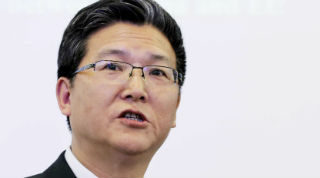
Zhang Zhanbin 张占斌 | Chinese Academy of Governance
A macroeconomist, Zhang sees urbanisation as the core of China's transition to more sustainable economic growth. Head of the New Urbanisation Research Centre at the Chinese Academy of Governance, he travels the country, talking at both central and local levels to clear barriers for new urbanisation. Local governments, says Zhang, need incentives like ‘linking people, land and money’ to implement central urbanisation goals.

Feng Changchun 冯长春 | Peking University
When Henan commissioned a study of the province’s ‘linking people and land’ pilots, Feng led a team of Peking University researchers to conduct a study. Studying the pilot in Henan's Xinxiang city, Feng proposed a nine-step process, including four links: people, land, money and industry. His suggestions included consolidating land and trading quotas, as well as boosting industries to provide jobs. Infrastructure funds and central redistribution can rarely fully support social security expansion, cautions Feng; the slowing economy may limit job growth in small cities and towns.

The China Centre for Urban Development NDRC
The China Centre for Urban Development was instrumental in shaping NDRC's urbanisation policies and in drafting the New Urbanisation Plan (2014-20), which serves as the blueprint for small-town urbanisation. As the most authoritative brain trust on small-town urbanisation, the centre plays an increasingly important role as China's urbanisation shifts to small cities and towns. The centre is led by Li Tie 李铁, who is a key advocate of the role of innovation and technology in improving urbanisation, and remains optimistic despite real estate oversupply in many regions. The centre is now conducting further analysis on how public services shape the urbanisation process, in cooperation with the UN Population Fund.