signal
New restrictions on smoking promotion in the Charity Law (in draft) and the Advertising Law underpin Beijing city's successful ban on smoking in public places and set the stage for further national efforts.
progress
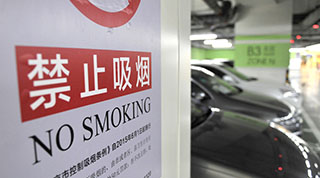
Despite deeply entrenched tobacco interests, steady enforcement of Beijing’s comprehensive ban on smoking in public places, launched 1 June 2015, is showing results. Previous nationwide, city-level legislation failed to make headway due to loopholes and lax enforcement.
Supplementary legislation this year has tried to limit other forms of tobacco influence
- Charity Law (now open for public comment) bans tobacco companies, who contribute prominently to disaster relief, education and other public causes, from sponsoring charities
- Advertising Law, effective 1 September 2015, bans tobacco advertising in mass media, outdoors, and on transport
- wholesale tax on cigarettes raised from 5 to 11 percent and levied as a C¥ 0.005 per-item tariff; while small, it is the first such increase since 2009, and the first that, rather than being absorbed by producers, raises retail prices to deter smokers
Smoking in public places will be the next national campaign target. The 12th 5-year plan (2011-15) called for a ‘complete smoking ban in public spaces’. But a draft law, submitted to the State Council in November 2014, is not yet a priority.
Reforms have made headway despite the institutional structure of tobacco control, in which the tobacco industry is both a participant and regulator.
- the Ministry of Industry and Information Technology (MIIT) leads implementation of the WHO tobacco control framework, ratified by China in 2005
- MIIT also has oversight of the State Tobacco Monopoly Administration (STMA)—and thus China’s tobacco SOEs
- STMA is a standing member in its own right on the framework implementation committee
- the per-leaf tax on tobacco levied by provincial governments is a perverse incentive, encouraging more production
outlook
Beijing’s experience should pave the way for progress on national legislation to ban smoking in public places in 2016, with rollout in years to follow.
National legislation must entail heavy central subsidies: already cash-strapped provinces, and heavily smoking-dependent cities, will resist using their own funds to crack down
- resistance will be heaviest in southwest regions (like Yunnan, Hunan and Guizhou) where tobacco taxes are more important to local revenue
- 70 percent of tobacco-producing regions are deemed impoverished; the majority are in the struggling west and northeast, potentially placing anti-tobacco on a collision course with poverty alleviation
To be effective, a national law must, like Beijing’s, be loophole-free and be decently enforced; Beijing’s early success provides ammunition for those seeking to prevent any watering-down.
Growing recognition of smoking as a public health issue will build support for these efforts.
Xi Jinping’s 习近平 support, needed to advance reform, is likely to be delivered: his wife, Peng Liyuan 彭丽媛, is an anti-smoking advocate. Xi supported a ban on Party members smoking in public or giving cigarettes as gifts in 2013.
Related reforms, including more graphic pack warnings, will be tougher to pass than banning smoking in public places: secondhand smoke is easy to draw attention to as a public health issue.
Blocked from advertising or promoting their brands via charity support, tobacco companies will still be able to sponsor sports, fashion, and other activities not covered by legislation
- lacking a clear definition of advertising, the industry may still find loopholes in niche media, product placement in TV programs, and public relations
- public space is ill-defined: if not specified, warns Wu Yiqun 吴宜群, over 5 million retailing spots may freely post flyers, misleading minors
context
30 Oct – 4 Nov 2015: NPC Standing Committee discusses Charity Law draft; the for-public comment version restrains tobacco companies from using charity to market products.
1 Sep 2015: Advertising Law takes effect, prohibiting tobacco advertising in mass media, public space, outdoor, and transportation.
1 Jun 2015: Beijing’s smoking ban, the most comprehensive, takes effect.
24 Nov 2014: National ban on smoking in public spaces submitted to the State Council by the NHFPC. Proposing concrete monitoring and enforcement mechanisms, it requires
- a complete ban on smoking in public places, including indoor avenues, workplaces, and public transportation
- prohibition of tobacco advertising, promotion, and sponsorship
- graphic health warnings on cigarette cases
17 Jan 2014: Ministry of Education (MoE) reiterates that schools must be smoke-free.
29 Dec 2013: CCP and State Council demand Party members and officials refrain from smoking in public places.
1 Aug 2013: Central Party School publishes Tobacco Control: International Experience and China’s Strategy under the watch of Xi Jinping, then in charge of the school.
24 Dec 2012: tobacco control framework group publishes ‘China’s tobacco control plan (2012-2015)’, aiming to reduce
- adult smoking rate from 28.1 percent to 25 percent
- teenage smoking rate from 11.5 percent to 8.5 percent
- second-hand smoking exposure rate from 72.4 percent to 60 percent
20 May 2009: smoking banned in health institutes; all health care facilities to be smoke-free by 2011.
27 Apr 2007: State Council approves NDRC’s request to form an inter-agency FCTC implementation coordination mechanism, later placed under control of MIIT.
11 Oct 2005: China ratifies the WHO Framework Convention on Tobacco Control (FCTC), signed in 2003.
roundtable
half of provinces refuse to share smoking data
Wu Tao 吴涛 | Legal Daily
An effective smoking control effort must be led by cadres, teachers, and medical staff, says Jiang Huan 姜桓 Chinese Centre for Disease Control and Prevention. Cadres are particularly important in playing an exemplary role. Despite the CCP Central Committee and the State Council’s stance, however, local officials may not be willing to play along: over half of provinces would not disclose relevant information on publicly financed cigarette consumption, tobacco consumption or noncompliance, says Huang Jinrong 黄金荣 CASS.
charity donation from tobacco industry must be banned
Zhu Lin 朱琳 | Legal Daily
The tobacco industry should be banned from donating to charity, says Yu Xiyuan 于秀艳, through which it generates more profit but damages society. The government could subsidise social programs through higher taxes on the tobacco industry, rather than allow them to boost their image through philanthropy. Restricting tobacco charity donations could show China's commitment to meeting international convention standards.
national legislation needed
Zhang Jin 张进 | Caixin
Despite progress in 2015, a national ban on smoking is still a long way off. The nationwide control draft was placed into category III of China’s legislative plan, says Wu Yiqun 吴逸群, normally released only after three to four years. Graphic warnings on cigarette packaging, the most straightforward, economic, and effective measure, adds Wu, could change Chinese custom of offering cigarettes as gifts.
in the spotlight
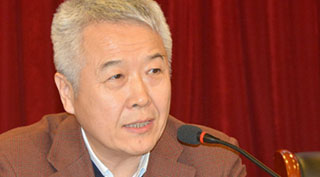
Zhang Jianshu 张建枢 | Beijing Tobacco Control Association
A veteran of Beijing’s health administration, Zhang drafted and oversees its smoking control plan. Optimistic about the implementation in Beijing, the city has mobilised over 10,000 volunteers to promote enforcement. Like the Advertising Law, he says, the Charity Law must ban tobacco industry sponsorship to avoid legal conflicts with Beijing’s plan. Allowing cigarette firms to donate to primary schools will, he warns, influence children’s views on smoking.
Inter-agency FCTC implementation coordination mechanism 烟草控制框架公约履约工作部际协调领导小组
Created in 2007, the eight-member inter-agency mechanism is in charge of fulfilling the tobacco control clause in the World Health Organisation Framework Convention on Tobacco Control (WHO FCTC). The inclusion of STMA, affiliated to the group leader MIIT, casts doubt on China’s commitment to tobacco control and cripples already lax tobacco control plans. The former Ministry of Health, merged with NHFPC since 2013, was the vice group leader who proposed to reimburse treatment to help quit smoking through medical insurance in 2012.
State Tobacco Monopoly Administration and China National Tobacco Corporation 国家烟草专卖局和中国烟草总公司
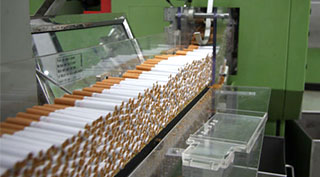
Despite having two names—State Tobacco Monopoly Administration (STMA) and China National Tobacco Corporation (CNTC)—it is a single agency. An entrenched interest group with 33 provincial subsidiaries, and countless municipal trading companies with an estimated 60 million employees, it monopolises tobacco production, sales and personnel management. Blocking any substantial smoking control measures, STMA/CNTC presents itself as the spokesperson for the 1.6 million peasants who grow tobacco and the industry that contributes 10 percent of China's overall taxation revenue.