
event
14 Jan 2015: State Council released the ‘Decision on government and service agency personnel pension system reform’. Government and service agency employees will now pay pension contributions at the same level as enterprise employees (employer 20 percent contribution goes into a pool; employee 8 percent into individual pension account). Further supplementary annuities (employers 8 percent; employees 4 percent) will likely be offered to government and service agency personnel.
signals
- government and agency employees are still favoured in the new model
- greater labour mobility between enterprises, government and service agencies under the same contribution schemes
- deeper issues still lack consensus: funding, national-level collection (eliminating regional inequalities), delayed retirement, individual accounts, post-retirement income levels
context
8 Jan 2014: State Council meeting raises enterprise employee pension benefits by ten percent for the tenth time in as many years 16 Mar 2014: ‘National new urbanisation plan (2014-20)’ released calling for reduced social insurance contributions
- high contribution rates can reduce firm efficiency, but there is little room for enterprise and individual contributions to drop even if the state increases its portion, says Hao Yansu 郝演苏 Central University of Finance and Economics.
15 May 2014: State Council released the ‘Regulations on service agency personnel management’. Only includes in-principle reforms to classifications, salaries, and pensions
- moves are cautious to avoid disrupting social service provision
- poor cooperation among responsible agencies including MoHRSS, MoF, NHFPC, SCOPSR
17-19 Nov 2014: 8,000 teachers strike in Heilongjiang, a pension reform pilot province, over unfair social security contributions (compared with non-pilot provinces) and poor salaries
19 Jan 2015: Hu Xiaoyi 胡晓义 MoHRSS vice minister announces government and service agency personnel will see monthly base salary increases and promises pension benefits for retirees will, for the most part, remain unchanged
- salary increases offset losses to net pay
outlook
- inequalities will remain
- only ten percent of enterprises have currently set up annuity schemes for staff, official MoHRSS data reveals
- future increases to enterprise employee pension benefits unlikely to put them on par with government and service agency personnel
- service agencies not fully funded under classification reform will lose out. Stumping up 20 percent per worker, they may offset expenses by raising service costs
- more focus on pension fund investment to address funding deficits
- infighting will continue between the MoF and MoHRSS over individual accounts
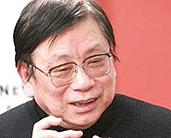
Tang Jun 唐钧 | CASS Social Policy Research Centre
Pension and welfare system expert Tang is a regular critic of delayed retirement and the housing provident fund. Urban-rural and public-private pension mergers are cosmetic, a universal basic+supplementary scheme should be offered to all citizens. Don't be fooled by the Decision, Tang warns. Officials are still privileged.
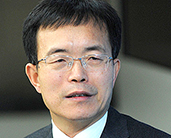
Chu Fuling 褚福灵 | China University of Finance and Economics
An economist and social security expert, Chu applauds the latest dual-track merger as a risk-sharing move. The state, employers, and individuals will now share responsibility. He argues for professional fund management procedures and diversifying investment. Options include special government bonds and infrastructure projects. He recommends staying clear of domestic financial markets.
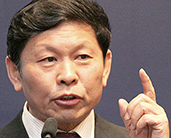
Song Xiaowu 宋晓梧 | China Society of Economic Reform
Labour economist Song campaigns for clarifying workers' right to strike and equal social security benefits for migrants. Standing against the MoF over Notional Defined Contribution accounts, Song argues instead for lowering individual account contributions to five percent and increasing pooled contributions up to 30-40 percent.