new rules on research fraud—how is this shifting policy?
- 'misconduct’ to be defined and integrity enforced
- database to record and track research dishonesty
- ‘essay mills’ and academic journals in the crosshairs
- standards set for ethics review
Recurring scandals keep a spotlight on research integrity issues in the PRC scitech community. Struggling to address misconduct over recent years, since early 2022 Beijing has been experimenting with raising the legal consequences. An amended Scientific and Technological Progress Law, effective January 2022, lowers the boom on research fraud and malpractice and commercial sourcing of academic publications. Enshrining fundamental ethics principles for research, the State Council’s March 2022 Opinions on appropriate oversight outline safeguards. Avoiding another fallout like the 2018 gene-edited baby scandal is top of mind.
enforcing honesty
New rules, jointly issued by 22 agencies on 14 Sep 2022, improve prospects for cleaning up the research sector. Dishonesty in research is now detailed as
- plagiarising or appropriating the research results of others
- fabricating procedures, falsifying results or trading data for experiments
- writing academic papers or proposals for others, or falsifying peer reviews
- winning research support via falsehood, bribery, etc.
- cheating to receive ethics approval
- claiming authorship without genuinely contributing to publication
- publishing research in multiple places and citing irrelevant literature
Practical guidance is provided for identifying and eliminating dishonesty, setting standard actions and obligations in
- case reporting and acceptance
- investigation
- handling measures
- appeal procedure
- guarantees and supervision
Depending on the severity of the misconduct, penalties range from warnings, public naming-and-shaming to funding freezes and cancellation or withholding of titles and degrees. Under the new rules, offenders will be labelled a subject of ‘serious research dishonesty’ in a case database, a scientists-only version of Beijing’s social credit system. This marks the first time rules on research integrity specify how the database will be used to penalise research misconduct.
down with ‘essay mills’ and problem journals
Academic publication, a major measure of research output, is riven globally with fraud, primarily plagiarism. This is taken to creative extremes in the PRC. ‘Essay mills’ churning out papers of dubious originality is a cottage industry, reports Xinhua, offering every type of academic writing from undergrad term papers to citable articles in peer-reviewed journals. Applying tried and true templates, the ghost writers (typically holding relevant professional qualifications) fabricate learned articles to order, and without delay. Reviewers at certain journals are on essay mill retainers, insiders reveal, ensuring the forgeries are published without a hitch.
Alert to this commerce, the latest rules identify as fraudulent ‘buying, selling or getting others to write research papers or grants’, clearly targeting the essay mills. At the same time, authorities have been paying attention to another group of enablers in this research fraud: the academic journals. Comments on assessment by the Ministry of Education (MoE) on 5 September 2022 highlight reinforcing regulation of journals and reforming their self-oversight. Specifically, the MoE pledges to
- crack down on publications leveraging personal loyalties, not research merit
- create early-warnings on usual suspect journals with
- poor academic reputation
- high publication fees for contributors
- abnormal distribution of paper sources
- suspiciously rapid rise in publication count
- blacklist journals that
- do not maintain academic quality
- put commercial interests first
- have led to undesirable impacts (as in the gene editing case)
ethics to the fore
The March 2022 State Council Guidelines on research oversight breaks with the previous hands-off approach. Demanding rigour in life sciences, medicine, AI and other leading-edge fields, institutions are placed on notice to set up ethics committees to ensure research on humans or animals follows ‘scientific, independent, just, and transparent’ principles. The research community must genuinely monitor and warn of ethics risks, updating criteria in step with emerging tech.
The new guidelines make fabricated ethics approvals subject to penalties. Fraud-busting committees are to be staffed with ethics experts when relevant.
While theoretically these measures might deter research dishonesty, in practice there are many factors in play. Taking shortcuts to move up the ranks is now recognised as a routine moral hazard. Beijing, on the other hand, excuses occasional scandals as a cost to pay for overall progress. So even with clearer red lines, the S&T culture will be difficult to change.
Scandals are far from unknown in the West. Their lesson overall is that criteria of scientific honesty can be paradoxical, or at least very tricky. This is the point of an article translated from the UK’s New Statesman, appearing on the highbrow web platform Aisixiang (‘Love Thought’) this month. Discussing a notorious hoax article accepted by the globally-published Social Text in 1996, it shows not only that a writer's intentions may evade normal ethical guide rails but that the publisher's interest may be equally hard to pin down. The red lines drawn in the PRC has much to navigate.
who is shifting policy?
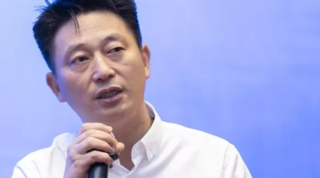
Feng Chujian 冯楚建 | Ministry of Science and Technology Department of Supervision and Scientific Integrity deputy director general
‘Zero tolerance’ of academic dishonesty is something MoST adheres to. Scitech researchers are encouraged to identify and correct their mistakes. The rules allow for light or no penalties for those able to cancel their paper submissions before issuance of a report, or major adverse impact. Handling such cases is, insists Feng, to educate and guide and not an end in itself. MoST will work with the Ministry of Education, the National Health Commission and the National Natural Science Foundation et al., normalising liaison and reporting on research dishonesty. MoST has so far published 21 investigative items involving 1,422 individuals on its website.
Former deputy director general of the Science and Technology Department, Tibet Autonomous Region, Feng holds a management degree from Jiangsu University.
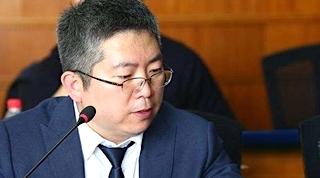
Zeng Yi 曾毅 | Tsinghua University Institute of AI International Governance chief scientist
Research ethics vary widely in maturity across scitech disciplines. AI-related R&D activities are, for example, yet to enact ethics reviews, falling behind current opinion on research oversight. All levels of R&D agencies and supervising departments should form ethics review committees on AI in view of its high-risk areas. Life sciences and medicine, on the other hand, have long since begun developing ethics criteria. These differences between fields and their governance deserve recognition. There is a case, for example for waiving fully-featured ethics review for low-risk AI R&D.
Fellow in the Institute of Automation, Chinese Academy of Sciences, Zeng has been vocal for decades on AI ethics and governance, bridging neuroscience and AI. He has worked on high-profile AI ethical issues, including the Ministry of Science and Technology’s ‘Beijing Principles’. He took part in a UNESCO international expert group to draft AI ethics guidelines.