
A page one People’s Daily interview with an ‘authoritative person’ on 9 May set the tone for the month, reaffirming the decisive role of markets, and reiterating the priority of supply-side structural reform. Reassuring those fearing economic reform had gone off the rails, talk of an L-shaped growth curve set out to modify expectations of a rapid recovery. Instead, it led to widespread speculation of a growing divide at the top. Some read it as an attack on Li Keqiang 李克强, with his State Council’s publishing a list of its Q1 achievements as a defence. But it is just as likely that the interview was designed to restore the Party’s reform credentials in the wake of Gao Xiqing’s 高西庆 revelations in New York in late April. The tealeaf reading is set to continue.
Despite political rumblings, policy flows thick and fast. A shadow banking clampdown saw regulated investment markets proffered as safer alternatives. State Council released Guiding Opinions, seeking to kick-start general aviation, along with keystone Opinions on building an ecological protection compensation mechanism. The Central Propaganda Department launched ‘golden shares’, giving video websites’ SOE board members veto powers over editorial and personnel decisions. Details of the long-touted coal and steel industry support fund were announced. Early May saw VAT rollout across four remaining industries; long-awaited NEEQ stratification measures came at the end.
All was not quiet on the geopolitical front. Election of President Rodrigo Duterte in the Philippines signaled more regional pushback, as Vietnam and Japan welcomed Obama. Burgeoning international M&As aroused calls for reciprocity in trade; Zhang Dejiang’s 张德江 offer of Belt and Road advantages to Hong Kong generated little warmth; the program itself racked up more doubts and rethinks. International Capacity Cooperation, on the other hand, edged ahead, despite repeated questions over the feasibility of the Hinkley Point C nuclear power plant in the UK.
featured analysis

paying for greying: re-evaluating China’s pension system
Ageing pressure has increased the urgency of pension reform. Growing urgency has sparked fundamental debates among leading scholars and policymakers about how to make the pension system fairer, stronger and more sustainable. full post open access →
policy movers
can't put a name to the face? go to page footer
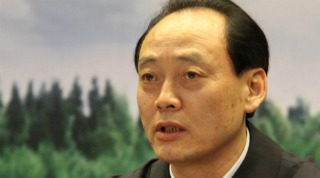
1. I am in charge of planning, planting, seed management and party work at MoA, and lead agricultural restructuring and supply-side reform. Policies introduced under my management include reclassifying potato as a staple. I became vice minister in 2012, having served as Nanchang party secretary in my native Jiangxi Province under Meng Jianzhu 孟建柱, and briefly as vice-governor of Anhui. I wrote my PhD thesis on land management at Nanjing Agriculture University while running the Department of Agriculture in Jiangxi in 2000.
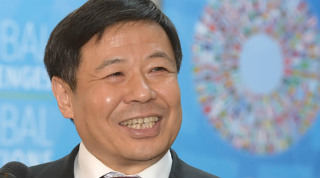
2. After serving as vice minister at MoF for six years, I was also appointed to the Central Leading Group for Financial and Economic Affairs. Led by Xi Jinping and Li Keqiang 李克强, the group is second only to Central Leading Group for Comprehensively Deepening Reforms in importance. My group is in charge of organising the annual central economic work conference, where were set policy tones for the coming year. My portfolio at MoF covers tariffs, the Sino-US economic and strategic dialogue, and economic and financial negotiations at the G20 Summit. I challenged the EU standard of three percent debt-to-GDP ratio and 60 percent government debt-to-assets ratio in November 2015, signaling that my ministry welcomes bigger deficits.
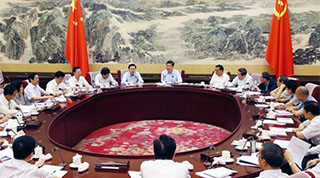
3. Founded in March 1980 to coordinate Deng Xiaoping’s 邓小平 reform and opening policy, we were abolished in 1989 but reinstalled in 1992 to serve as a political platform to push the economic agendas of PMs Zhu Rongji 朱镕基 and Wen Jiabao 温家宝. Since Xi took over leadership, however, we have become a subcommittee of the Central Leading Group for Comprehensively Deepening Reform. No longer supporting and advising the State Council, by law the supreme decision-maker on economic and other issues of public welfare, we now instead promote Xi’s economic agenda over Li Keqiang's. State media have begun talking up the economic wisdom of Liu He 刘鹤, my general office chief of staff, implying we are better positioned and better equipped to make tough decisions and enforce policies.
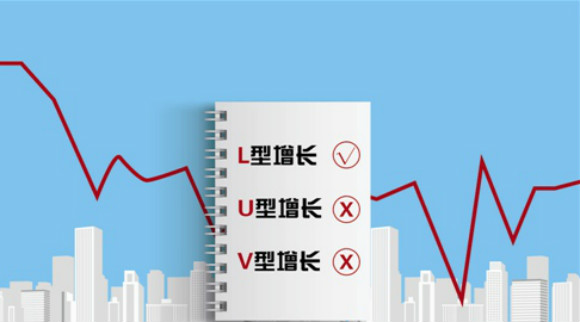 an ‘authoritative person’ forecast steady L-shaped growth for the next two years in a People’s Daily interview
finance
loose credit blowing a housing bubble
Looser credit to prop up growth has spurred unregulated deposit lending, putting further pressure on housing markets in tier-1 cities. Regulators will seek a fragile balance between expanding credit, regulating financial innovation, and tightening housing policy. full signal client access →
mid may position:
- authoritative person: low growth to continue
end may position:
- NEEQ stratification: building in innovation
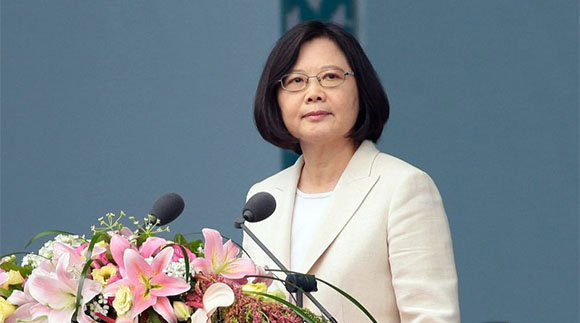 Taiwan’s incoming president Tsai Ing-wen 蔡英文 drew threatening columns from Global Times
geopolitics
mid may position:
- market status: European Parliament votes ‘no’
end may position:
- belt and road: criticism mounts
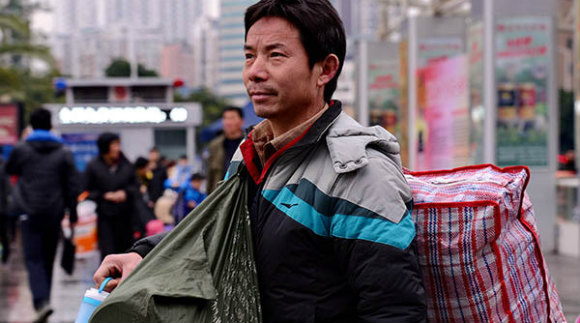 incentivising local government with cash: urbanisation's next step
society
linking people, land and money for deep urbanisation
A new central strategy ‘linking people, land and money’ better incentivises local governments to realise ‘deep urbanisation’: offering full urban entitlements to new residents, while limiting urban sprawl and soaking up housing oversupply. full signal client access →
tracking trust a one-way street
Publicly accessible social credit platforms compile information on firms and individuals and rate their trustworthiness. Designed to increase transparency and curb dishonest behaviour, they address the so-called social trust deficit. full signal client access →
mid may position:
- third pension pillar: investment opportunities for public funds
end may position:
- moderate prosperity: expanding the ‘middle income group’
 the fallow and rotation system plan is next on the agricultural reform agenda
agriculture
mid may position:
- agriculture restructuring: change is coming
end may position:
- restructuring crops: increasing influence
 State Grid chairman Liu Zhenya 刘振亚 is to step down after 13 years in charge
trade and industry
mid may position:
- change in power: powering change
end may position:
- general aviation: the next infrastructure frontier
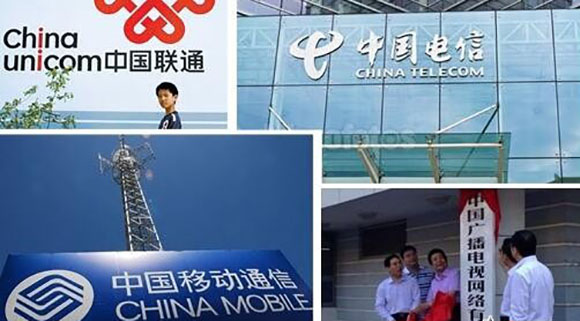 a SAPPRFT subsidiary has been granted a licence to try to break the triopoly of telecom’s Big Three
governance
mid may position:
- foreign NGOs: welcome, sort of
end may position:
- golden shares: media controls increase
policy ticker highlights
precision medicine cloud launched
Economic Information Daily | 27 May
To promote the application of genomic information and precision medicine’s big data, a cloud network was launched by WuXi AppTec, WuXi NextCODE and Huawei in the Shanghai FTZ on 24 May 2016.
rushing into many Belt and Road projects a recipe for disaster
Phoenix International Think Tank | 24 May
Top-level design of Belt and Road has been completed, but difficulties and challenges will emerge in implementation, argues Xue Li 薛力 CASS, and ‘special methods for special cases’ will be needed. These, however, must be principled, says Xue, and have a bottom line.
the importance of talking about the ‘middle-income group’
China Youth Daily | 20 May
The Party has long talked about expanding the number of middle-income wage earners, says Li Qiang 李强 Tsinghua University.
media required to accept SOE ‘strategic shareholding’
Tencent | 20 May
The Central Propaganda Department directed traditional media outlets to introduce a ‘golden share’ system, giving SOE shareholders editorial control, on 16 April 2016, as per the Third Plenum Resolution.
eco-protection compensation mechanism plan
State Council | 13 May
State Council issued ‘Opinions on building ecological protection compensation mechanism’.
VAT complicates tax collection
Hexun | 10 May
VAT rollout complicates tax collection in two ways, says Li Xuhong 李旭红 Beijing National Accounting Institute fiscal policy director, elaborating that cross-district enterprises now need to prepay taxes to provinces where their real estate is, and later pay the remaining amount to provinces where they operate.
selected texts of the month (clients only)
finance
- monetary policy should prioritise economic growth over the housing market
- housing investment creates rather than combats inflation
- we should not compromise deleveraging for the sake of reducing capacity
society
- high labour costs not to blame for economic woes
- major imbalances in the Labour Contract Law impede economic activity
- revisions must take worker and business viewpoints into account
- social credit building should start with public offices and officials
- news media must strengthen self-discipline and build social credit
- an efficient way to prevent cycles of abuse and crackdown
lexicon

First piloted as ‘linking people and land’, and later expanded to include ‘money’. ‘Linking people and land’ has been piloted extensively as a strategy to encourage urbanisation. When a rural resident moves to a city, the amount of construction land there is typically allowed to increase by a given amount. In the 2016 government work report, this expanded to include central financial subsidies: the central state will pay localities for each newly urbanised resident given access to full social services (‘deep urbanisation’). While the mechanisms are still unclear, ‘linking people, land and money’ is now key to incentivising local governments to achieve central urbanisation goals
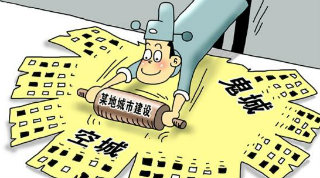
Rezoning land into urban areas generates revenue for local governments. But, as the cartoon shows, this strategy expands a city’s area in a fashion similar to ‘spreading a pancake’, creating wasteful urban sprawl and even ghost cities (鬼城 guǐchéng). Hoping to make urban environments and local budgets more sustainable, top-level agencies and urbanisation policies seek to keep land growth in line with population increases
in the media
Chinese Billionaires Largely Stay Away From Charity
Voice of America | 30 May
China recently came out with new laws that imposed severe restrictions on foreign non-government organizations, and a set of new regulations for charity organizations. China wants to discourage the growth of an independent civil society and divert funds and energies to certain chosen fields, said Josh Freedman, research manager at consulting firm China Policy. "The government is trying to redefine charity. It is welcoming donations in charities that support its own goals — like poverty eradication, disaster relief and environmental protection; but, it wants to curb NGOs that encourage labor activism or support political groups," Freedman said.
Cultural Revolution: Anniversary China wants to forget
Al Jazeera | 16 May
"The Cultural Revolution gave the word revolution a bad name. Yet that was what the party's claim to authority wrested on," David Kelly, director of research at the China Policy think-tank in Beijing, told Al Jazeera. "Now it has been replaced by the word reform. In the past you had to show that you were part of the revolution that was going transform China. Now the fight is over whether you are inside or outside reform.
Whither China’s Economy? Parsing a Twofer From the People’s Daily
The Wall Street Journal | 11 May
“You’re seeing more open contention,” said David Kelly, research director at China Policy, a Beijing-based consultancy. “There’s a realization of the risk of stimulus — that they’re hitting the accelerator and the brakes at the same time and the car’s wobbling – while there’s also a feeling that as long as you don’t go crazy you can muddle on.”
China's bold gambit to cement trade with Europe--along the ancient Silk Road
The Australian | 1 May
David Kelly, director of research at the Beijing-based consultancy China Policy, said the envisioned projects of One Belt, One Road are too big and would take too much time to provide any sudden economic benefits for China.
quiz answers:
1. Zhu Guangyao 朱光耀 | MoF vice minister and Central Leading Group for Financial and Economic Affairs vice director
2. Yu Xinrong 余欣荣 | MoA vice minister
3. 中央财经领导小组 Central Leading Group for Financial and Economic Affairs