top financial meeting stresses demographic threat—how is this shifting policy?
- human capital to drive growth
- education a strategic priority
- pro-birth incentives to step up
Early May's CFEAC (Central Financial and Economic Affairs Commission) meeting, the first since the October 2022 Party Congress, put the PRC's human capital needs centre stage.
Chinese-style modernisation hinges on a 'high-quality' population, Xi told the meeting on 5 May 2023. Domestic commentators note his departure from a single-minded focus on population size to accepting that it is human capital that drives most growth.
diminishing dividends
Official data recorded a shrinking PRC population for the first time in six decades last year. The data shows that the working-age population, which peaked at 940 million around 2011, has dropped by over 60 million in the past decade.
The nation has exhausted its demographic dividend. A declining, aging workforce and a growing cohort of elderly will make labour-intensive industries hard to sustain, not to mention exports and investment-driven expansion, says Wang Jingying 王金营 Hebei University.
The impact of population changes will be felt most on the demand side, cautions economist Cai Fang 蔡昉. Older people may consume less, given inadequate social security and the burden of supporting the younger generation. Working people will likely spend less, too, as they face mounting pressures to contribute to pay-as-you-go pensions and save for retirement.
boosting human capital
With fewer workers available, they need upskilling to sustain productivity. Boosting human capital is the key to 'high-quality' development, confirms Shi Yi 史毅 China Population Development Research Centre. Building an education 'powerhouse' will take priority to shore up a skilled and capable workforce, as will deepening reform and innovation in healthcare, concluded the 5 May direction-setting meeting.
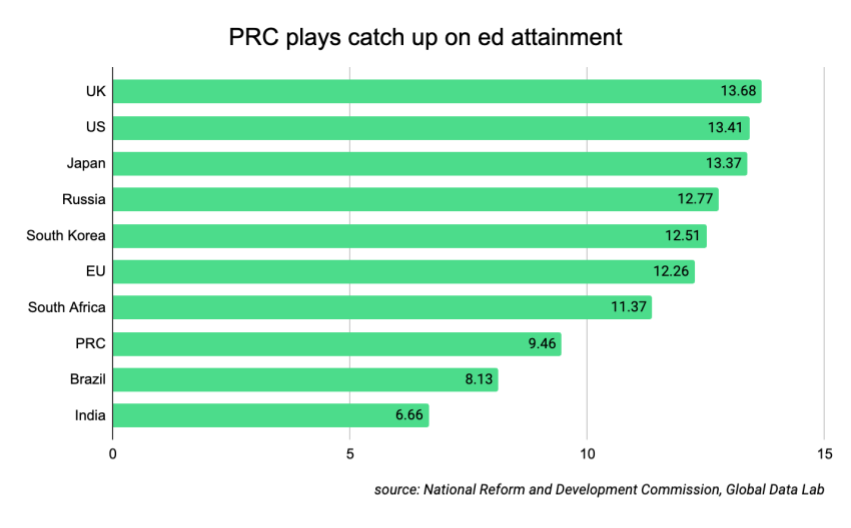
Regarding the years a student spends at school, a widely-used measure of human capital, the PRC is in an unenviable position. The 2020 census reports adults aged 25 and older averaging 9.46 years of schooling, scandalously adrift from the 12-plus years in advanced economies. Cai Fang proposes extending the current 9-years of compulsory ed to preschool and high school, a possible solution as a declining school-age population may alleviate some funding pressures.
Older workers, with even lower educational levels, will struggle to prolong their careers and maintain earnings, Cai adds. In addition to integrating early childhood education into basic public services, Shi Yi suggests helping retirees reenter the workforce or work flexibly: a lifelong perspective is essential to improving human capital.
pro-birth loopholes
An ‘appropriate’ birth rate is essential to an adequate workforce, the CFEAC meeting agreed. The PRC's export-oriented manufacturing model was premised on a large population, explains Wang Jinying. A population drop will severely imbalance the industrial system, says Wang, posing an obstacle to economic modernisation.
Beijing pledges to make childbirth, parenting and education less burdensome. The announcement of the three-child policy in 2021 prefaced a slew of pro-birth measures, from providing cash allowances to expanding affordable preschool ed. These have had limited impact, with policy needing to
- promote gender equality in family planning
- reduce the financial burden on enterprises of maternity leave
- expand maternity insurance coverage
- include assisted reproductive services in medical insurance
- address childrearing challenges faced by migrant families
neglected migrants
The ongoing demographic transition features massive internal migration, notes He Dan 贺丹 China Population and Development Research Centre. The CFEAC meeting urged coordinating population and regional development to promote urbanisation.
Official data show that nearly 300 million worked away from home in 2022, although more are choosing to work in their own provinces rather than move far away. Registered as rural residents, urban migrant workers are denied access to basic services in the cities they work in.
Increasing such services for migrants would unleash consumption, argues economist Liu Shijin 刘世锦. In 2020, 71 million children migrated with their families, surpassing the number left behind in the villages (67 million), indicating a growing trend of families deciding not to live apart. This shift highlights the increasing need for migrant children to receive schooling in cities. Despite this, among the local economic recovery packages announced in early 2023, there is a notable absence of any funding commitment to tackle housing, healthcare, education, and social security issues faced by this marginalised group, Liu laments.
The point at which the population began to shrink came earlier than expected, leaving limited time for policy catch-up. The mood in the PRC is bleak, as turning around the falling birthrate appears hopeless and attendant woes become more apparent. Some are less pessimistic, insisting that a gloomy economic future is not preordained. They urge seizing the window of opportunity to enhance labour force productivity. As Cai Fang, a top thinker on the topic, says above, the impact will be felt most on the demand side. This is not promising for the much-touted ‘ultra-large domestic market’ that is meant to shield the PRC from export dependence.
population people
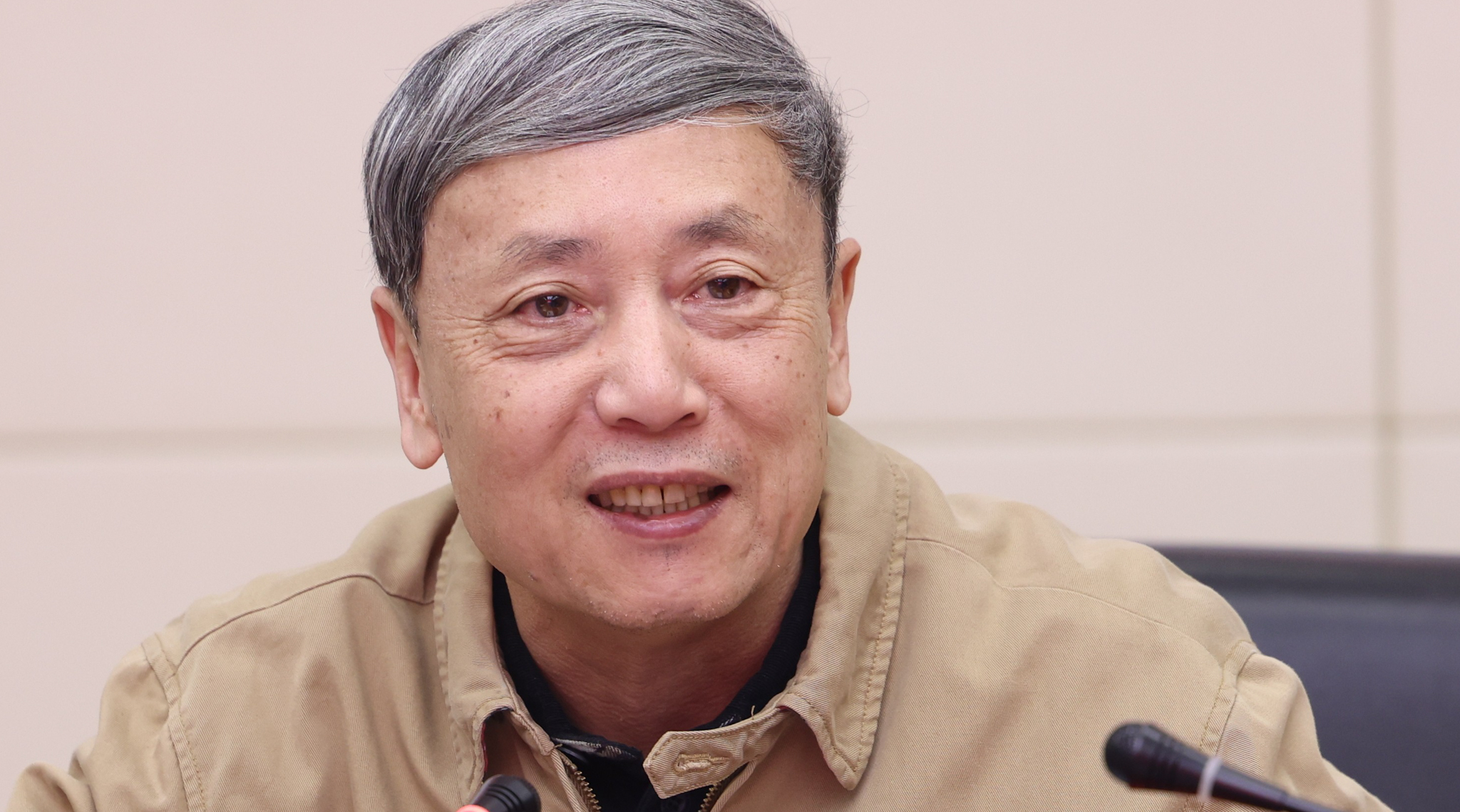
Cai Fang 蔡昉 | Chinese Academy of Social Sciences chief economist
Since the early 2000s, Cai has forecast that the PRC's working-age population would shrink as a proportion of the whole (a local outcome of the 'Lewis inflection'). Yet, he argues, the GDP growth rate might hold at some 4.1 percent—given productivity grows at current rates. Should efficiencies gear up, a rate closer to 5 is attainable, implying that reform should
- urbanise, drawing surplus rural labour towards cities
- marketise, setting a business environment where productive enterprise thrives
- balance, creating industry sectors that need high-level skills
Low- and middle-income earners' spending power, notes Cai, is dampened by financial uncertainty. Tapping it requires measures that close income disparities, meeting basic service needs of the elderly, migrant workers, and the rural poor.
Renowned demographer Cai took a PhD in economics from the Graduate School of Chinese Academy of Social Sciences (CASS) in 1989. Rising to CASS vice president, he became active on the PBoC Monetary Policy Committee in 2021, publishing copiously on labour economics, income distribution, and economic reform.
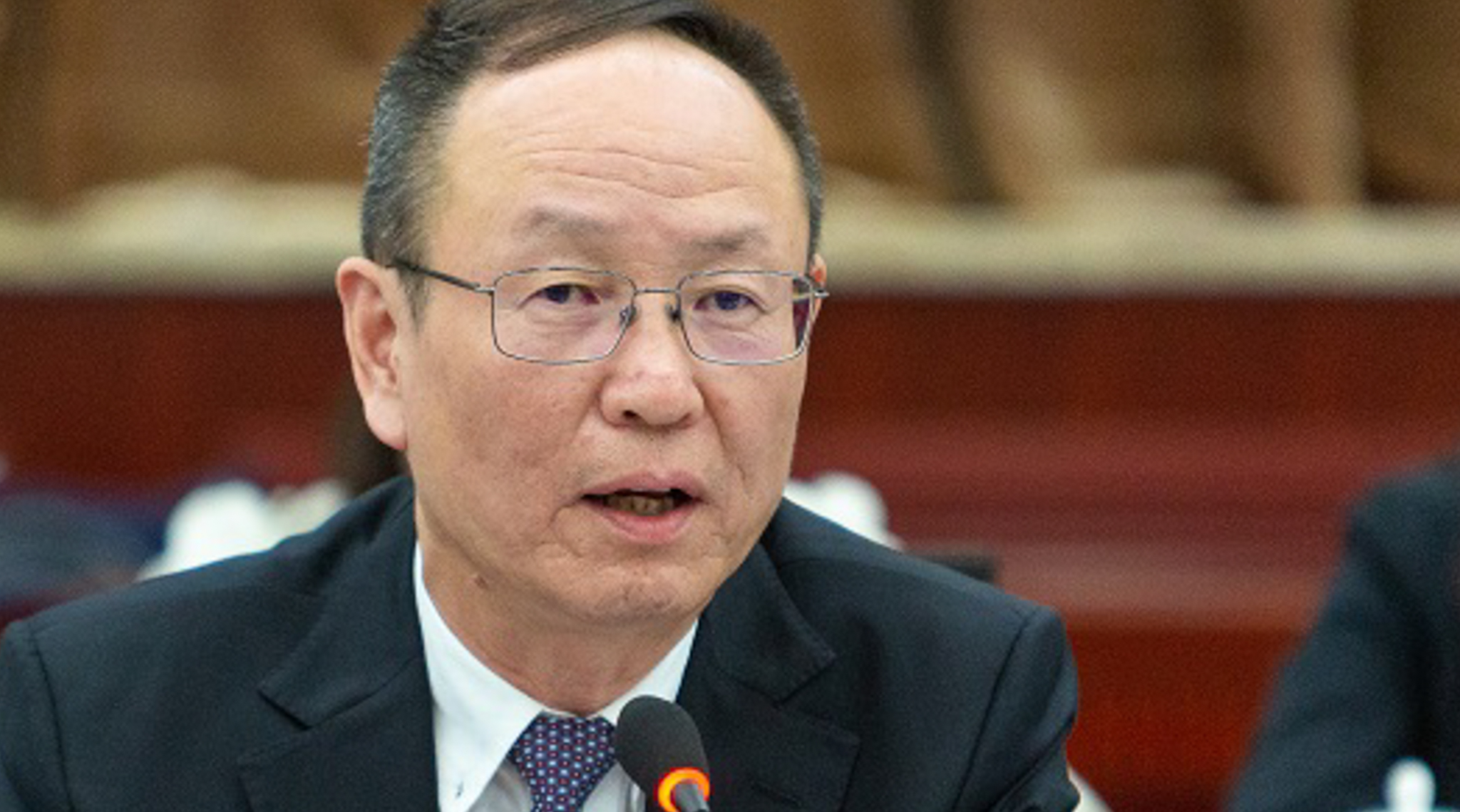
Wang Yiming 王一鸣 | China Centre for International Economic Exchanges vice chair
The PRC’s steep population decline, argues Wang, holds growth potential; the working-age cohort, despite shrinking by 2050 from 900 milllion to 600-700 million, will still outnumber those of advanced economies. Up to 2035, the majority will be between 60 and 69, a useful human resource with experience and expertise. Their retirement can and should be delayed, argues Wang. Market potential exists as well for products and services for the elderly. Tourism, entertainment, healthcare, and smart homes are set to expand. A new round of tech revolution is reshaping the economies, observes Wang: promising productivity enhancements that offset labour shortages.
Taking a PhD in 1989 from Nankai University, Wang is versed in macroeconomics and related economic and social development, tech, industrial development and regional economic policy. He has since worked at the National Development and Reform Commission (1998-2015) and the Development Research Centre of the State Council (2015-20). A member of the PBoC Monetary Policy Committee since 2021, Wang serves as an advisor to several local governments.

He Dan 贺丹 | China Population and Development Research Centre director
Grassroots misreading of central policy is, argues He Dan, a factor in the failure to support one-child households. Losing sight of the goal—making childbirth worthwhile—local incentives fragment, she argues, perversely favouring two- to three-child families. Migrants without local residence hukou are excluded from benefits, reinforcing dual-track welfare. Open maternity insurance benefits to university students, she urges, harmonising education with family incentives; help young student couples cope with career disruptions imposed by marriage and child-rearing.
Active in the journal China Population and Development Studies, He Dan is a veteran of domestic and international agency projects, not least the National Health Commission and WHO, frequently helping draft central directives.