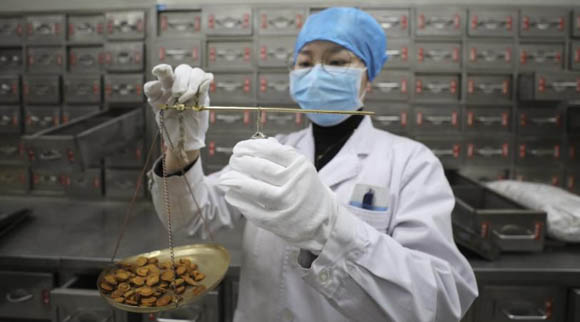
COVID-19 throws a domestic and a global spotlight on traditional Chinese medicine
China dispatched a COVID-19 medical aid team to Italy on 17 March. It carried TCM (traditional Chinese medicine) granules for 10,000 people, to prevent and treat mild cases. Cow-bezoar bolus (gallstones and other organic matter produced by cows) was also taken to ‘resurrect’ severe cases, reported Global Times.
The Party has cast TCM as the custodian of cultural and medical knowledge, intrinsic to its ‘China solution’. Together with Confucian values and dynastic governance, this underpins the rejuvenation of the nation under Xi Jinping.
massive policy support
TCM has been promoted more aggressively than ever since the outbreak in Wuhan. With pharmaceuticals in ever shorter supply, 85 percent of all COVID-19 patients in China have been treated with various TCM remedies. Ratios of recovered and recovering patients are correlated with TCM treatments, provinces reporting their treatments and their success rates. None have been pronounced failures.
This state-led advocacy builds on massive policy support for TCM in recent years. It features in the Healthy China 2030 plan; an eight-year program to build production centres for TCM materials is underway; a three-year poverty alleviation program urging farmers to plant TCM herbs was taken up so strongly that 2019 prices for the common herb baizhu (Atractylodes macrocephala) fell below 20 percent of 2007 levels. Revisions to the Drug Administration Law and the release of related ‘Opinions on promoting innovation and heritage of TCM’ in 2019 were intended, in part, to tighten regulation and ensure TCM materials will be safer and more effective, paving the way for including TCM on the national pharmaceutical list and for it becoming an integral part of the public healthcare system.
These measures were catalysed by a 2017 State Drug Administration report. 70 percent of pharmaceutical violations, it showed, were committed by TCM producers, distributors and importers. Given the industry’s status as a cultural flagship, the authorities went into damage control. Cleaning up the sector entails disarming enterprise interests, and breaking deep silences around its problems.
Indiscriminately promoting TCM to the frontlines of the COVID-19 ‘war’ puts these regulatory efforts at risk.
Dispatching TCM to Italy accords with Beijing’s determination to see it gain global legitimacy (and become a growth industry: Beijing plans to channel medical tourism from Belt and Road countries to TCM hospitals in western China).
domestic controversy
The COVID-19 outbreak, implicating exotic animals as sources, lays many traps for the TCM brand. Domestic controversy is not going away. Cherished by many, TCM is seen, by others, as risky and cruel in its use of wild animals (to say nothing of the decimation of some species across China, Southeast Asia and Africa). Official promotion of unproven treatments is seen as irresponsible. Arbitrary promotion of TCM to treat COVID-19 in February, when there was no evidence base for them, angered the public. Some TCM experts within China concurred.
In the midst of COVID-19, the National People’s Congress sought to deflect these criticisms, announcing a ban on wildlife trading and consumption. Directly targeting the assumed source of the outbreak, doubt was thrown on TCM as a whole. With the Wildlife Protection Law now also on the reform agenda debates on farming exotic animals and exploiting wildlife will unfold in the months to come.
where’s the evidence?
New legislation will disrupt the industry. But a radical makeover is also unavoidable if TCM is to break through to global acceptance. ‘SARS: Clinical Trials on Treatment Using a Combination of Traditional Chinese Medicine and Western Medicine’, a 2004 WHO publication, lent support. The WHO’s decision to include a TCM chapter in 2019’s International Classification of Diseases (ICD-11) was gratifying to the Party. Yet it also drew protests from non-Chinese doctors. In the same month, eight TCM universities were removed from the World Directory of Medical Schools.
A sticking point for acceptance of TCM is its evidence base, a barrier to further integrating it with Western medicine. Renowned for being ‘empirical’, with extensive centuries-old documentation of treatments, TCM fails to measure up to contemporary standards of double blind trials, statistical analysis, etc., and above all the priority of disproving rather than confirming empirical data. A welter of papers by leading TCM practitioners in reputable international journals aims to bolster its evidence base. Clinical trials are needed, they recognise; absent universally accepted results, community trust will always be qualified. On 12 February, the public backlash against exclusive TCM treatment of COVID-19 patients was recognised when NHC and SATCM announced TCM and Western medical science would be integrated and complementary.
towards universal rigour
Finding a way to modernise the TCM industry may help its image, but framing it as a national emblem sits uncomfortably with China’s aspiration for global recognition of its scientific credentials. If China is to refute the growing sense that TCM has been arbitrarily hitched to the pandemic wagon, it must impose rigour on TCM’s knowledge system; nationally-branded science is a self-defeating tactic.
what are the experts saying?
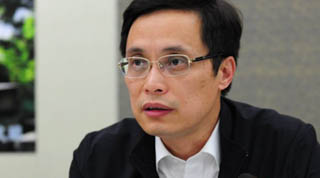
Huang Luqi 黄璐琦 | Chinese Academy of Traditional Chinese Medicine president
After a career at the Chinese Academy of Traditional Chinese Medicine, Huang became president in December 2018. During COVID-19, he set up the first TCM medical team on 24 Jan 2020, joining Jinyintan Hospital, the first epidemic-designated hospital in Wuhan. TCM is most useful in prevention and rehabilitation, he argues, and should be used as a complement to western medicine. Clinical effectiveness is, he says, ‘the gold standard’.
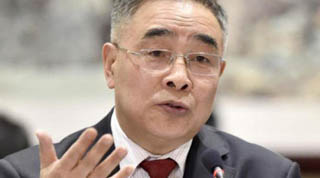
Zhang Boli 张伯礼 | Tianjin University of Traditional Chinese Medicine president
Huang Luqi’s predecessor as president of the Chinese Academy of Traditional Chinese Medicine, Zhang flew to Wuhan on 27 Jan 2020 for the Central Guiding Group on Disease Prevention and Control. TCM helps prevent serious symptoms in mild COVID-19 patients, he states. It mostly plays second fiddle treating serious cases. More integration between TCM and western medicine is called for, he says, with more acceptance of TCM’s effectiveness.
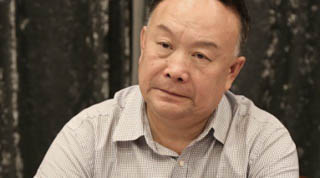
Duan Jin’ao 段金廒 | Nanjing University of TCM former vice president
Scaling up production of TCM raw materials, and recycling TCM resources is the focus of Duan’s work, for which he won a prize in the 2019 National Science and Technology Awards. No TCM prescription is a panacea, he stresses: TCM treatment must be personalised. Formal medical advice is thus crucial. TCM and western medicine should, he agrees, be jointly used, with more resources allocated to TCM.