
roundup from our portfolios
With major fires to fight on the tech-trade, Hong Kong and human rights fronts, official media took comfort from President Xi’s appearances overseas proclaiming China’s wisdom and sincerity with his calling cards: BRI, BRICS and ‘community with a shared future for mankind’. He undertook seven overseas visits and hosted four major international events in 2019. Visits to India, Nepal, Greece and Brazil closed the sequence as Zhongnanhai gears up for major domestic conclaves in December.
Discussion in Party media early in the month was dominated by the outcomes of the Fourth Plenum. It sent a strong message: the Party brings modern governance to China with little need of foreign advice or values. What modern governance’ entails, and how to ensure its quality, was elaborated, along with topics such as decentralisation, grassroots participation, data, cadre supervision and ideology.
Blueprints for the future of healthcare reform were rolled out this month. Measures and timelines were set for services, insurance and pharmaceuticals reforms. A mid- to long-term plan addresses a rapidly aging population, pledging healthcare and social benefits for the elderly. Also in health news, results of the largest ever Reimbursable Drug List negotiation were announced.
Efforts to address ecological damage due to unchecked urban growth and over-intense agriculture were bolstered by State Council directives prioritising environmental protection in spatial planning. Delineation of ecological redlines, permanent farmland protection and urban development boundaries are to be completed nationally by 2020.
Also on the agenda was SOE reform, with Vice Premier Liu He promoting a three-year SOE reform action plan, aiming to make the state-owned economy more ‘competitive, influential, innovative, and resilient’.
Policy moves on food regulation covering certification, labelling and food safety supervision were to the fore. Tighter and more detailed rules are introduced, echoing a CPC and State Council directive in May arming food safety (not for the first time) with draconian standards, regulations, accountability and penalties. In other food news, China’s first lab-grown meat was cultured at Nanjing University’s Meat Research Centre. Media reviews were mixed.
Made in China 2025 has marched on. MIIT (Ministry of Industry and Information Technology) and NDRC (National Development and Reform Commission) issued measures to achieve ‘high-quality’ industry, while MoF set up a C¥150 bn manufacturing transition fund with state-owned and private contributors. Mobile technology development is continuing, telcos launched commercial 5G services on 1 November; MIIT released an action plan on 5G+industrial internet.
Stagflation is still debated, with consumer price indices rising while producer prices continued to decline. An inflation crisis from pork price spikes due to African swine fever spilling over cannot be ruled out. The central bank offered some stimulus, cutting the medium-term lending facility, loan prime and regular market operation rates. Given rampant inflation, experts see the tweaks as the beginning of an interest rate downcycle.
Breakthroughs were made in the world’s biggest trade pact, RCEP (Regional Comprehensive Economic Partnership), with members agreeing to sign off next year. Chinese observers are sanguine about India joining. In Seoul, China-Japan-South Korea trilateral FTA (Free Trade Agreement) talks took place, with the three aiming to achieve an ‘RCEP plus’ FTA, further boosting trade.
november policy movers
policy professionals in and out of the establishment
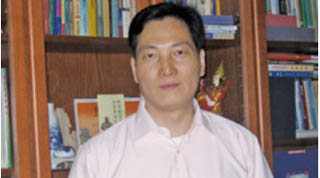
Mu Guangzong 穆光宗 | Peking University Institute of Population Studies professor
Mu works on population, gerontology and sustainable development. Highly critical of the one-child policy, he holds it responsible for current population issues including the low fertility rate and gender imbalance. He thinks the unconditional two-child policy is ineffective; its failure confirms his view that a low fertility trap is imminent. Fines and restrictions on fertility should be removed, and a ‘birth culture rebuilt’: Mu believes the current crisis is not only a mathematical, but also a social issue.
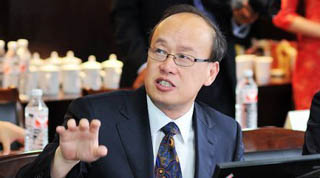
Zhou Guanghong 周光宏 | Nanjing Agricultural University professor
An internationally-recognised meat scientist, Zhou was elected Fellow of the Institute of Food Technologists and the International Academy of Food Science and Technology. He rejects the ‘white’ and ‘red’ meat distinction, blaming it for causing chaos in evaluating safety and nutrition. Dedicated to chilled meat research, his team has mastered key technologies for controlling the quality of chilled meat, providing technological solutions to food processing companies. The first man-made meat cultured by his team has garnered attention and is viewed as a ‘landmark’ in the field.

Gan Lin 甘霖 | State Administration of Market Regulation vice director
Top anti-monopoly advisor, Gan served as vice director of former State Administration for Industry and Commerce 2011-18, before its merger into SAMR during the institutional reshuffle of March 2018. Leading anti-monopoly, anti-unfair competition and price supervision work in SAMR, she actively advances competition policy and regulation. China's fair competition review system will, claims Gan, ensure that no discriminatory price and subsidy policies will be imposed on imported products and services. Recently vocal on food safety, she calls for ‘precise’ supervision based on classification and international cooperation on cross-border risks.
policy ticker highlights
gems from our feed of policy releases and domestic debate
geopolitics
Xi’s ‘major power diplomacy’ displays sincerity to world
Yicai | 18 November
context: On 10-14 November, Xi Jinping visited Greece and attended the BRICS summit in Brazil. In 2019, Xi made seven overseas visits and hosted four major international events. A commentary in People’s Daily Overseas Edition, looks back at Xi’s diplomatic effort this year.
Xi’s diplomatic effort in 2010, claims commentator Yan Yu 严瑜
- showcased New China’s great achievements and ‘big power diplomacy’ with Chinese characteristics
- exhibited a great power’s sense of responsibility
- shared China’s ideas and wisdom
- raised China’s appeal and influence
‘community with a shared future for mankind’
- China’s vision for the world
- a way for mankind to treat each other
- Xi has elaborated this concept at numerous occasions
- ‘China solution’ delineates a hopeful future for the world
Belt and Road Initiative (BRI)
- a platform China built for the world
- a way for human development
- fruits of cooperation are harvested wherever Xi goes
- Piraeus port in Greece is a successful example
- Italy became the first G7 country to sign up
- clearer BRI blueprint in Kyrgyzstan and Tajikistan
- Nepal actively taking part to build a cross-Himalaya connectivity network
Opening wider to the world
- a pledge that shows China’s sincerity (chengyi 诚意) to the world
- a way for mankind to share with each other
- at the China International Import Expo, Xi vowed to provide other countries with more market, investment and growth opportunities
- at Osaka G20 summit, Xi said China would take major measures to open wider to the world and work towards high-quality development
At a time when the world is undergoing profound changes unseen in a century, Xi has
- absorbed wisdom from Oriental civilisation and learned from history
- thought about mankind’s future in an in-depth manner
- summarised China’s successful experience
- come up with a China solution consistent with the expectations of the international community and the interests of all parties
- to guide global governance
governance
Zhejiang official hails ‘Maple Bridge Experience’ as governance model
People's Daily | 25 November
context: Mention of the ‘Maple Bridge Experience’ in the Party media has waxed and waned in recent months, especially as the conversation about the nature of local governance has focused on the community and street level. Here is a further redefinition of the concept.
Zhejiang’s Zhuji Party Secretary Xu Liangping 徐良平 hails the ‘Fengqiao (Maple Bridge) Experience’ (枫桥经验) as the banner of national grassroots governance, stating it has been continually practiced and updated in Zhuji for 56 years, earning the city fame as its birthplace.
Social governance is an important aspect of national governance. For Zhuji, it is a matter of power and pressure. Especially in the Internet era, Xu states, the demand for innovation of mass work mechanisms is higher, especially given the airing of contradictions and opinions online. Accordingly, Zhuji authorities
- moved city mediation offices to the Internet
- connected online and offline efforts
- enabled online case-filing and video mediation
- moved conflict resolution from ‘door-to-door’ to ‘online’
- launched an online broadcast platform for dispute prevention
The focus of governance is at the grassroots level, and on services, Zhu says. In order to solve the problem of inconvenient handling of affairs, Zhuji authorities have promoted one ID card and ended redundant business procedures. Grassroots governance is a tricky task, and the satisfaction of the masses is a touchstone. Only by more emphasis on the concept of ‘governance for the people’ and refocus implementation on ‘service is governance’, can achievements in providing better services yield results for governance.
We should not only make good use of social forces to broaden ideas of governance, but also make good use of market methods to explore new ways of governance. In recent years, Xu notes, Zhuji has pushed the focus of social governance and services down to the grassroots, addressing such problems as a large immigrant population and dangerous housing.
finance
monetary policy should be structurally oriented
Jiemian, 21st Century Business Herald, Securities Daily | 13 November
context: Monetary policy-making is a difficult task in H2 2019. Inflationary pressures are mounting, while external uncertainties continue to threaten stability. The latest economic work symposium sends strong signals to policymakers about the importance of policy stability.
On 12 Nov 2019, Premier Li Keqiang presided over the Economic Situation Experts and Entrepreneurs Symposium. The symposium reiterated downward economic pressure has increased. Li says it is necessary to have an ‘awareness of hardship’ and the 'spirit to do hard work'. He stressed the necessity of policy stability and using counter-cyclical adjustments more effectively.
The symposium stipulated
- enhance effectiveness and sustainability of fiscal and monetary policies
- strengthen support for the real economy especially SMEs
- optimise use of local government special-purpose bonds
- expand effective investment and endogenous growth engines
- secure employment stability and support job-seeking
- dismantle institutional barriers and promote consumption
- accelerate recovery of pig production
Ren Zeping 任泽平 Evergrande Research Institute chief economist believes weak October 2019 credit data indicates the domestic slowdown has exacerbated. Tight real estate financing and high premiums for private SMEs are squeezing credit creation, Ren warns. Structurally, on-balance sheet loans, special bonds, and unacceptable bank drafts have dragged down credit growth. Ren suggests tweaking LPR and MLF interest rates in several steps to reduce the impact of interest rate adjustments on the market while offering mild monetary stimulus to the economy.
Differentiated reductions in deposit and loan benchmark interest rates can put pressure on banks’ net interest margin, argues Tang Jianwei 唐建伟 Bank of Communications Finance Research Centre chief analyst, adding that banks should boost targeted liquidity to support SMEs. More broadly, the central bank may lower the required-reserve ratio (RRR) when liquidity is tight at the end of 2019, Tang contends.
trade
RCEP will open markets as China goes global
Yicai | 24 November
context: The text-based negotiations of RCEP were reported finalised in November 2019, paving the way for further regional economic integration and facilitating East Asian FTA negotiations.
RCEP, the world's largest FTZ when concluded in 2020, will help Chinese enterprises 'Go Global' and realise technical and production upgrades by utilising regional resources and technologies, notes Tian Wei 田巍 Peking University School of Economics associate professor.
RCEP's market structure will bring intensive linkage between upstream and downstream industries. ASEAN's emerging economies will undertake more processing from developed economies and Chinese enterprises, while Chinese enterprises can use RCEP to enter developed markets such as Japan and South Korea, Tian says.
Tian points out the two main forms of greenfield investment for Chinese enterprises 'going global' are production type investment (by building plants overseas), and trade-service type investment aimed at operating overseas, which assists and supplements domestic parent companies in import-export
Tian predicts RCEP will facilitate FDI of China's manufacturing, especially of coastal private export SMEs, as many will establish offices in RCEP countries, helping them develop their brands. He notes RCEP clauses will address negotiations on SME investment facilitation, including further reducing market barriers, increasing transparency, and reducing risks.
Tian notes Chinese companies facing rising land and labour costs, especially in textile and electronics industries, are shifting production lines from eastern to central and western regions and overseas countries with low costs, including ASEAN countries.
In RCEP's more integrated and competitive market, Chinese enterprises will need to compete with ASEAN countries' low labour costs and developed countries' high-quality products, by relocating production lines, transitioning from labour-intensive production to R&D and capital-intensive production, and from low-value-added production to the high-end of industrial chains. Importantly, says Tian, they will depend on the Chinese government's policy support ("Go Global"), as well as technical breakthroughs.
agriculture
draft Measures for food labelling released for comment
State Council Legislative Affairs Office, Sohu | 21 November
context: This is the first special Measures on food labeling, aiming to consolidate regulations fragmented in laws, administrative regulations, and standards within a single document, thereby improving unity, consistency and authority of labelling management.
In line with Food Safety Law and its implementation rules, State Administration and Market Regulation (SAMR) is calling for comment on ‘Measures on supervision and management of food labels’ until 20 Dec 2019. The draft specifies
- types of food that the Measures apply to
- pre-packaged food
- ready-made food
- bulk food
- edible ag products
- irradiated food
- genetically modified food
- special food, covering healthcare food, infant formula food, special medical formula food
- catering food
- imported food
- scope of ‘food labels’: texts, symbols, numbers, patterns and other instructions stuck to, printed on, marked on or attached to food or its packaging to differentiate or explain basic information, features or properties of food
- food labels must be clear, conspicuous, durable, easily identifiable and recognisable
- food labels must not be detached from food or its packaging
- food labels must be directly attached to smallest unit of food for sale or its packaging
- standard Chinese characters shall be used for all food labels; however ethnic minority languages, pinyin and foreign languages can be used alongside
- food labels should state
- ingredients
- net weight
- name, address and contact details of manufacturer
- date of production and date of expiry
- product standards code
- storage requirements
- imported food should
- have a Chinese label, that shall be directly affixed, printed or marked on the minimum sales package of the food during the production process
- transition period from old labels to new labels is six months
Compared with existing regulations and standards, the Measures shows
- more items that need to be highlighted on labels, including production date, shelf life and warning signs
- stricter requirements on food naming
- using less or no food additives encouraged
- food group standards are allowed to be marked on the food label as an implementation standard for the first time
society
State Council roadmap for healthcare reform
National Health Commission | 11 October
context: Seven years since healthcare reforms were first piloted in Sanming, Fujian, many measures are going national, implementing the tasks announced for 2019, but this time clear timelines are set out.
State Council Leading Group on Deepening Healthcare Reform issued ‘Announcement on further promoting the Fujian Model and Sanming Model of healthcare reform’. Main experience to draw on includes
- strong leadership and clear division of departmental responsibilities
- synergised reform in the pharmaceutical industry, care delivery institutions and health insurance
- performance-based incentive scheme
- strong supervision
- reforming payment methods
- enhancing grassroots institutions
Key tasks and timeline are specified
- strengthening leadership
- naming a leader for healthcare reform
- local authorities should draw up implementation plans before end 2019
- allocating funding
- reforming procurement schemes
- implementingcentralised drug procurement before end 2019 and expanding scope of procurement in 2020
- implementing provincial drug procurement for drugs not included in centralised procurement
- implementing centralised procurement of high value medical devices
- stricter hospital performance evaluation and supervision on use of consumables
- tertiary public hospitals should be evaluated by Nov 2019, evaluations of secondary hospitals and below should start in 2020
- rolling out regulations on medical consumables in 2020
- drawing up provincial lists of drugs under strict monitoring and setting up monitoring mechanisms by end 2020
- enhancing management of drug lists to prevent over-prescription
- increasing public hospital income from medical services
- improving medical service pricing mechanism
- reforming public hospital operation and wage systems
- establishing tracking system on medical service prices in 2020
- annual evaluations on possibilities of increasing medical service prices from 2020 to 2022
- innovating practitioner wage scales
- detaching employee income from pharmaceuticals, medical devices and examination programs by Feb 2020
- allowing public hospital employees higher wages than employees in service agencies
- allowing income from medical services to be rewarded to hospital employees
- monitoring proportion of wages in total costs
- promoting targeted management of insurance funds
- promoting DRG-based payment reform
- adjusting payment standards of global budget and DRG-based payment
- exploring province-level coordination of medical insurance to improve efficiency
- establishing a stratified and integrated healthcare service system
- piloting close-form medical alliances and county-level medical alliances
- encouraging global budget payment in close-form medical alliances
- promoting ICT and family doctors
- enhancing implementation of rural doctor subsidies in 2020
- strengthening and innovating traditional Chinese medicine (TCM), achieving full coverage of TCM clinics at county level by 2022
industry and environment
State Council calls for setting spatial planning boundaries
State Council | 1 November
context: The centre has long been concerned about the ecological damage of converting natural land to farmland and urban development. Contradictions have emerged between ecological redlines, permanent farmland, and urban development. The centre has been seeking to coordinate the 'three lines' as part of efforts to integrate different types of spatial planning.
CPC Central Committee and State Council jointly issued 'Guiding opinions on delineating and implementing "three lines" in spatial planning', calling to implement the 'strictest ever' environmental protection, farmland protection and land conservation stipulating
- the 'three lines' are ecological redlines, permanent farmland protection boundaries, and urban development boundaries
- key targets
- by end 2020, completing delineation of the three lines; incorporating them into the national spatial planning information platform
- by 2035, strictly protecting the three lines; creating a 'scientific and proper' national land spatial layout
- key tasks
- ecological redline
- ecological redline should prioritise protection of ecologically sensitive regions, and areas of critical ecological functions
- human activities are prohibited in nature reserves core area
- permanent farmland
- incorporating qualifying arable land as permanent farmland
- urban development boundaries
- urban development boundaries should take into account
- urban development current status
- resource bearing capacity
- population layout
- economic layout
- urban-rural integration
- urban development potential
- preventing unchecked urban expansion
- urban construction should not illegally occupy instream rivers and lakes
- urban development boundaries should take into account
- addressing contradictions in data and line overlaps
- gradually removing permanent farmland, villages, towns and mining rights in nature reserves core areas
- removing permanent farmland, villages, towns and mining rights that cause significant impacts on nature reserves general control areas
- incorporating delineation and management of the three lines into Party and government officials' performance evaluation
- ecological redline
science and innovation
state steps up Greater Bay Area project to dissuade Hong Kong protesters
Xinhua Net, Economic Information Daily, National Development and Reform Commission, State Council | 18 November
context: As the five-month demonstration in Hong Kong continues to escalate, Chinese media blame the city's socio-economic problems. Ignoring skepticism among Hong Kong youngsters and the population more generally, officials are continuing to present the GBA project as the solution, arguing it will diversify Hong Kong's economy and cut living costs.
During National Reform and Reform Commission's (NDRC) monthly press conference, Meng Wei 孟玮 NDRC spokesperson highlighted progress with the Greater Bay Area (GBA) project, including
- drafting action plans for
- infrastructure hubs
- environmental protection
- industry development
- inter-city railways
- developing innovation hubs
- two corridors: Guangzhou-Shenzhen-Hong Kong and Guangzhou-Zhuhai-Macao
- two nodes: Lok Ma Chau Loop (Riverbank) and Hengqin
- Hong Kong University of Science and Technology's new campus in Guangzhou Nansha
- Chinese Academy of Sciences' new Hong Kong branch
- sci-tech infrastructure, including high-current particle accelerators and equipment for material genome and brain analysis and simulation
- transportation infrastructure upgrades
- high-quality living standards
- Guangdong 'Implementation plan on accelerating the development of Hong Kong and Macao youth innovation and entrepreneurship bases'
- preferential personal income tax policy
GBA should focus on sci-tech innovation, factor flows and livelihood improvement, said Han Zheng 韩正 Politburo Standing Committee member during the GBA Development Leading Group meeting on 6 Nov 2019. Especially young Hong Kong and Macao citizens should feel they benefit, stressed Han. Carry Lam 林郑月娥 Hong Kong chief executive and Fernando Chui 崔世安 Macao chief executive attended the meeting.
Institutional reform is key to GBA development, said Cao Dahua 曹达华 Guangdong Office of the Leading Group on GBA Construction executive deputy director-general at a separate event. Cao called for a smooth flow of
- research personnel
- research equipment
- research samples
- intellectual property protection
- promote research achievement conversion
- coordinate collaboration between CAS and local universities
- undertake technological education and promotion activities