
roundup from our portfolios
A Trump tweet of 5 May brought China-US trade talks to an unexpected end. The US announced increased tariffs 10 May to 25 percent on US$200 bn of Chinese goods, and China responded 13 May with its own tariffs on US$60 bn worth of US imports. The tariff moves, both to kick in later, heightened RMB depreciation pressure, pushing the RMB-USD exchange rate to 6.9 and forcing top financial policymakers to reassure the market they could stabilise the rate. The sharp ratcheting of tensions triggered some deeply felt responses. Though ‘open to negotiation’, China vowed that it would ‘fight to the end’ and ‘not compromise on the national interest’. Conflict extended to multilateral platforms, where China sought support with a WTO reform proposal seeking to break the Appellate Body judge appointment impasse, curb 'national security' exceptions and ban unilateral measures, all focal points of US-China tension.
After the US put Huawei and 68 affiliates on its restricted ‘entity list’, Beijing issued previously announced tax cuts for integrated circuit and software firms, in hopes of helping Huawei build an alternative supply chain. On a visit to Jiangxi, Xi Jinping toured a rare earths industry enterprise and reasserted the state’s commitment to indigenous innovation and self-reliance, while Ren Zhengfei 任正非 Huawei founder called instead for openness and international collaboration.
External conflict served to reinforce the drive for domestic reform. After 18 years in draft, State Council released ‘Regulations on government investment’, providing a legal framework for investment and financing. The agency also released 'Opinions on urban–rural integrated development', linking strategies on urbanisation and rural development. It seeks to eliminate barriers to free flow of land, capital and labour between cities and villages, and lays out a timeline for reform of the hukou system. Beijing also earmarked C¥100 bn from surplus unemployment insurance funds to provide training to 50 million people in the next three years. C¥23.7 bn in special grants for vocational schools were provided to add one million students.
Rising steel supply and reports of illegal capacity expansion prompted warnings of oversupply undermining central de-capacity efforts; National Development and Reform Commission's 2019 de-capacity priorities did not propose new targets for steel and coal, instead requiring localities and central SOEs to fulfil missed 2018 targets.
NDRC also completed a first draft of a new Food Security Law alongside launch of new food safety reforms, and ambitious action plans from Ministry of Agriculture and Rural Affairs on protection and utilisation of crop, livestock and poultry genetic resources. All three take on particular urgency amid mounting concerns with US–China trade talks in limbo and domestic supply threatened by African swine fever and fall armyworm.
may policy movers
policy professionals in and out of the establishment
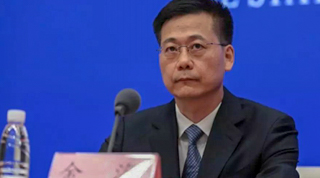
Jin Hai 金海 | General Administration of Customs Department of General Operation chief
Governments, international organisations and industry associations should work together to curb IPR infringement, says Jin, as no country can solve it on its own. GAC cooperates with customs agencies from more than 130 countries or regions, and collaborates with the World Intellectual Property Organisation, World Customs Organisation and others. The next step for GAC is, argues Jin, to facilitate data and information sharing and improve joint law enforcement with other countries. He promises to protect foreign enterprises’ IPR, and calls for other countries to do the same for Chinese firms.
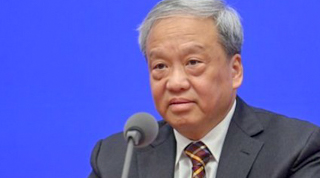
Wen Ku 闻库 | Ministry of Industry and IT Department of ICT Development director
Head of MIIT’s ICT development department since 2013, Wen has had a hand in many sci-tech initiatives, including broadband construction and the roll-out of IPv6 and 5G. The wider economic and industrial implications of any sci-tech project are, he argues, at least as important as its infrastructure. He notes that the urban-rural divide persists, despite MIIT’s efforts to build network infrastructure and encourage telcos to offer discounted packages. A 5G enthusiast, Wen spearheads its development and calls for speedy commercialisation. The success of 5G requires collaborative development of game-changing applications, he argues, suggesting tech firms integrate better with the real economy and act responsibly as they grow bigger.
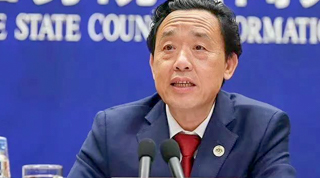
Qu Dongyu 屈冬玉 | Miniser of Agriculture and Rural Affairs vice minister
Versed in plant and flower genetics, with experience as Ningxia Hui Autonomous Region vice governor, Qu transferred to the former Ministry of Agriculture as vice minister in June 2015, in charge of ag international cooperation, state farms, and ag economic information departments. He is China’s candidate for FAO director-general, to be elected June 2019. At a sub-summit of the 2019 Belt and Road Forum, Qu committed to strengthening ag cooperation with BRI countries in trade, investment, and capacity building, and pushing forward with bilateral and south-south cooperation. MARA is willing, he asserts, to share Chinese practices and experiences in safeguarding food security, and contribute to a ‘zero-hunger’ world.
policy ticker highlights
gems from our feed of policy releases and domestic debate
geopolitics
US ‘clash of civilisations’ is uncivilised
Xinhua Net | 15 May
context: US Secretary of State Mike Pompeo recently dismissed China’s claim to be a ‘near-Arctic state’. Resort to talk of ‘clash of civilisations’ by the Trump administration compounds Beijing’s resentment of US tariffs and sanctions on Iranian oil imports. Sino-US codependency and engagement are shelved in favour of a postulated value cleavage.
Recent US comments on ‘clash of civilisations’ and use of ‘civilisation’ to project power politics and hegemony, writes Xinhua, illustrates its arrogance and bigotry, and is quite uncivilised. China and the US should seek common ground, it advises, while strengthening dialogue with an open mind and making efforts to ‘crack the myth’ of the clash of civilisations.
Civilisations cannot be distinguished as ‘high’ or ‘low’; calls for ‘clash of civilisations’ reflect a Cold War mentality.
The US has adopted condescending and bullying attitudes towards China, says Xinhua, evidenced in statements like ‘the Chinese have lived a good life for too long’, ‘expel China from the WTO’, and ‘the US rebuilt China’. They highlight US ignorance of its own history, says Xinhua: its multicultural society came at a great price.
By contrast, the historical record indicates that Chinese have always valued
- equality above arrogance
- respect above prejudice
- communication above confrontation
- tolerance above exclusion
- peace above confrontation
Valuing peace, China will not initiate ‘clashes’ with others and Chinese civilisation has never created a ‘clash of civilisations’, says Xinhua.
finance
expanding official local government budget necessary for investment regulation
21st Century Business Herald | 10 May
context: China’s fiscal federalism is a tug of war between central and local governments. Prior to tax sharing reform in 1994, the centre was concerned about its weakening influence on fiscally empowered localities. After the reform, local revenues did not match spending responsibilities, motivating an evasion of central budget controls. The hide-and-seek game will continue as long as the top-down structure persists.
While the new regulation provides legal reference for government investment behaviours, off-budget funds still constitute a great number of local government investments. If the official budget is not enlarged, regulation may not be effective in controlling illicit investment practices in localities, argue He Fan 何帆, Zhu He 朱鹤 and Su Xinyuan 苏欣园 from Entropy Capital.
According to them, government investments demonstrate the following features
- the public sector plays a larger role in credit expansion, taking up over 30 percent in additional debt in 2013-17
- local governments perform most investment projects; the existing central-local fiscal power distribution is in question
- 2017 infrastructure investment volume was C¥1.5 tn for central government and C¥15.8 tn for localities
- as local governments have more spending responsibilities than revenues, they are inclined to invest in short-term, for-profit projects which go against government investment objectives
- lack of funding within official government budget while off-budget financing is unregulated and opaque
While providing detailed rules targeting illicit investment practices, the regulation rightly precludes bad local investments in the name of macro-level adjustment. This expression was included in the 2010 draft but deleted in the final version, limiting government investment to only non-profit, public welfare areas where the market is inefficient.
However, the regulation mostly targets investment within official budget, falling short in addressing off-budget investment that is increasingly significant. Announced government debt reached C¥18.3 tn by end-2018, not including implicit debt which is conservatively estimated to be around C¥40 tn, say Entropy Capital researchers.
agriculture
MARA sets ambitious 3-year goals on ag genetic resource protection and utilisation
Ministry of Agriculture | 10 May
context: The 3-year plans reflect authorities’ commitment to advancing breeding research, with detailed timelines provided for some launched projects, such as the new national crop genebank construction project announced February 2019 (to be completed by 2021). Livestock and poultry genetic resources are also receiving policy attention. African swine fever’s spread lends urgency both to protecting pig genetics and supporting commercial farms’ efforts to boost meat supply.
Ministry of Agriculture and Rural Affairs (MARA) released 3-year action plans on protection and utilisation of ag crops, livestock and poultry genetic resources (2019-21), aiming to support modern seed industry development and promote ag high-quality development.
- ‘3-year plan on ag crops genetic resource protection and utilisation (2019-21)’
- development goals by 2021
- complete construction of national long-term crop germplasm bank
- build Belt and Road international germplasm protection centre
- targets on germplasm resources introduction, evaluation and identification
- key tasks and schedule
- launch third general investigation on national ag crop germplasm resources
- strengthen
- protection system building covering facilities, infrastructure, regional layout
- precision identification and breeding of high-quality germplasm resources
- information management and international cooperation
- supporting measures
- revise ‘Management measures on ag crops germplasm resources’
- introduce ‘Opinions on strengthening ag crops germplasm resources protection’
- development goals by 2021
- ‘3-year plan on livestock and poultry genetic resources protection and utilisation (2019-21)’
- development goals
- optimise protection system, monitoring and alert system, and identification and evaluation system by 2021
- achieve comprehensive protection and utilisation of local varieties; promote commercial cultivation
- key tasks and schedule
- strengthen genetic resources protection system-building covering expanding existing gene banks and promoting provincial genetic farms building
- genetic resources preservation
- optimise genetic resources monitoring and alert system with IT and big data
- strengthen industrial development and utilisation
- launch investigation on genetic resources in Tibet
- development goals
society
NDRC denounces ‘war on talent’
State Council | 6 May
context: While the centre repeatedly reminds localities of 2020 target for one million rural migrants acquiring urban hukou, second- and third-tier cities are devoting themselves to the ‘talent war’. The inconsistency reveals disconnect between Beijing and localities on calculating the costs and benefits of urbanisation. Cities prefer the rich and educated, while Beijing seeks to stitch a polarised country together. Beijing needs to make real promises of support to persuade localities to implement its plan.
At a National Development and Reform Commission (NDRC) press conference discussing ‘Opinions on urban–rural integrated development’, Chen Yajun 陈亚军 NDRC Department of Planning director spoke out against the policy of ‘conditional hukou access’ adopted by a number of regional capitals.
Chen said free flow of labour is the top priority for urban-rural integration, without which other factors of production (land, capital and information) can’t circulate well. As of end 2018, there were 226 million migrants who had permanently relocated to cities but not received urban hukou, of which 65 percent lived in cities above the prefecture level. Large cities rather than small towns should take the lead in absorbing migrants, says Chen.
There are two ways to accommodate migrants
- granting them hukou to enable access to urban public welfare
- allowing migrants to receiving urban public welfare with residence permits
Chen reiterated
- cities need people from different backgrounds. Selective hukou assignment based on educational attainment or property ownership perpetuates social segregation of migrant workers and associated problems
- prime concern should be for those who already live and work in a given city (i.e., second-generation migrants born in cities, rural-origin university graduates and veterans), instead of people relocating from other cities.
- relaxing hukou doesn’t mean relaxing real estate control. Low-income migrant workers rely on affordable housing in order to not slide back into poverty after settling in cities
- local variations are acceptable. Super- and mega-cities can still maintain a high threshold to prevent over-expansion and select hukou recipients with a point-based system
governance
Xi Jinping inspects Jiangxi
People's Daily | 23 May
context: As with last month’s visit to Chongqing, Xi reiterated some familiar themes, while adding some more specific thoughts, including about economic development and the current international situation.
On a visit to Jiangxi 20-22 May, Xi Jinping 习近平 CCP General Secretary delivered a speech promoting the rise of the central region, toured a Ganzhou rare earth industry enterprise, and visited the Memorial Hall of the Long March of the Central Red Army in Ganzhou along with a nearby village. Accompanied by Liu Qi 刘奇 Jiangxi Party Committee secretary and Yi Lianhong 易炼红 Jiangxi governor, Xi inspected economic and social development, and poverty alleviation progress in historic revolutionary areas. Xi stated that China is still in an important period of strategic opportunity for development, but the international situation is becoming increasingly complex. We should have a clear understanding of the long-term, complex nature of various unfavourable factors at home and abroad, he noted, and make proper preparations for dealing with various difficult situations. The most important things, Xi argues, are to
- do our own work well
- coordinate research and deployment
- manage efforts to promote reform, development and stabilisation of various tasks
- work out a plan to move forward in the period to come
Xi affirmed that companies should increase investment in scientific research, devote themselves to scientific and technological innovation and pay attention to ecological restoration. He stressed that technological innovation is companies’ lifeblood. Only by possessing independent intellectual property rights and core technology can we make products with core competitiveness and remain invincible in fierce competition, Xi emphasised. Rare earth is not only an important strategic resource, but also a non-renewable resource. We should intensify scientific and technological innovation, constantly improve the technological level of development and utilisation, extend the industrial chain, increase added-value, and achieve green and sustainable development.
During his visit to Duxian to pay a visit to the site of the Central Red Army’s departure on the Long March, Xi noted that this year marks the 70th anniversary of the PRC’s founding. We must bear in mind our red origins and how the new China was established, he said, cherishing the socialism with Chinese characteristics initiated by our Party, and strengthening self-confidence. Today, on the new Long March road, we must overcome all kinds of major risks and challenges from home and abroad and win the new victory of socialism with Chinese characteristics, still depending on the firm ideals, beliefs and strong revolutionary will of the whole Party and the whole people. Party committees and governments at all levels, Xi said, should take good care of old Red Army comrades who contributed to the Chinese revolution, as well as the descendants and families of revolutionary martyrs.
On his visit to Tantou village, Xi noted that he was inspecting the old soviet area in Jiangxi to see if lives had improved, and whether poverty could be defeated on schedule. Xi stated that efforts should be made to improve rural settlements, build spiritual civilisation, improve the rural governance system, renew the social atmosphere, and enable villagers to live an enviable pastoral life.
Xi hosted a symposium on promoting the rise of central China, and made eight suggestions
- promote high-quality manufacturing development
- improve indigenous innovation ability in key areas
- alleviate financing difficulties of private, small and medium-sized enterprises
- strengthen docking with eastern coastal areas and relevant international regions, actively participate in the Belt and Road Initiative
- do a good job fighting poverty, improving social security, and innovating social governance
- improve policy measures, working mechanisms, and overall coordination
Xi Jinping emphasised that the CCP Central Committee will soon deploy the ‘never forget the original intention and remember the mission’ project, and all departments in various regions should take this as part of the effort to resolutely rectify formalism and bureaucracy, and thereby let cadres devote more enthusiasm to the great cause of the rise of central China.
Xi stated that the general tone of the work is to
- strive for progress in a stable way
- implement new development concepts
- promote steady growth, reform, and restructuring to benefit people’s livelihood
- prevent risks and maintain stability
- accelerate high-quality development of old revolutionary areas
Xi emphasised building of a new type of urban-rural relationship to promote modernisation of agriculture and rural areas.
Xi also noted the need to strengthen construction of mechanisms to prevent and resolve social contradictions, improve social grid governance, prevention and control, crack down on criminal activities according to law, and deepen the special struggle against gangsters and evil forces.
Party leaders including Ding Xuexiang 丁薛祥, Liu He 刘鹤, He Lifeng 何立峰 and others accompanied Xi.
trade
China’s proposal on WTO reform
Yicai (1), Yicai (2), Ministry of Commerce (1), Ministry of Commerce (2) | 15 May
context: As China-US trade friction escalates, China is looking for support from multilateral platforms like the WTO. Many of its proposals seek to counter and contain the US. It seems unlikely they will be accepted in this form.
China formally submitted a WTO reform proposal on 13 May 2019. The proposal seeks to break the impasse of appointing judges to the Appellate Body, curb national security exceptions and ban unilateral measures. It proposes notification procedures and multilateral reviews of tariffs on national security grounds, and for affected members to be compensated. China proposes equal treatment for investments by state-owned enterprises and all other firms. It also took positions on reforming other committees, and special treatment rights for developing countries.
Without a dispute settlement mechanism, WTO’s authority and feasibility cannot be guaranteed, says Tu Xinquan 屠新泉 UIBE WTO Research Institute director. With proposals for e-commerce and investment facilitation, China wants reform to address current needs and new developments of international trade and economy, contends Tu. China may have other alternatives besides this proposal, Tu adds.
Absent clear rules, the WTO relies on inappropriate and vague provisions, which harm its effectiveness, says Wang Yuesheng 王跃生 Peking University professor. China has opened up, reduced tariffs and lowered subsidies, but it should not roll over and give up its developing country status, notes Wang, arguing doing so would be unfair to China and other developing nations.
industry and environment
2019 steel, coal, and coal-fired power de-capacity priorities announced
National Development and Reform Commission | 9 May
context: This policy comes on the heels of rising steel supply and reports of illegal capacity expansion. Coal supply also increased in 2018. No specific de-capacity targets are included.
NDRC, MIIT and NEA jointly issued 2019 de-capacity priorities for steel, coal and coal-fired power plants, covering
- de-capacity
- implementing ‘taking another look’ measures on de-capacity work from 2016-18
- prohibiting production of substandard steel
- strengthening enforcement against illegal coal-fired power plants
- continuing elimination of substandard coal-fired power plants
- implementing inspections for capacity replacements
- reducing crude steel capacity by end 2019
- meeting coal de-capacity targets by end 2020
- optimising steel industry structure
- improving coal supply quality
- upgrading of coal-fired power plants
- shutting down or restructuring zombie enterprises in steel and coal sectors by end 2020
- strengthening law enforcement against illegal conduct in construction and production
- controlling new capacity in steel and coal
- strengthening de-capacity management mechanisms
- ensuring stable supply and preventing ‘unreasonable’ market fluctuation
- improving employee resettlement
- resolving asset and debt problems
- making better use of special structural adjustment funds
- promoting M&As and vertical integration in steel, coal and coal-fired power
- improving long-term mechanism for industry development
Attached to the Notice were three implementation plans for steel, coal and coal-fired power de-capacity in 2019. In summary
- for steel, the implementation plan mandates authorities
- meet crude steel de-capacity targets by end 2019 in regions that have yet to hit previous targets
- shutdown specified zombie enterprises
- strictly eliminate backward capacity
- prevent re-emergence of substandard steel and re-use of eliminated capacity
- strictly prohibit new capacity
- conduct special inspections of de-capacity results
- improve illegal capacity and substandard steel production reporting system
- promote use of satellite remote sensing technology to monitor de-capacity work and steel enterprise electricity consumption
- strictly control total capacity targets in key areas, including Yangtze River Delta and Fenwei Plain
- promote enterprise M&A
- facilitate smooth performance of steel products and iron ore industries
- promote cooperation between steel enterprises and upstream and downstream industries
- accelerate industry green development and technological advancement
- promote electric furnace steelmaking technology
- promote international cooperation in steel
- for coal, the implementation plan mandates authorities
- consolidate de-capacity results achieved in 2016-18
- accelerate shutdown of zombie enterprises
- accelerate elimination of backward and unsafe coal mines
- coal mines to be eliminated
- below 300,000 tonnes/year in Shanxi, Shaanxi, Inner Mongolia, and Ningxia
- below 150,000 tonnes/year in Hebei, Liaoning, Jilin, Heilongjiang, Jiangsu, Anhui, Shandong, Henan, Gansu, Qinghai and Xinjiang
- below 90,000 tonnes/year in other regions
- below 300,000 tonnes/year for zombie enterprises
- below 300,000 tonnes/year coal mines that are rockburst/coal and gas outburst-prone
- coal mines to be eliminated
- eliminate coal mines not meeting environmental protection and quality standards
- strictly prevent newly-built and expanded coal mines
- prohibit approval of specified coal mines
- promote
- construction of high-quality coal mines
- clean development, production and transportation
- M&A
- improve medium and long-term contract system
- improve capacity replacement and inventory mechanisms
- for coal-fired power, the implementation plan mandates authorities
- promote ultra-low emission renovations
- eliminate backward coal-fired power plants by end Dec 2019
- rectify illegal coal-fired power projects
- implement ‘Coal-fired power station construction warning mechanism and warning mechanisms results for 2022’
- strictly control new coal-fired power capacity
- strengthen emergency backup power sources
science and innovation
CAC issues draft cybersecurity review measures
Cyber Administration of China | 24 May
context: Few cybersecurity documents came out in 2018, but the state has been stepping up implementation of the 2016 Cybersecurity Law in recent months, as experts highlight the need for a comprehensive data defense system. SAMR has revised cybersecurity standards, MPS has released a new set of data security guidelines, and CAC is calling for comment on data security management measures.
Cyber Administration of China (CAC) is calling for comment on ‘Cybersecurity review measures’ until 24 Jun 2019. The draft requires critical information infrastructure (CII) operators to file risk reports when purchasing products and services and occurrence reports if
- CII stops functioning or main functions are not functioning properly
- large amount of personal information or important data is leaked, lost, damaged or exits the country
- operation and maintenance, technical support and upgrading of critical information infrastructure faces supply chain security threats
- other potential risks seriously endanger critical information infrastructure security
A new Cybersecurity Review Office (CRO), set up under the National Internet Information Office, will administrate the process. Upon receiving a risk or occurrence report, CRO will in principle complete preliminary reviews within 30 days, considering
- impact on sustained, safe, stable operation of CII, including possibility of control, disruption and detriment to business community
- controllability, transparency, supply chain security including possibility of disruption due to non-technical factors, such as politics, foreign relations, trade
- impact on defence industry or critical information infrastructure tech and industries
- compliance of product and service providers with national laws and administrative regulations
- products and providers being subsidised or controlled by foreign governments
CRO will then send its verdict to reviewers, who have 15 work days to comment. If they raise an issue, CII operators will be notified that a special review procedure will be started, which in principle should be finished in 45 work days. The whole process should take 90 working days, excluding extensions.