retaliation versus domestic supply concerns
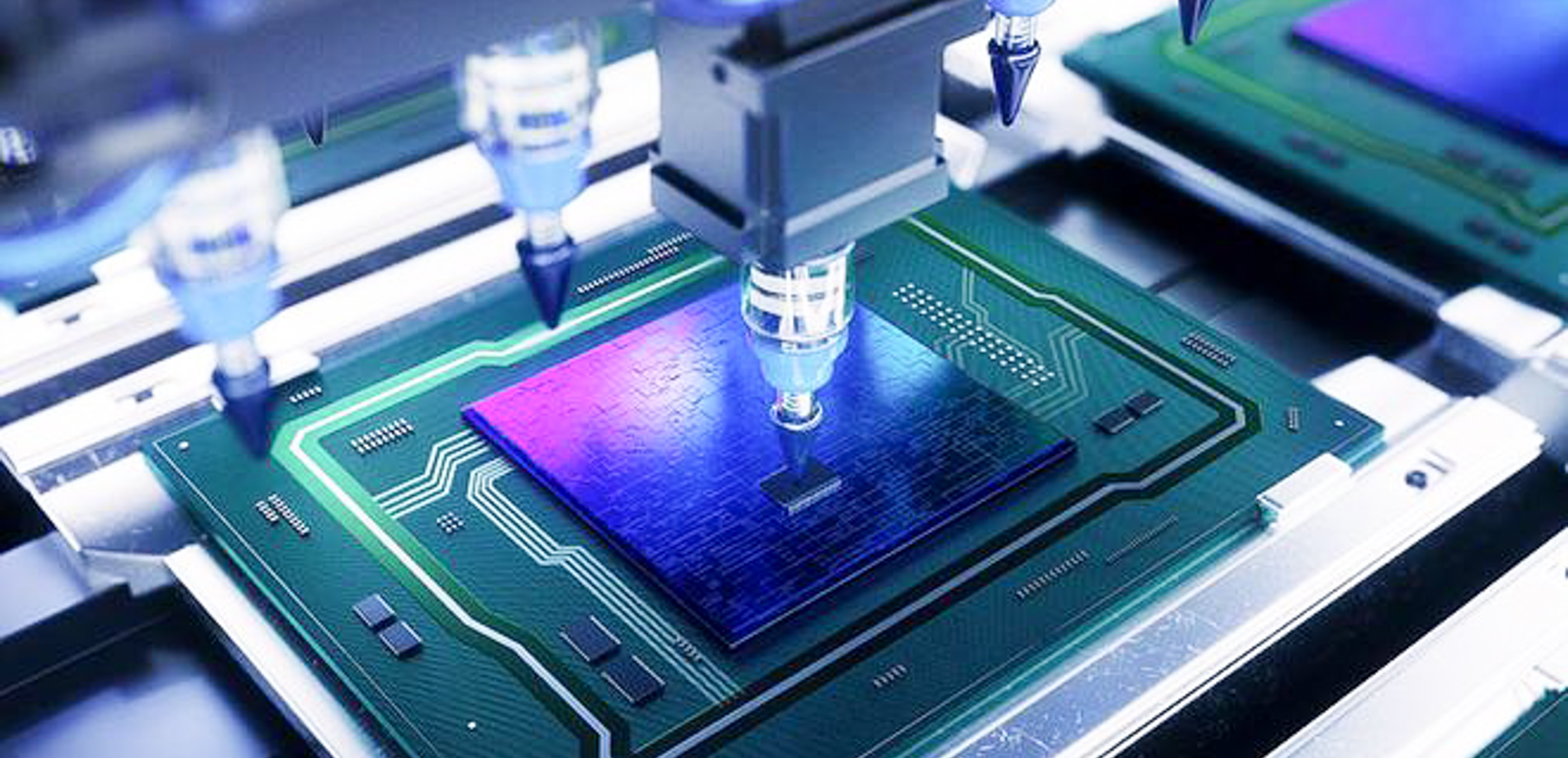
On 3 July, Beijing imposed export controls on 14 gallium and germanium items, effective 1 August 2023. The PRC produces around 68 percent of global germanium and 90 percent of gallium. Both are used in ever more high-tech products. Germanium finds its way into infrared optics (36 percent), optical fibre (34) and solar cells (17); over 90 percent of gallium is used in smartphones and solar cells in the form of gallium arsenide, notes Caixin.
Shi Xiaoli 史晓丽 China University of Political Science and Law WTO Legal Research Centre, claims there are at least three legal bases for this measure
- Export Control Law § 2: 'the state exercises control on the export of dual-use items, military products, nuclear and other goods, technologies, services related to safeguarding national security and interest or performing nonproliferation and other international obligations'
- Foreign Trade Law § 15: 'the State may restrict or prohibit the import or export of relevant goods and technologies for the following reasons'; the first item states 'the import or export needs to be restricted or prohibited to safeguard the state security, public interests or public morals'
- Customs Law § 40: 'where the State specifies the provisions in respect of prohibitions or restrictions on inward and outward goods and articles, Customs shall carry out control in accordance with laws, administrative regulations, and the provisions of the State Council or the provisions laid down by its departments concerned who are authorised upon laws and administrative regulations.' The detailed rules of control shall be specified by the General Administration of Customs
a dual-use issue...
The controls put into action MofCOM's February announcement on improving control of dual-use (military and civilian) exports, directing provinces to examine cases. Identifying end users is key to the controls. Germanium and gallium are dual-use, says Wang Wenbin 汪文斌 MFA (Ministry of Foreign Affairs) spokesperson: imposing such controls is a standard international practice. Both materials are categorised as strategic minerals by the PRC and the EU, US, Japan and other countries, notes Securities Times.
Proclaimed to 'safeguard national security and interests', the controls require exporters to obtain licences from MofCOM, submitting details of the importer and the end user.
...with retaliatory implication
Driven by more than security concerns, the measures are retaliatory, admits Chen Fengying 陈凤英 CICIR (China Institutes of Contemporary International Relations). How is it acceptable, she asks, to be a primary source of gallium and germanium used in semiconductors yet face bans as a destination for the finished goods?
Controls on gallium and germanium products are just the beginning of retaliation, warns Wei Jianguo 魏建国 former MofCOM vice-minister. Continued blockage of PRC access to technology will see countermeasures strengthened accordingly. He warns that there are many further options beyond export controls.
MofCOM and others have waved off imputed retaliatory motives: export controls do not amount to outright bans; licences will be granted provided exporters comply with the regulations.
How is MofCOM to determine who gets a licence? Gallium and germanium do undoubtedly have military applications. Blocking exports to military industry end users may have a limited impact on other importers. Yet the measures do provide MofCOM grounds for blocking larger swathes of exports. Emerging tech sectors are on alert.
the politics of 'strategic' status
Rivalry over critical minerals between the PRC and the US and EU is inevitable, comments Li Jianwu 李建武 CAGS (Chinese Academy of Geological Sciences) Global Mineral Resources Strategy Research Centre. Reviewing the National Security Strategy (2021–25) in late 2021, the Politburo raised mineral security to national strategic status for the first time.
The PRC's vibrant 'emerging industries', not least new energy vehicles, have long been grappling with supply chain risks and are active globally to ensure a stable supply. The 14th 5-year plan on raw material industry development, issued a month after the late 2021 Politburo meeting, seeks to leverage the minerals sector for industry upgrading. Major shortcomings are identified, including reliance on imports of high-tech mining tools, poor environmental records and lack of influence on global prices due to widespread overcapacity and illegal mining.
The PRC criterion of strategic minerals differs from developed economies, says Wang Anjian 王安建 CAGS (Chinese Academy of Geological Sciences) Global Mineral Resources Strategy Research Centre, stressing their value to industry development, and thus to the economy. Advanced states focus on supply risks. He notes that germanium and gallium are deemed strategic despite their domestic abundance.
growing security concerns
The focus has intensified since the 20th Party Congress, observes Sui Jigang 眭纪刚 Chinese Academy of Sciences Institute of Science and Development. Whereas the earlier strategy was aimed at leveraging science and innovation to fuel economic and societal development under the loose ‘innovation-driven development’ framework, the focus is now on bottlenecks in 'key core technologies', self-reliance, and security under the 'new nationwide system' framework.
China is currently a top exporter of raw materials deemed vital to emerging industries. However, as they become scarce, the trade structure should be adjusted accordingly, urges pro-control Qiu Lin 邱林 China Nonferrous Metals News commentator.
Domestic mineral security has reached a critical stage, argues Ge Honglin 葛红林 China Nonferrous Metals Industry Association president. Shifts in global resource development and investment, fueled by escalating geopolitical tensions and rapid global energy transformation, are prime factors. Maintain moderate output, advises Ge, and avoid indiscriminately increasing exports or reducing imports.
High-level support for boosting domestic mineral security grew In 2022–23. Xi Jinping emphasised efficient resource utilisation. Meanwhile, the DRC (State Council Development Research Centre), a prominent internal thinktank, called for supply security, regularly evaluating supply and demand prospects and compiling a catalogue of minerals used in new energy industries. The 2023 Government Work Report lists mineral resources among sectors lacking self-reliance, with obvious action implications. SOEs are now reviewing their domestic and global supply chains.
avoiding tit-for-tat
The list of strategic minerals to be controlled is likely to grow.
The PRC has a secure supply and remains an exporter of rare earths, including tungsten, tin, molybdenum, antimony, indium, germanium, gallium, phosphorus, fluorite, and graphite. Ge Honglin warned in late June of the rapid depletion of tungsten and molybdenum, posing long-term risks. Over-reliance on imported high-end equipment and supporting machinery (annual import of high-end computer numerical control tools are worth over C¥10 bn) was concerning, hence not good candidates for retaliation.
warning on competitiveness
MofCOM is mulling other restrictions on tech exports where the PRC already leads. Controls on solar photovoltaic (PV) tech may be a candidate. In late 2022, MofCOM added it to a draft update to the 'PRC’s catalogue of prohibited and restricted tech for export'. The final edition is awaited, but flagging such controls makes waves domestically. They risk harming the PRC’s global competitiveness, warns Bai Chong'en 白重恩 Tsinghua University School of Economics and Management.
Better would be to spearhead re-globalisation, as Wei Shaojun 魏少军 Tsinghua University argued. Compared to the initial globalisation of the industry, re-globalisation would emphasise cooperation rather than division of labour, argues Wei; this would, in practice, entail granting foreign firms access to the vast domestic markets.
people and orgs in nonferrous metals
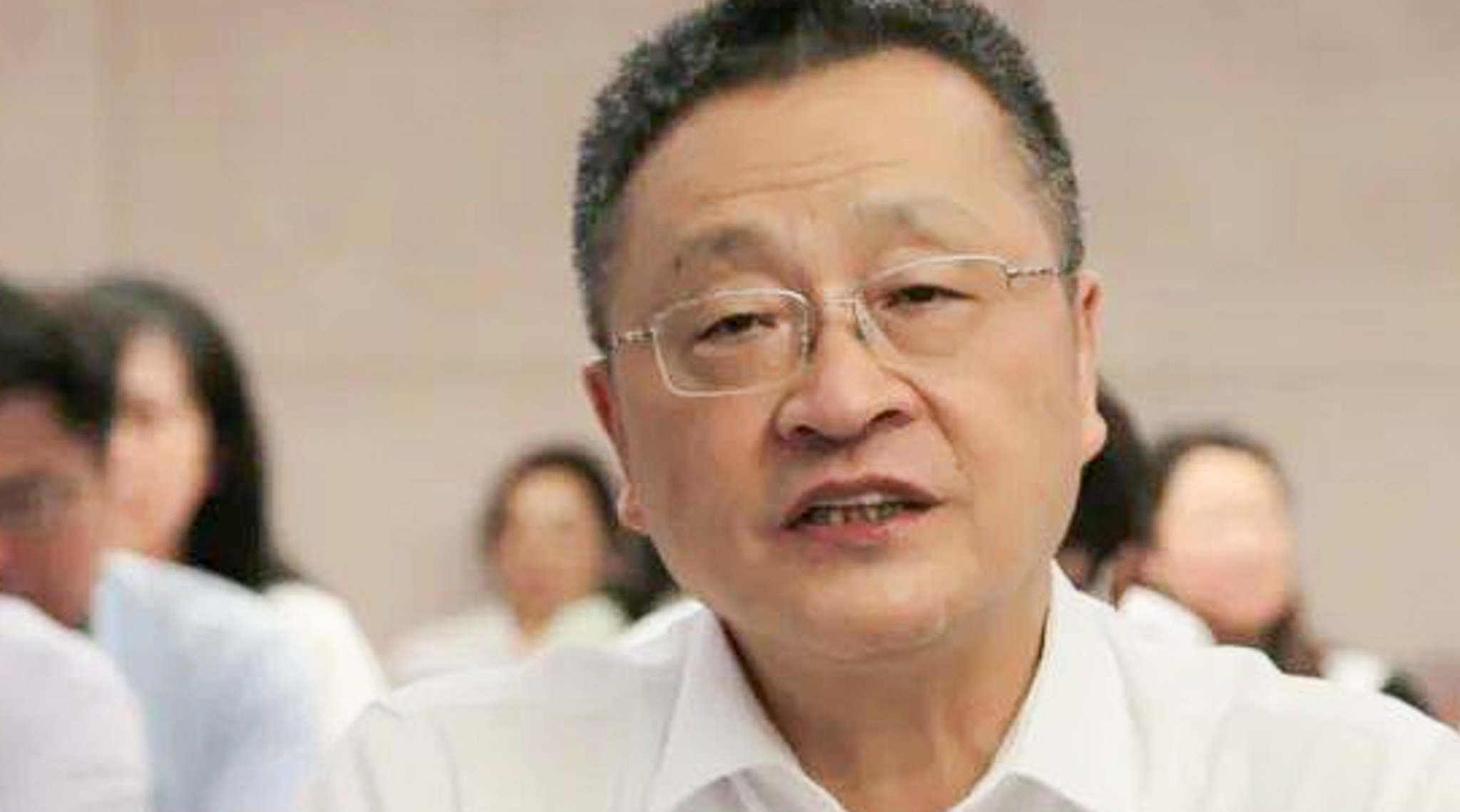
Ge Honglin 葛红林 | China Nonferrous Metals Industry Association president
Ge calls for proactive engagement and strict adherence of non-ferrous industries to national plans. In his view, overcapacity remains an intractable challenge to the sector, needing self-discipline. Dependence on imported high-end equipment and lack of high-quality products signal non self-reliance. Working closer with domestic end users is needed to overcome tech bottlenecks. Ge urges keeping to a moderate output, opposing the idea of more exports and fewer imports being intrinsically better. Recognising the limitations of market forces, the state should, he argues, safeguard sound economic development. Ge urges PRC firms to foster closer cooperation abroad.
Starting at the Baosteel Research Institute Ge, with an engineering PhD from Beijing University of Science and Technology and Canada's University of Windsor, rose to become institute president and member of the parent group's board. Chengdu's mayor for over a decade, he became chairman of aluminium (and gallium) giant Chinalco in 2014. He became the chairman of the association in 2019 and president in 2021. He was an external director of AVIC from 2019-23 and recently assumed a similar position at Rongtong Fund Management, a fund assisting SOEs to restructure. Before his retirement, he was a delegate to the National People's Congress and CPPCC.

China Nonferrous Metals Industry Association (CNIA) | 中国有色金属工业协会
The China Nonferrous Metals Industry Association (CNIA) is a non-profit organisation with 726 member enterprises, institutions and individuals. It succeeded the State Bureau of Nonferrous Metals Industry in 2001, which was dismantled to comply with PRC accession to the WTO. Initially, under SASAC, CNIA was made independent in April 2023 in broader efforts to curb ‘inappropriate contacts' between state and intermediary organisations.
- formulation and implementation of industry regulation
- government advice on industry policy
- standard setting
- collection, processing, and analysis of industry data
- early demonstrations of new infrastructure or technology
- inspections, evaluations, and quality control
- talent training and scientific awards
- international industry exchanges
CNIA’s multiple branches are classified by chemical element of concern. The Germanium Branch (which includes bismuth) was established in 2009, and the Gallium Branch (also covering selenium and tellurium) in 2015. Wang Qinhua 王琴华 CNIA vice president and president of the Gallium Branch, identifies the lack of the highest quality gallium as a critical focus area for the branch.
MIIT Raw Materials Industries Department | 工业和信息化部原材料工业司
A department under the Ministry of Industry and Information Technology (MIIT), the Raw Materials Industries Department is crucial in managing and supervising several critical raw materials sectors. These include steel, non-ferrous metals, rare earth, petrochemicals (excluding oil refining), chemicals (excluding coal-based fuels, fuel ethanol, and pesticides), and building materials.
Its primary responsibilities are to foster the growth of new material industries, conduct comprehensive assessments of the domestic and international raw material markets, and formulate strategic recommendations based on their analyses. Additionally, the department houses the Rare Earths Office, which functions as an inter-ministerial coordinating body for rare earths and other strategic minerals.
Together with the Ministry of Natural Resources and the Ministry of Science and Technology, the department drafted the 14th 5-year plan on raw material industry development to better support the sector with industrial upgrading, move towards a green direction, enhance self-reliance and gain international competitive advantages.
The department is led by director Chen Kelong 陈克龙 and overseen by Wang Jianping 王江平 MIIT vice minister.