the pandemic has prompted welcome progress in the cold chain industry, but absent systematic reform, it will keep chasing current best practice
offshoring safeguards speeds up
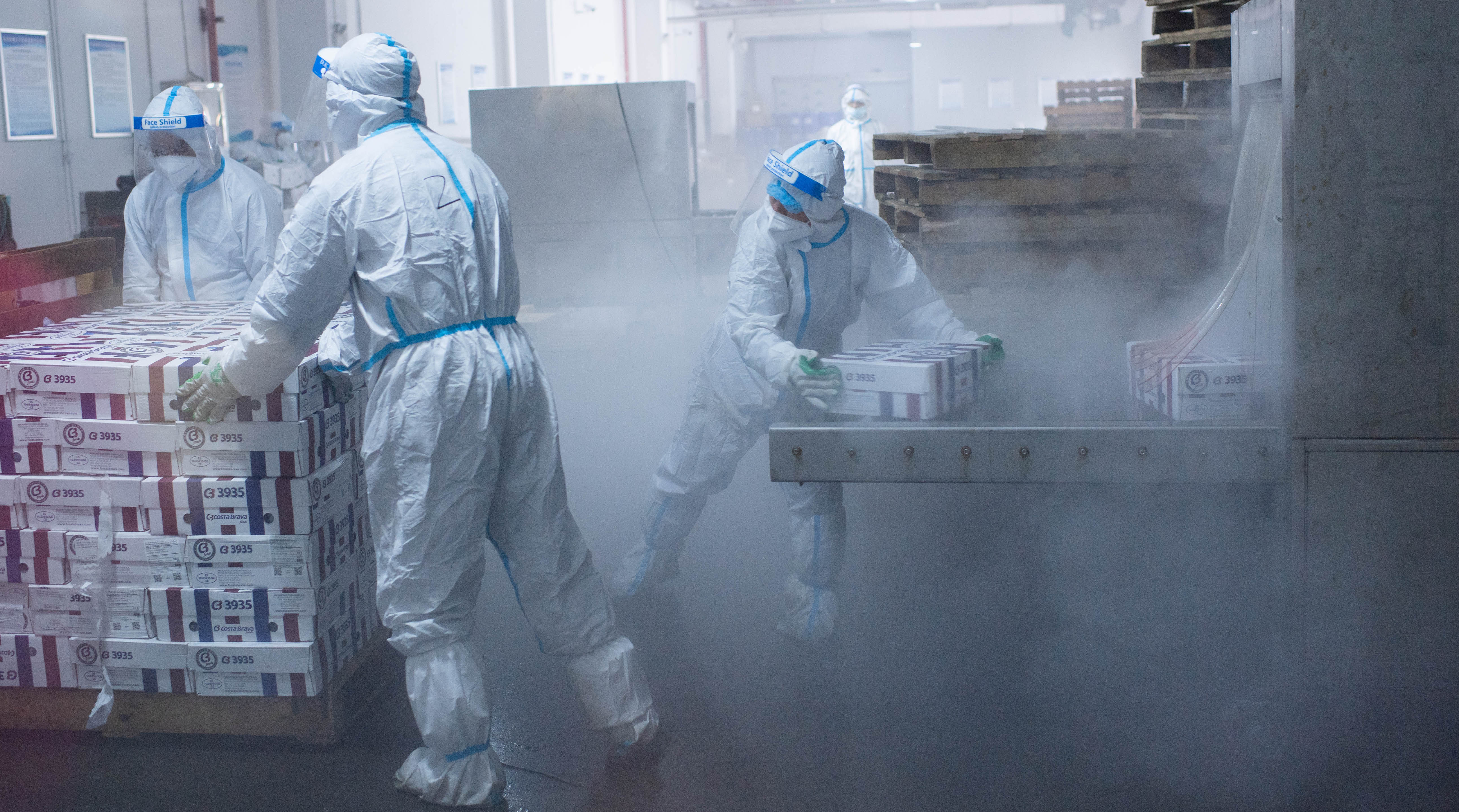
With Omicron cases surging, political pressure mounted for viruses to be found in cold chains and labelled 'foreign'. Regulators ramped up efforts to check imports, now aggressively tested and disinfected at national, provincial and lower levels.
Dependent on freshness, higher-priced cold chain imports lost market. Still worse, buyers lost confidence in their safety. Getting into the market at all was against the odds; many shipments were stopped at customs. Overseas exporters hit with COVID contamination claims risked ruinous suspension of their business. These took a worrisome upward trend: by March 2022, some 120 foreign seafood exporters had their shipments halted. India and Ecuador, bulk suppliers of frozen white prawn and hairtail, were heavily hit due in part to the volume of trade and weak food safety regimes.
Winding down contamination claims, GAC (General Administration of Customs) gave up suspensions in July. But aggressive procedures are still in place at customs.
Inspection is shifting upstream to source countries and may well be inscribed into GAC Decrees §249 and §248 as a permanent measure. Overseas suppliers can expect more direct inspection by GAC, on-site or via video, realising PRC norm setting beyond its borders. GAC still threatens to end trade should there be evidence of food bearing infectious disease, including COVID. On 2 August, GAC video surveillance identified lapses in anti-COVID regimes among four seafood suppliers. Their operations with the PRC were suspended.
prospects of profit
Integrated refrigeration has been rising since 2018, driven by the blending of IT and food retailing, allowing high-quality perishable goods to travel further. COVID brought the cold chain to public attention. Traceability from farm/factory to table has risen as a post-COVID issue. Cold facilities throughout the supply chain must now be fully traceable.
The central decision to strengthen cold chains was amplified by food shortages exposed in the Shanghai COVID-19 outbreak. Overwhelming proportions of the city's grain, pork and vegetables are shipped in. A campaign against post-harvest food losses also underscored the necessity of keeping perishables cold.
MoF (Ministry of Finance) rapidly clarified the funding for cold chain development. It will come from 2022-23 support funds for service industries, aimed at bottlenecks, above all ‘first’ and ’last mile’ issues. The former, referring to the handling of produce arriving at the farm gate, is decisive in keeping it fresh. New measures support cleaning, sorting, grading, washing and packaging, plus precooling, in a controlled-temperature environment, with dispatch to hubs via refrigerated vehicles.
Businesses that solve the ‘last mile’ issue create unbroken chains, gaining an edge in fast-growing urban markets. Small coldstores handy to residential communities are attracting investment, as are ‘central kitchens' delivering semi-prepared meals to chain restaurants.
growing out of COVID
Unlike established regimes in advanced countries, cold chain coverage in the PRC remains patchy and services partial, multiplying food loss and safety concerns. Of horticultural, meat and aquatic products, only 35, 57 and 69 percent ship by cold chain (see chart), compared to over 95 percent in the US and Japan. Food losses en route reach as high as 20 percent: the developed country average are below 5.
share of ag products sent by cold chain
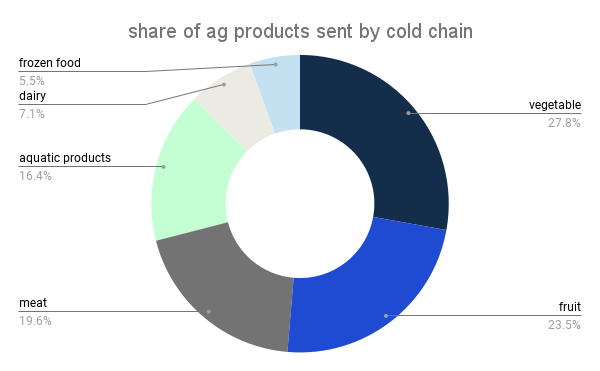
source: China Federation of Logistics and Purchasing Cold Chain Logistics Committee
click chart to expand
Infrastructure and vehicles aside, another big hole is standardisation. With many decades-old guidelines deemed 'modern' and vacuums unfilled, system-wide standards are far from taken-for-granted. Facilities and operations resist being joined up.
Consumer interest and policy support are growing the profitability of the sector. Yet, given its need for adequate, sustainable investment in infrastructure, both hard and soft, good intentions must outlive pandemic-era hype.
what are the experts saying?

Qin Yuming 秦玉鸣 | China Federation of Logistics and Purchasing Cold Chain Logistics Committee secretary general
With cold chain operations a public culprit at the peak of COVID outbreaks in 2022, Qin did not mince his words that total closure was unfeasible. 10 percent of meat had been shipped from abroad via cold chain in 2021; imported cherry and frozen seafood sales doubled y-o-y at early 2022’s Spring Festival. Less thinkable than ever without cross-border cold chains, added Qin, demand for diverse, healthy sustenance now gave rise to prospects of 300,000 added jobs.
profiles

SF Express 顺丰速运
PRC logistics leader SF Express offers integration of warehousing management, sales forecasting, big data analysis, financial management et al. Leveraging central policies, the company has high-end networks and tech capabilities able to do well in the cold chain market. SF Cold Chain 顺丰冷运 offers up-to-date services in the fresh food and pharmaceutical sectors with whole-process temperature control, real-time monitoring and liaison with delivery specialists.
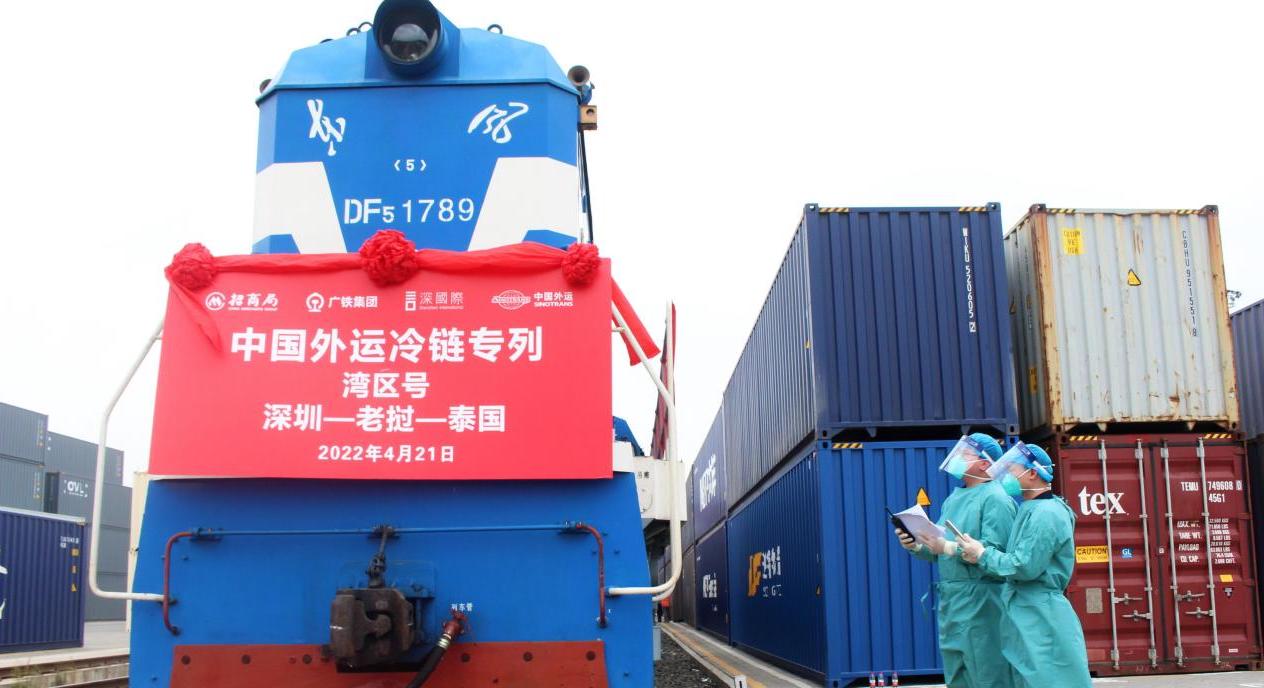
China-Laos-Thailand international cold chain train 中国外运冷链专列 深圳–老挝—泰国
Launched 21 April 2022, the China-Laos-Thailand rail cold chain carried over 1K tonnes of Chinese malt, vegetables and candies from Shenzhen. It will bring back tropical fruit from Thailand and use cold storage designed to 16 safety standards.