China–US trade tension adds urgency to ongoing consolidation and professionalisation of development zones
As US tariffs targeting intermediate manufacturing goods come into effect, zones producing goods for export are under pressure. To attract more FDI, Guangdong province responded on 6 September 2018 with measures further opening its free trade zone (FTZ). Guangdong’s prosperity traces back to Shenzhen, which led FDI-driven low-cost labour in the 80s. When the Shenzhen ‘special economic zone’ was proposed in 1984, Deng Xiaoping 邓小平 touted it as a ‘window of advanced technology, knowledge, governance models and foreign policy’.
In the 1990s, zones on the Shenzhen model led the economy into a decentralised, no-holds-barred race for growth. But the model’s strengths became weaknesses: hitting GDP targets while tolerating inefficiency and local rent-seeking. Two zone categories set up in the 1980s, namely economic and technological development zones (econ zones) and high-tech industrial development zones (high-tech zones) contributed 23 percent of GDP in 2015 and 2016. They also created wasteful duplication, lined local government pockets and ignored land, environment, labour and other regulations.
In the wake of 19th Party Congress and its ‘New Era’ growth model, old zones are being consolidated while a new generation of centrally controlled zones is planned to pursue ‘high quality’, ‘high tech’ growth, eschewing subsidies. Trade tension, forcing external adjustments to supply chains, adds urgency to this effort.
Failed zones may be stripped of their national zone status and accompanying subsidies, official documents suggest. Merging failed or undersized zones with more successful ones or newly-established larger entities, State Council has yet to demote any. Recent moves include
- preparing for a first batch of ‘Made in China 2025 national demonstration zones (NDZ)’, after 26 locations applied
- approving Hainan as the 12th pilot free trade zone (FTZ) in April 2018; FTZs are leading the country in the actual use of foreign capital, said Gao Feng 高峰 Ministry of Commerce (MofCOM) spokesperson at a 13 September press conference
- drafting a plan for the Hong Kong–Macau–Guangdong Greater Bay Area
Coastal regions with many legacy zones will only be allowed to launch new ones if they have a clear focus. New zones will be overseen by central agencies
- jan 2018: National Reform and Development Commission (NDRC) urges the seven comprehensive innovation and reform pilot zones to set up IP service centres, IP courts and to harmonise discretionary IPR standards, investigation and enforcement
- feb 2018: State Council approves sustainable development demo zones in Shenzhen, Taiyuan and Guilin
- may 2018: Ministry of Science and Technology (MoST) approves a second batch of three sci-tech transfer zones; the goal is to have 10 by 2020
In relatively underdeveloped areas, mostly in central and western China, new ‘traditional’ comprehensive zones are still being launched under local supervision, with recent moves including
- mar 2018: State Council approves 12 national-level high-tech industrial development zones (high-tech zones), mostly in central and western China; the goal is to approve 72 more to reach 240 by 2020
Finally, China is promoting its zones approach overseas, both as a landing place for its firms to Go Global and as part of a loosely defined ‘China solution’ or model for prosperity. FTZs are also part of China's multilateral free trade deals
- as of may 2018: MofCOM has approved 31 overseas cooperation zones in countries along the Belt and Road (BRI)
- mar 2018: 44 African nations sign the African Continental FTZ agreement
- jun 2017: Ministry of Agriculture and Rural Affairs approves the first batch of 18 overseas ag parks and zones including Kyrgyzstan
A lexicon of national-level zones, attached, classifies China's many different zones by type and historical period.
centre-local and state-market relations
Low professional standards, local discretion and opportunism have led to waste, rent-seeking and the occasional ‘zombie zone’ with scant value production. National zones are approved and partly supported by the central government, but supervised by local governments. Localities often plan zones to attract funding rather than on the basis of regional and sectoral advantages, causing crowding and duplication in the most subsidised sectors. Comprehensive zones help industrial upgrading in backwards areas, but also exacerbate duplication and overcapacity in emerging industries, says Li Beiguang 李北光 Ministry of Industry and Information Technology (MIIT) Planning Department vice-director. 154 of 552 national-level zones listed in NDRC’s ‘Catalogue of approved development zones’ specify ‘equipment manufacturing’ as a pillar industry (see below). Robotics industrial parks in Shenyang, Shanghai, Wuhu (Anhui) and Yongchuan (Chongqing) all claim to be the largest ever. Instead of local subsidies, thriving advanced manufacturing clusters rely increasingly on synergies across industrial chains, argues MIIT-affiliated China Centre for Information Industry Development (CCID).
Localities have also taken advantage of zones to provide cover for land seizures and crude efforts to boost local growth. Over the last decades residential and industrial land transactions have surged. But in 2017 Ministry of Land and Resources (MLR) found that only 30 percent of 483 investigated zones used land efficiently (at least 90 percent utilisation rates); 75 zones had rates below 50 percent. This shortcoming, argued the ministry, highlighted the need for a procedure to revoke the ‘national’ title of moribund zones. In a scandal in Yancheng provincial-level hi-tech zone, one hundred enterprises were in fact shell corporations without operational records.
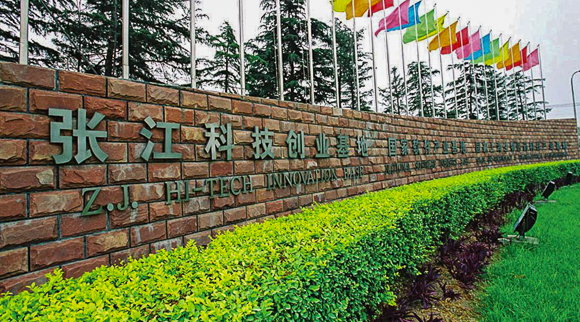
Zone managers should change their mindset to better serve entrepreneurs, says Li Zuxing 李祖兴 Shanghai Zhangjiang High-tech Zone development planner. Governing modern compound zones requires expertise and experience, argue Hou Yanquan 侯彥全 and Cheng Nan 程楠 CCID analysts. Local officials lack such knowledge and should, they argue, stay out of park management, either directly or through affiliated management committees; but employing third-party management would prevent local governments from engaging in destructive competition. Despite a trend towards professional, third-party zone management, overall professionalisation remains low. Many parks fall directly under district governments. And even if they are led by a separate administrative committee, local officials can often interfere, as they oversee many of the incentives that can attract firms, including land, direct subsidies, tax credits, loans, industrial funds and labour policies.
The central state only sets out directives, licenses new zones and regulates market access and administrative approval.
To ready zones for the New Era, the state will need to regulate and clarify relations between local, central and zone management—essentially forcing many local authorities to surrender power and attendant rent-seeking. Actors at these three levels must coordinate to make decentralisation work, argues Qu Wanwen 瞿宛文 Academia Sinica (Taipei). Deregulation and greater autonomy for park management were prominent topics at the 30th anniversaries of econ zones and high-tech zones, with MofCOM organising a workshop for the former 21-22 June and MoST Torch Centre organising a seminar for the latter 9 July.
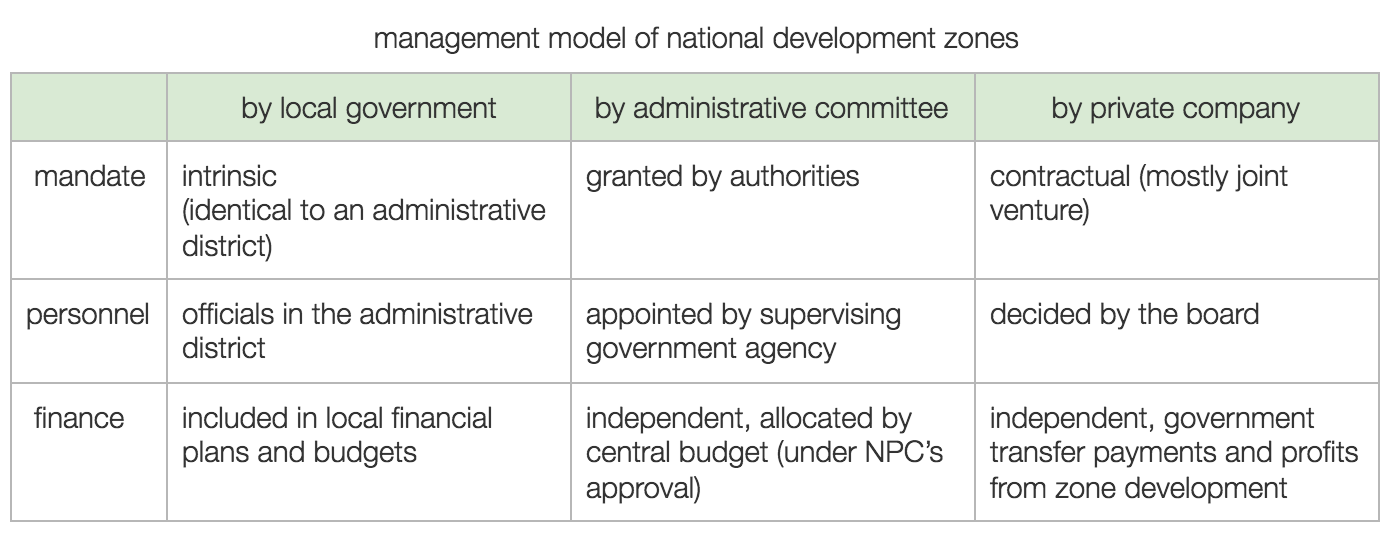 compiled by China Policy
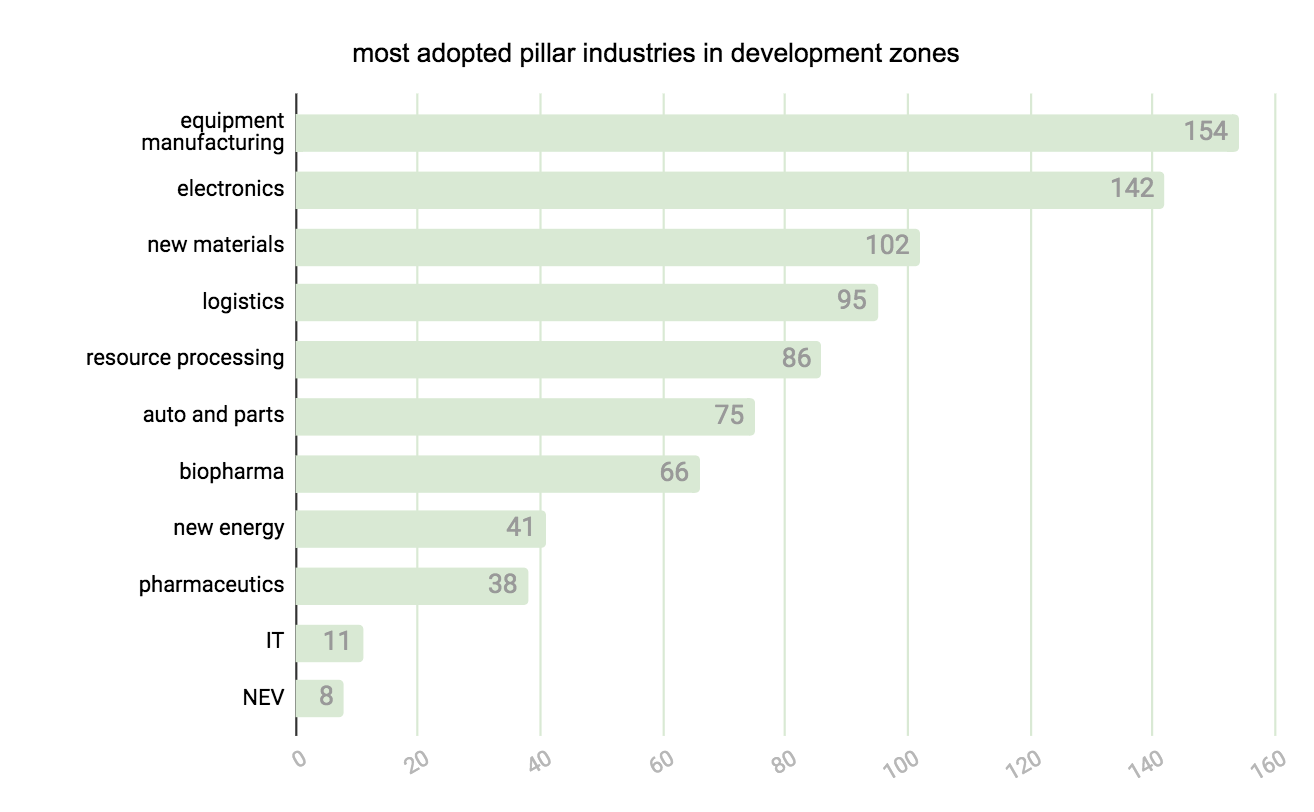 source: NDRC list of approved zones and parks (2018 version), (552 in total, all at the national level)
when zones succeed
Despite the challenges, there are many successful zones. For example, the iconic Zhongguancun Science Park has prospered from an early lead in information technology R&D (including electronics, integrated circuits, data analytics and cybersecurity), global recruitment programs and active international outreach. Industrial parks in Wuhan, Shenyang and Taicang show how local government involvement can be institutionalised, and how overseas governments and firms have successfully engaged with Chinese zones.
Wuhan East Lake Hi-tech Zone 武汉东湖新技术产业开发区
East Lake is a prototype successful top-down, state-led industrial park. Steadily gaining recognition following its 1988 launch, it was a national hi-tech zone by 1991 and an indigenous innovation demonstration zone by 2009. Conventional policy tools, such as funding for R&D, tax incentives and innovation procurement, paved the way for its ascendency as ‘China Optics Valley’. State support and clear positioning helped it become a leader in the high-end semiconductors and chip industry. In 2017, the zone hosted 1,848 sci-tech enterprises and 600 incubators; 5,013 patent applications were submitted; above-scale electronic information enterprises registered in the zone generated C¥205 bn output value. In April 2018 a national innovation centre only the fourth in the country, opened in the zone, to enhance R&D in optoelectronics, biopharma, AI and industrial robots.
China-Germany Equipment Manufacturing Industrial Park in Shenyang 中德(沈阳)高端装备制造产业园
The Shenyang park is, with the China–Singapore Suzhou Industrial Park, one of the two most successful bilateral industrial parks. Set up in December 2015 as part of the national strategy to revitalise the northeast, it is intended to explore synergies between Made in China 2025 and Germany’s Industrie 4.0. While headlining China–German relations, the park also builds ties between regions within those countries. At the central level, the Shenyang park enjoys support from NDRC, MIIT and other ministry-level agencies. Locally, the park’s administration committee has the autonomy and authority to set policy. Two development companies under this committee handle infrastructure construction projects. German company representatives sit on the management board as special-term vice directors. Centring on a BMW factory, the park’s pillar industries include intelligent manufacturing (robots, smart equipment, additive manufacturing, hardware, IT) and auto manufacturing (whole-car design and component, NEVs, automotive electronics).
Taicang Port Econ Zone 太仓港经济技术开发区
Taicang exhibits bottom-up clustering around a supply chain. Thanks to its well-equipped deep-water port and proximity to Shanghai, it emerged as a cluster of German automobile component manufacturers that supply Volkswagen and SAIC’s Shanghai factories. Since Kern-Liebers settled in the zone in 1992, Taicang grew to host 280 German enterprises, mostly SMEs. In 2011 it became a national-level econ-zone, and the annual amount of German investment reached C¥40 bn in 2017. The zone’s administrative committee is part of the local government, and is directly in charge of zone construction and administration. Taicang runs an innovation and incubation centre to promote industry–research–university collaboration on the Fraunhofer Society model, and a dedicated IP centre to assist German enterprises. It is the only Chinese county with an overseas liaison office, launched in Frankfurt in March 2015.
next steps
Front and centre in the last 40 years of development policy, zones will continue to be key to national economic goals. The traditions of institutional reform, market opening, technological transformation and entrepreneurship on which the high-tech zones were built should be preserved, says Wang Delu 王德禄 Great Wall Strategic Consulting. But to remain relevant and meet the challenges of the New Era, zones need to become more professional and autonomous. This is similar to the ongoing corporatisation of state-owned enterprises (SOEs): both gradually remove the state from much day-to-day business management.
This trend brings in governance structures that begin to mimic modern corporations with boards of directors, independent professional managers and an advisory committee. In such a model, the government would only supervise core business, major reforms, key operation procedures and top appointments. To support this framework, national and municipal policy makers are likely to institutionalise the process of competitive tendering, regular performance checks and feedback, to encourage zones to ‘race to the top’.
At the same time, zones will need to adjust to changing centre–local relations, growing global economic interconnectedness, domestic industrial restructuring (especially in the manufacturing sector), and rising labour costs. These trends will push zones to become more sophisticated. Zone governance will follow five principles: embeddedness, connectedness, specialisation, professionalisation and sustainability, agree high-tech zone managers, Li Zuxing 李祖兴 Shanghai Zhangjiang, Wu Shiying 吴世英 Wuhan East Lake, and Ruan Li 阮雳 Hangzhou Binjiang. They urge national and municipal policy makers to
- assist settled enterprises to engage locally, expanding
- entrepreneurial resource-sharing networks with peers and competitors
- business connections with local suppliers and consumers
- supply chain of knowledge and educated labour from neighbouring universities and research institutes
- improve interaction with external stakeholders, for example
- partnering with other zones, domestic and overseas
- extending the zone’s economic rayon of influence
- promote public–private coordination
- develop social, cultural and institutional assets
China’s zones have global implications. As part of a loosely defined ‘China solution’ or model for economic development, the zones approach is being promoted internationally, especially in developing countries along the Belt and Road. Overseas parks give Chinese firms access to affordable land, labour, minerals and other resources, in addition to advancing Beijing’s international goals. It also puts Chinese firms closer to markets in which they have a technological advantage. By doing so, says Deng Haiqing 邓海清 Renmin University guest professor, China seeks first to create a robust and stable economy, and then strive for ascendency with strategic emerging industries and growth systems that embrace standards, statistics and evaluations.
what are the experts saying?
‘zones are not yet dead’ Wang Yiming 王一鸣 | Caixin
When they were set up in the early 1980s, zones were tasked with facilitating institutional reform, industrial growth, urbanisation and opening-up, says Wang Yiming 王一鸣 Ningbo Econ Zone ex-administrator. The proliferation of zones is part of China’s grand transition from a closed economy and an authoritarian regime to a market-oriented, modernised and globalised country, explains Wang. Now 30 years on, the ‘zone’ approach is falling out of fashion, but remains relevant to contemporary issues, argues Wang. Based on his experience in governing Ningbo econ zones, Wang delineates three new missions for development zones: to receive growing international investors in the financial sector, to cultivate indigenous sci-tech innovation and to promote economic integration along the Belt and Road. Deng Xiaoping’s 1984 prediction that ‘development zones are full of prospects and will continue to prosper’ has proved accurate, concludes Wang.
‘industry clusters thrive on decentralisation’ Zhang Xiaobo 张晓波 | The Paper

The breakneck industrialisation of the past 40 years was accomplished by local clusters, argues Zhang Xiaobo 张晓波 Peking University National Development Institute. Chinese policies from the 1990s encouraged local officials to support local industry, such as financial decentralisation and adjustments to how local officials were evaluated. For example, since the 1980s, households, SMEs and local governments teamed up to develop a wool cardigan cluster in Puyuan, a small commodities city in Yiwu and a potato processing base in Anding. Local success stories could not possibly have been engineered top-down, says Zhang. Political and academic leaders must engage popular wisdom and local elites, concludes Zhang.
‘China should export its "zones" approach abroad’ Xian Guoming 冼国明 | 21th Century Business Herald
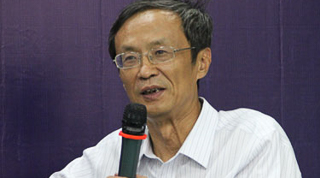
While overseas manufacturing parks allow Chinese firms to access affordable land, labour, minerals and other resources, most are handicapped by low profitability and long payback periods, notes Xian Guoming 冼国明 Nankai University Centre on Multinational Corporations. Failed investment is mostly due, he argues, to ambiguous divisions of responsibility between managers (administration committees), developers (manufacturing or investment companies) and initiators (central or local government) of parks. Moreover, the core business of most overseas parks is built around low-end, resource-based production, which, says Xian, is at odds with developing higher quality products and competing with developed nations. Overseas parks should, he concludes, avoid the trap of a ‘enclave economy’ but integrate with local communities, through hiring, interaction with suppliers and technology diffusion.
context
14 Aug 2018: Ministry of Finance, MIIT and MoST issue ‘Implementation plan on building business incubators to support SME entrepreneurship and innovation (E&I)’, aiming to support 200 development zones with up to C¥50 million each, spread out over three years
6 Aug 2018: State Administration of Foreign Experts Affairs, MoST Torch Centre and China International Talent Exchange Foundation (CITEF) sign an agreement to set up a special fund for cultivating international talent in high-tech zones
July 2018: Ministry of Commerce issues a shorter version of the negative list for foreign investments in FTZs
February 2018: State Council approves first batch of three sustainable development demo zones in Shenzhen, Taiyuan and Guilin
October 2017: State Council issues ‘Plan for accelerating science and technology transfer’, calling for designating sci-tech transfer demonstration zones for policy experimentation. MoST followed up by releasing a ‘design guidelines’. MoST has so far identified six zones
- first batch (oct 2017)
- Jiangsu Sunan, Shanghai Minhang, Shandong Qingyan
- second batch (may 2018)
- Changchun–Jilin–Yanji, Chengdu–Deyang–Mianyang and Pearl River Delta
July 2017: NDRC, Guangdong Province, and Hong Kong Macau Special Administrative Regions (SARs) sign ‘Framework agreement on deepening Guangdong–Hong Kong–Macao cooperation in the development of the Bay Area (GBA)’ may 2017: MoST issues ‘13th 5-year plan for national hi-tech zones’, urging
- top-level innovation areas, with pioneering and global influence
- key platforms for strategic emerging industries
- driving force behind economic restructuring and China’s rise up the global value chain
- indispensable to China’s ambition to become an innovation powerhouse and global sci-tech power
6 Feb 2017: State Council issues ‘Opinions on promoting reform and innovation in development zones’, a blueprint for new strategies and approaches to governing zones. Key directions include
- specialisation: zones do not need to be comprehensive
- regional coordination: larger and more successful zones are encouraged to absorb neighbouring smaller, unproductive ones
- stricter evaluation policies: the main concern is shifted from economic performance (mainly GDP) to social and institutional indicators, especially innovation capabilities, sustainability, intellectual property, and entrepreneurship
- optimal use of land
- more autonomy and independence for zone managers
- competition though exit and promoting channels: thriving zones can get a higher rank; dying zones will be decomposed
December 2016: State Council announces setting up 10 sustainable development pilot zones by 2020, aiming to fulfill China’s promises in the G20 ‘Action Plan on the 2030 agenda for sustainable development’. To fulfill the promises, MoST issued pilot zone design guidelines in April 2017. So far three pilots have opened
- Shenzhen: on efficient resource utilisation, environmental improvement, healthcare and urban governance
- Taiyuan: on water recycling, water pollution treatment, green energy, de-capacity and industrial upgrading
- Guilin: on karst geology research, eco-system protection and recovery, urban–rural environmental governance, tourism, feature towns, culture and tradition preservation
July 2016: State Council launches ‘comprehensive innovation and reform pilot zone’, which concerns exploring new growth drivers, incentivising innovators and entrepreneurs, as well as IPR protection. Seven zones were approved, each paired with policy tasks
- three provinces
- Guangdong: regional integration with Hong Kong and Macau
- Anhui: undertaking industrial transfer (relocated from Yangtze River Delta to inland area)
- Sichuan: civil–military integration
- three cities
- Wuhan: pioneering technology innovation and strategic emerging industries
- Xi’an: civil-military integration
- Shenyang: reviving industrial rust belts; SOE reform; developing advanced equipment manufacturing industries
- one mega city cluster
- Jing-Jin-Ji: regional integration, undertaking functions relocated out of Beijing
April 2016: State Council finalises econ-zones’ performance review standards: those ranked bottom 5 in two consecutive years are to be removed from the national list 2014: State Council issues ‘Opinions on consolidating national econ zones’, calling for quality-driven growth and dynamic management aug 2013: State Council launches the first pilot FTZ in Shanghai. 12 pilot FTZs were identified
- in 2015: Tianjin, Fujian, Guangdong
- in 2017: Liaoning, Shaanxi, Henan, Hubei, Sichuan, Chongqing, Zhejiang
- in 2018: Hainan
2013: MofCOM and Ministry of Finance (MoF) issue ‘Management measures on re-assessing and annual assessment of overseas economic and trade cooperation zones’. Subsequently, eight of the 19 overseas parks established at the time lost their subsidies. By end 2017 there were 81 zones, 45 of which were in Belt and Road countries Since 2009, a total of 17 entities have been identified as indigenous innovation demo zones. Except from Zhongguancun, the recognition is mostly attached to administrative districts (such as Xi’an hi-tech district) or city clusters.
- first batch (in 2009): Zhongguancun Science Park, Wuhan East Lake Hi-tech Zone
- second batch (in 2014): Shanghai Zhangjiang, Jiangsu Sunan, Shenzhen
- third batch (in 2015): Hangzhou, Pearl River Delta, Changsha–Zhuzhou–Xiangtan, Xi’an hi-tech district, Chengdu hi-tech district, Binhai New Area
- fourth batch (in 2016): Shenyang–Dalian, Shandong Peninsula, Hefei–Wuhu–Bengbu, Fujian–Xiamen–Quanzhou, Zhenzhou–Luoyang–Xinxiang, Chongqing