crisis response
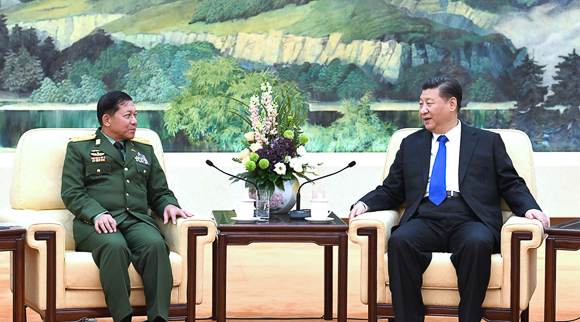
Beijing got into high gear on the Rohingya crisis in the last months of 2017, one of a series of diplomatic initiatives in the wake of its 19th Party Congress. Visiting Myanmar in November, Foreign Minister Wang Yi 王毅 unveiled a ‘three-point plan’ to settle the crisis, with a new China-Myanmar Economic Corridor (CMEC) linking the Kyaukpyu port and Yangon to Yunnan. Xi personally received controversial Myanmar army commander Min Aung Hlaing, hailing bilateral military ties as at their ‘best point in history’. A week later Aung San Suu Kyi was the chief guest of Xi’s global conference for political parties.
Beijing has taken the crisis as an opportunity to intensify economic and political ties with Myanmar, drawing it deeper into its sphere of influence. China’s regional profile is raised in the process, albeit as only one of ten states opposing a UN General Assembly resolution calling for an end to the military campaign.
the blame game
Most Chinese analysts avow sympathy for Aung San Suu Kyi’s position, echoing the official line that ‘results cannot be expected overnight’. While the state should safeguard Rohingya lives and property, argues Li Chenyang 李晨阳, director of the Centre for Myanmar Studies at Yunnan University, it is unrealistic to demand protection of their civic rights: this would likely topple the government. Accusing the West (save the Annan Commission) of ignoring the rights of the Rakhines, many stress that Rakhine State is not home to the Rohingya alone. While needing support of the military, Suu Kyi has limited power over them, argues Yu Qun 虞群 of Nanjing’s South China Sea thinktank, hence her unsatisfactory response in terms of the 1982 citizenship law, and her calculation not to risk national transition for the sake of reconciliation with a ‘hated’ minority.
Unsurprisingly given the political context, no commentators sheet the violence home outright either to Myanmar’s government or its military. China’s own issues in Xinjiang and Tibet no doubt shape its assessment and policy toward ethnic strife in Myanmar.
As in other arenas, economic issues are the most commonly identified factors underlying instability, rather than vice versa. Poverty underlies ethnic conflict and the Rohingya crisis, claims Li Erping 李尔平 Kunming University of Science and Technology; he urges prioritising poverty reduction in Belt and Road initiatives (B&R). Song Qingrun 宋清润 of China Institutes of Contemporary International Relations (CICIR), an influential thinktank affiliated with the Ministry of State Security, notes that the Rohingya and Buddhists not only clash over religion, but over jobs and natural resources as well. Economic hardship contributes to legitimacy issues, says Zhang Tian 张添 Yunnan University Myanmar Studies Institute. China is not saying ‘who is right or wrong’, many claim, but offers economic development as the solution.
A few, nonetheless, find development to be a necessary but not all-encompassing solution in itself. Beyond routine reference to the legacies of British colonial rule, some argue for including political factors and solutions too. In a 2016 article republished last spring, Dai Yonghong 戴永红 and Zhang Guoxuan 张国烜 Sichuan University Institute of South Asian Studies explicitly urge abolishing discrimination against the Rohingya, deploring bias against them in state policies. To resolve the issue, they argue, the key is Myanmar’s ability to offer the Rohingya citizenship and recognise them as another ethnic minority. Such a critical view would normally be marginalised in the public sphere as the crisis deteriorates and Beijing moves to strengthen strategic ties; nonetheless it exists.
a strategic gain
Providing the shortest route to the Indian Ocean, Myanmar’s strategic value to China is clear. It has invested in the oil pipeline from Kyaukpyu (southern Rakhine state, just south of the crisis epicentre) which started operations earlier this year, helping reduce its dependency on the Malacca Strait for energy supplies. Energy projects and a special economic zone made China Myanmar’s biggest investor in 2016. Chinese analysts increasingly argue for building more overseas military bases, and Beijing’s 70 percent stake in Kyaukpyu’s deep-sea port makes it a logical future candidate, modeled after Pakistan’s Gwadar, if local politics permit.
Location also makes Myanmar a focus of rivalry with other powers. The US achieved a breakthrough during Obama’s pivot, though due less to the latter than to political-military events in Myanmar. India has been keen to improve ties, as Myanmar is the first stop for connectivity projects under its ‘Act East Policy’. Seeking to balance China’s influence, it declined to embrace the Bangladesh-China-India-Myanmar corridor, frustrating Beijing.
China has nonetheless managed to retain its dominant position by drawing Myanmar closer despite its democratisation. A strategic dialogue of foreign and defence ministers has been inaugurated, border security promoted and committees for agriculture and electricity cooperation set up. High-level visits are regular; in 2015 Suu Kyi was welcomed to China as opposition leader. Beijing has aided her peace process, bringing northern ethnic groups to the negotiating table. To boost cultural ties, Beijing has sent more students to Myanmar, and with 500,000 PRC visitors last year, it became the second largest tourist source.
Much public analysis of the crisis in China includes a strategic lens. The crisis impacts not only Myanmar’s ties with Western countries, argues Song Qingrun (CICIR), but the UN, Bangladesh, Malaysia and the wider Islamic world. Links with the US have suffered amid concerns over reimposing economic sanctions, observes Peng Nian 彭念 Hong Kong Baptist University, citing measures passed by the US Congress in the wake of the crisis, and Myanmar’s delayed democratisation. Trump’s Asia-Pacific strategy is unlikely, he adds, to see value in Myanmar like Obama’s pivot.
fake news
In the Chinese blogosphere, hostility to the West often feeds disturbing conspiracy theories. Citing Kosovo as precursor, one blogger speaks of a ‘US roadmap’ for an independent Rakhine state through a civil war (Sohu). Others charge the US and EU with ‘hyping up’ the refugee crisis to block B&R, warning that to ‘internationalise’ the issue is to invite Western intervention (Sohu). These views are neither mainstream nor influential, but their (uncensored) proliferation reflects widespread resentment of the West.
being constructive
PRC analysts praise Beijing’s proactive and ‘constructive’ stance in the crisis, offering the ever-more encompassing ‘China Solution’ through its three-point plan and CMEC. International pressure has since then remarkably diminished, asserts Ge Hongliang 葛红亮 Guangxi University for Nationalities. Closer relations result from China’s efforts to mitigate Myanmar’s economic and political plight, claims Song Qingrun, highlighting mediation efforts with Bangladesh and with ethnic groups in Myanmar’s peace process.
Realising stability through development is a highlight of the China Solution, argues Su Xiaohui 苏晓晖, deputy head of the International Strategy Centre at the China Institute of International Studies (CIIS, affiliated with the Ministry of Foreign Affairs). China does not speak easily of a humanitarian crisis, she says, but ‘attends to people’s practical difficulties’.
Emphasising how CMEC will address the Myanmar people’s most urgent needs, such as infrastructure, Foreign Minister Wang Yi recalled the setback bilateral ties took from the widely unpopular Myitsone dam project. CMEC, operating within B&R, will connect Myanmar’s poorest and most developed regions, stresses Liu Wu 刘务 Yunnan University of Finance and Economics. Narrowing regional gaps, it will ease tensions between Buddhists and Muslims, expects Song Qingrun: CMEC could, he suggests, become a model for other B&R areas. The West, ‘having failed to sufficiently respect or help Myanmar’, is now resentful, he argues. The impression remains that CMEC primarily serves Beijing’s strategic objectives
political and security risks
This summer, several thinktank reports reminded Beijing of the security and political risks to B&R projects. Before the latest wave of large-scale violence, Dai Yonghong and Zhang Guoxuan of Sichuan University had already warned the Rohingya issue discourages investment in the Kyaukpyu SEZ and contributes to poor utilisation of Rakhine’s oil and gas resources. Political turmoil may not only impact China economically; its media recently reported that over 30 students have been murdered in Myanmar since 2016 (Sina Yunnan). Beijing has a strong imperative to ensure its political embrace extends beyond Myanmar’s government; embracing all sides of the political spectrum is seen as the best way to protect its interests.
China Solutions: cui bono?
‘China Solutions’ applying B&R development projects struggle to gain multilateral consensus. The UN General Assembly, led by the US and India, on 11 December 2017 removed language from a PRC resolution framing B&R as an untrammeled public good; Beijing retreated, avoiding scrutiny of the initiative’s transparency and environmental credibility.
China’s diplomatic efforts reflect Xi’s ‘new era’ aspirations for a leadership role in the region. Southeast Asia, above all the Indochina peninsula, was recently singled out by Yan Xuetong 阎学通 Tsinghua University as a region where, to take advantage of the Trump presidency, China needs to improve political and military ties. Humanitarian needs seem to compete with these strategic considerations. For the Rohingya, this unfortunately means any solution, let alone a comprehensive one, remains far out of sight.
who is moving the agenda?

Song Qingrun 宋清润 China Institutes of Contemporary International Relations South and Southeast Asia and Oceania Institute associate professor
Cleaving to the official line, Song lauds China’s constructive role in mediating between Bangladesh and Myanmar, where the West applies criticism and pressure. CMEC will boost Myanmar’s economic development, he expects, improving its investment prospects. But he warns the Rohingya crisis may spread. Myanmar’s government now has to fight a battle on two fronts for ethnic reconciliation.
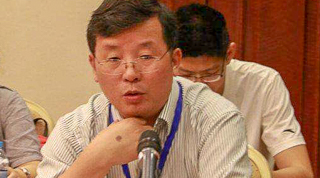
Li Chenyang 李晨阳 Yunnan University Centre for Myanmar Studies director
International double standards are on display, argues Li, asserting no one is brave enough to criticise the US for the implications (through the European refugee crisis) of its interference in Iraq and the Middle East. Decrying neglect of the rights and interests of the Rakhines, he claims credit as one of the first to track the Rohingya situation. The US and Japan want to use Myanmar to contain China’s rise and obstruct B&R, asserts Li, but their main goal is to democratise Myanmar, strengthening Aung San Suu Kyi and reducing military influence.
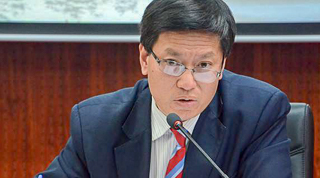
Dai Yonghong 戴永红 Sichuan University Myanmar Research Centre director
Highlighting historic rivalry between the Rakhines and Rohingya over economic resources, not least land, Dai urges speeding up local development. He is however one of the few scholars also suggesting a political solution via equality of rights and obligations for the Rohingya. With an economic background and considerable international experience, Dai remains associated with the Swedish Institute for Security and Development Policy.