On 20 Sept 2017, State Council postponed new customs regulation policies on cross-border e-commerce direct retail import to the end of 2018. Getting cross-border e-commerce rules right is taking time.
postponed
China’s retail cross-border e-commerce (CBEC) generated over C¥6.7 tn in cross-border transactions in 2016, not including grey channel daigou purchases. The state is keen to regulate the industry and lead in setting global e-commerce rules. But on 20 September 2017, the State Council again postponed new customs rules on CBEC direct retail (B2C) import until end 2018.
B2C CBEC retail explained
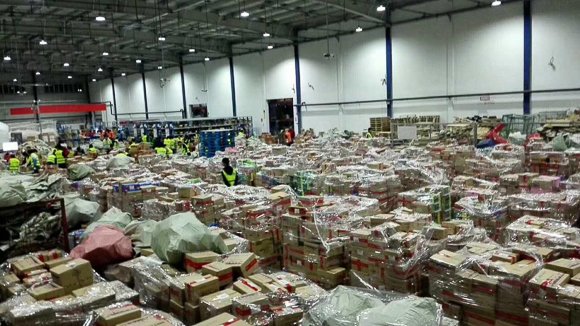
Passed off as goods for ‘personal use’, products such as cosmetics and maternity goods are either bought overseas or shipped in by overseas purchase agents. This B2C (business-to-customer) model avoids customs monitoring, and products are usually below the taxable value threshold. These factors make CBEC retail more profitable than traditional large-volume B2B (business to business) trade. B2C retail has allowed micro, small and medium-sized enterprises (MSMEs) to flourish, earning plaudits from the United Nations as ‘inclusive trade’. However, smuggling and counterfeiting has flourished as well, and traditional retailers struggle to compete. By treating B2C goods as personal and not as tradable, the government loses out on potential tax revenue.
what’s the deal?
First deferred to late 2017, these rules were originally introduced in 2016 as the '8 April New Deal', which aimed to
- steer CBEC into regulated waters: nudge B2C retail away from ‘grey’ daigou channels towards controllable bonded warehouses
- bonded warehouses are considered ‘within the border, but before customs (境内关外)’, allowing businesses to store imported goods domestically, before going through tax and customs procedures
- tighten the grip on goods entering China through B2C retail with a positive list, making customs clearance of excluded items more cumbersome
- create fairer competition for offline and online retail: a CBEC tax (comprising VAT, consumption tax and tariff) will apply to ‘tradable goods’ imported online. With the tariff set at zero and a 30 percent discount on the whole bundle, CBEC will remain more attractive than offline trade
- increase tax revenues from grey channels: parcel tax, levied on ‘personal goods’ from daigou and direct parcel trade, has seen a 5 to 10 percent increase across all categories (see link to chart below)
For a detailed overview on how the policy affects customs clearance and taxation, please click here.
missing the target
While keeping the ‘New Deal’ taxes, State Council suspended the new positive list-based customs rules after only four weeks.
One reason, industry insiders say, was that the policy hurt B2C retailers. B2C retailers were able to shoulder the tax burden, but not the increased logistical overhead of the positive list and stricter customs clearance. These procedures exposed businesses to delays and financial strains, forcing some to take products off the market for a time.
Retailers failed to move, as intended, to regulated bonded warehousing. This should have enabled them to import large volumes and store goods in bonded zones, which in turn should have speeded up delivery to customers and created hefty profit margins. But by locating the customs process at first-line entry and replacing the C¥50 parcel tax exemption with a CBEC tax, the new customs regime cancelled that advantage, tempting businesses and consumers to continue with daigou or other unregulated channels–the very thing it had aimed to combat.
It also became apparent that screening typically scattered, small-package B2C imports for whether they are ‘tradable’ or ‘personal’ was, for the time being, too costly to enforce.
Even if businesses were willing to abide by the policy, procedures for many items on the positive list were unclear, enabling local enforcement agencies to interpret rules at whim. Continuing with grey channels therefore offered more certainty than legal ones.
no deal better than a bad deal
Repeated postponement of the policy underlines the complexity of the issue and the search for a more sustainable B2C retail framework. For the policy to succeed, argue industry insiders, the government needs to
- simplify monitoring procedures for bonded warehouse imports
- use negative rather than positive lists to cut back on costs and red tape
This will, say experts, require authorities to be represented in and united under an interagency body. Only then can conflicting interests be coordinated.
Meanwhile, another set of regulations is in the pipeline. Even though the ‘8 April New Deal’ has yet to materialise, running a test round may prove useful for rules being drafted to replace the policy in the long run
- a second draft of the E-commerce Law was submitted to the National People’s Congress for review in October 2017; it systematically lays out standards for the sector and will require all online platforms operating in China to be licenced
- an amended Customs Law will clarify rights and obligations of administrative counterparts
- an amended Tax Collection Management Law will set up a taxpayer identification system that applies to both natural and legal persons and will regulate tax evasion by e-commerce businesses
- new VAT Law, Consumption Tax Law and Tariff Law, expected to be passed by 2020, aim to internationalise the taxation system and prepare a transition to direct tax
preparing a new system
China aspires to set global cross-border e-commerce (CBEC) rules. After initial attempts met with open opposition in developing countries and the WTO, it is now focusing on refining the domestic regulatory scheme before exporting it abroad.
When State Council announced its postponement of the customs regulation policy, it also called for more CBEC pilot zones, to optimise customs regulation and streamline B2C retail management. These zones serve as templates to be rolled out nationwide and exported abroad. On 7 December, five new pilot cities were announced, broadening the testing field.
CBEC management is a ‘China Solution’ to global trade governance, argues Chen Wenling 陈文玲 China International Economic Exchange Centre (CCIEE) chief economist in a recent report. With its policies tested by pilots and spread through the Belt and Road, China-regulated CBEC is intended to deepen global cooperation on e-commerce and challenge WTO-regulated traditional trade.
But these pilot zones do not address the fundamental tensions that drove the ‘New Deal’ to fail in the first place. Coordinated effort from ministries and departments will be essential to come up with a top-level supervision model. Wang Jian 王健, director of an influential CBEC research centre, calls the postponed policy a half-baked result trying to meet inherently conflicting demands from MoF, AQSIQ and General Administration of Customs (GAC).
The CBEC industry operates within a regulatory gap, giving way to lost tax revenue and smuggled or counterfeit goods. WTO regulations, too, have plenty of room for improvement. However, applying a traditional trade mentality to CBEC, the ‘New Deal’ is not only unfeasible, but also pushes previously legal firms to use grey channel daigou, according to Wang. The ‘China Solution’ to these issues, as proposed by Chen, will not exist without an interagency body to resolve competing ministerial incentives and build a legal framework.
roundtable

Chen Wenling 陈文玲 | CCIEE chief economist
International e-trade will gradually replace traditional trade, and China is pioneering this trend with its vast number of internet users, high-volume internet-based purchase transactions and large-scale CBEC. International e-trade is good for the global economy: its effectiveness and convenience benefits micro and medium-sized businesses across the world, making it a fair trade model. Consumers, too, profit from reduced intermediary costs and a wider range of products. E-trade facilitates platform-based information sharing and effective monitoring of data and logistics, allowing developing countries and emerging economies to increase exports while developed countries draw from eWTP global transactions data and conduct trade-in-services more smoothly. Ticker

Long Yongtu 龙永图 | former MofTEC (MofCOM) vice minister
CBEC is an ‘inclusive trade’ model on two levels: not only does it allow SMEs to challenge the global hegemony of transnational enterprises in the sector, it also gives emerging markets a larger piece of the cake. China should represent other developing countries and lead in actively formulating international trade regulations, which are likely to be a symbiosis of traditional trade and CBEC. Foreign trade will shift to a model in which both exporters and importers benefit from cooperation, away from the current system which favours the importing party. Ticker

Wang Jian 王健 | University of International Business and Economics
China pioneers cross-border e-commerce globally and will play an increasingly important role in Belt and Road and international cooperation. China can stimulate and speed up economic development in these countries through cross-border e-commerce. Trade negotiations between governments will sooner or later also include cooperation on cross-border e-commerce. Ticker
context
8 Nov 2017: first overseas eWTP launched in Malaysia
31 Oct 2017: Second draft E-Commerce Law submitted to NPC for review
20 Sep 2017: State Council once more postponed launch of direct retail import-tax policy to end of 2018 and called for building more CBEC comprehensive pilot zones
22 Mar 2017: Alibaba signed an agreement with Malaysia to set up the first eWTP digital hub in Malaysia
15 Nov 2016: one-year transitional period for cross-border e-commerce retail (B2C) regulations announced in May 2016 was extended to end 2017
11 Nov 2016: State Council issued ‘Opinions on promoting innovative transformation of the offline retail sector’
13 Sep 2016: Alibaba announced launch of the eWTP at the G20 summit in Hangzhou
25 May 2016: Ministry of Finance (MoF) customs department announced a one year grace period for ‘Cross-border e-commerce retail (B2C) import goods catalogue’, to last until 11 May 2017
15 Apr 2016: 11 ministries jointly released a supplementary positive list specifying market entry procedures for health and food products to start on 1 July 2016
13 Apr 2016: China Food and Drug Administration (CFDA) issued regulations on imported milk powder and cosmetics sold through cross-border e-commerce direct retail (B2C)
8 Apr 2016: 24 March import commodity tax put in effect
7 Apr 2016: 11 agencies published a positive list of goods authorised for entry to the Chinese market through cross-border e-commerce direct retail (B2C)
24 Mar 2016: MoF announced the introduction of an import commodity tax on B2C products and an increase in luggage-parcel tax from 8 April 2016
23 Mar 2016: MofCOM released annual plan for e-commerce and digitisation 2016
14 Mar 2016: NPC Financial and Economic Affairs Committee finished first draft of E-commerce Law
15 Jan 2016: State Council approved 12 cross-border e-commerce pilot zones in Tianjin, Shanghai, Chongqing, Hefei, Zhengzhou, Guangzhou, Chengdu, Dalian, Ningbo, Qingdao, Shenzhen and Suzhou 1
3 Jan 2016: MoF, MoFCOM and General Administration of Customs agreed to roll out a pilot tax on imports in all e-commerce pilot zones during the first half of 2016
December 2015: AQSIQ issued a notice for trade in food via CBEC, stressing such trade must comply with Animal and Plant Imports and Exports Inspection and Quarantine Law and animal and plant products origin foods must obtain market access approval
12 Mar 2015: Hangzhou launched first CBEC comprehensive pilot zone