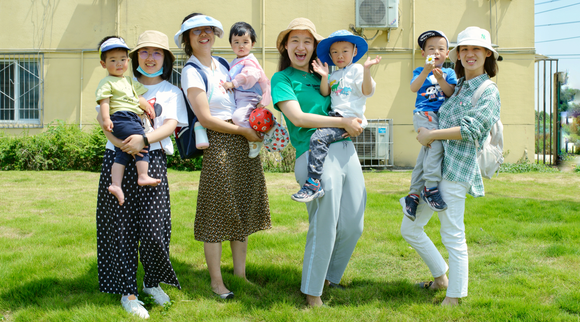
new pro-natal push: how is this shifting policy?
- launch of joint ministerial force to move on all fronts
- recruiting more maternal and child health professionals
- recognition that supporting childbirth needs holistic approaches
Better now frets, fail to convince women to have children. Rebooting population growth, it is now aged and child care promised in 2021’s ‘three-child’ policy will, Beijing realised, entails much more than lifting the cap on births: a birth-friendly society requires a whole basket of policy tools. A multi-level mechanism set up to coordinate the roll-out of measures conducive to child-bearing is a step forward.
new coping mechanism
A declining population will be the new reality over the 14th 5-year planning period, admits the NHC (National Health Commission) on the first anniversary of the three-child policy. In response, it issued Opinions on 16 August urging better rollout of pro-natal support by 16 agencies, supervised by an inter-ministerial mechanism for family planning, with 26 agencies onboard.
Opinions urge shoring up weak areas
- maternal and infant care, e.g. birth defect screening, perinatal care and nursing, as well as assisted reproductive tech
- affordable early childhood care and preschooling
- maternity leave and insurance
- affordable housing and tax benefits for families with many children
- access to basic education
- gender equality and non-discrimination in the workspace
alarming birth rates
A gloomy demographic future painted by the National Bureau of Statistics sets the scene. The total fertility rate in 2020 was 1.3 children per woman, among the lowest in the world; the total birth rate in 2020 fell below 1 percent for the first time since the founding of the PRC; annual net population increase plunged from 5.3 million in 2018 to 480,000 in 2021.
NHC data agree, reports NetEase: for women, the glow has gone off having babies. the exorbitant costs of child-rearing—the unintended consequence of the policy that made the only child extra precious—and women’s concerns about postnatal careers are disincentives. Boosting childbirth, argues Huang Wenzheng 黃文政 Centre for China and Globalisation demographer, hence entails countervailing incentives. Burdens of child-rearing must be partly shouldered by the state; subsidies should be directed to companies, argues Mu Guangzong 穆光宗 Peking University, offsetting losses incurred when employees have children.
managing risk
The ‘inflection point’ to population shrinkage has well and truly been passed in the PRC, confirms Yuan Xin 原新 Nankai University Ageing Development Strategy Research Centre. A 'moderately' ageing society is approaching, marked by low birth rates, higher longevity, low mortality and high old-age dependency ratios. A highly-mobile, migratory urban society is replacing the once static and stationary rural society. The nation is trending, inevitably, from being a country with a large labour force towards one with more skilled labour, concludes Yuan.
Population downsizing cannot but have implications for national economic growth. Total consumer demand, market capacity, labour force and industrial production face dramatic declines; unbalanced provision of education, health, medical, aged care and other social services will worsen exponentially. The conventional image of the nuclear family as the basic unit of development and social security will be challenged too.
looking ahead
Urging an end to remaining caps on birth, Ren Zeping 任泽平 Soochow Securities chief economist goes further: the state must abstain from intervention in citizen decision-making on child-bearing, handing it back completely to individuals and families. All choices—to have kids or not, when and how many—should be respected, insists Ren.
The state role in family planning would therefore be reduced to providing better, more all-round maternal public services in order to build a birth-friendly ecosystem.
Considering the limited effect of the 2021 three-child policy the new shift is likely to generate, bolder and more holistic pro-natal measures. Promising initiatives would include tax rebates and subsidies for maternal care, infant nursing and daycare; economic incentives for grandparenting; medical insurance coverage for assisted reproduction for prospective mothers whether married or single; as well as equal rights for children born in or out of wedlock.
To support the costs of having kids, the state will better share costs with the private sector and individuals. This includes subsidised preschooling, affordable housing, maternal-related tax, and financial incentives for firms to hire women.