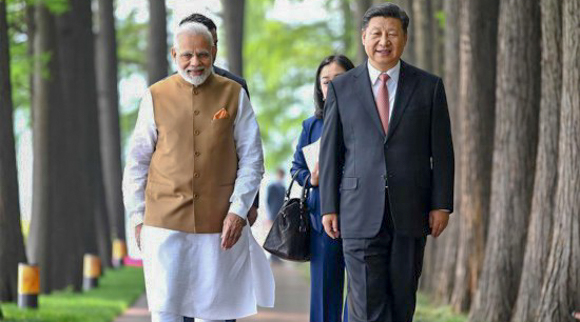
Commentators foresee an upturn in Sino-Indian relations in PM Narendra Modi’s second term. Driven by positive momentum and India–US trade friction, these calculations accompany a sense of strategic advantage: China is fast becoming an Indian Ocean power, whereas India has scant influence in the South China Sea. But some wonder whether India will align itself more closely with the US to win concessions from China, possibly opting into the US Indo-Pacific scheme.
Modi secured another five-year term in late May after a landslide election victory. His first term was marked by armed confrontation in the disputed Himalayan border region of Doklam (Donglang). But over the past year, Xi Jinping 习近平 and Modi have met several times, most notably at an April 2018 informal summit in Wuhan to address tensions and defuse the crisis.
positive momentum
The momentum seems set to continue as Modi’s second term begins: India announced 29 May that Modi will host Xi this year for another informal summit. This is widely thought to bode well for the Chinese side.
Modi’s re-election is positive for the stability of Sino-Indian relations, suggests Qian Feng 钱峰 Chinese Association for South Asian Studies. Since the 2018 Wuhan summit, bilateral relations have stabilised, and Modi’s victory will help sustain this forward momentum.
Modi’s re-election is good news, concurs Hu Shisheng 胡仕胜 China Institutes of Contemporary International Relations. Having interacted closely over the past five years, the two leaders have come to know each other better. Despite differences, they have developed a degree of tacit understanding of each other’s domestic issues, bilateral relations and views on the international situation.
US tariffs
Another favourable factor is that India has, like China, been at the receiving end of the Trump administration’s punitive tariffs.
Trump’s ‘America First’ strategy came as a shock to both China and India, says Hu Shisheng, and the two emerging powers will need each other ever more in the future. The two should strengthen strategic cooperation on globalisation and global governance, guaranteeing sustainable development for both.
Faced with Trump’s protectionism, emerging powers such as China and India have a common responsibility to defend the international trade order, suggests Sun Lipeng 孙立鹏 China Institutes of Contemporary International Relations. There are great prospects for developing trade between the two: China’s market keeps expanding and Indian agricultural products are competitive. To alleviate pressure on China from US tariffs, India can step up trade cooperation.
Indo-Pacific and BRI
Optimism thus far is one-sided. Little attention is paid to the Indian viewpoint. Concerns remain over India’s potential alignment with the US under the Trump administration’s Indo-Pacific strategy, and New Delhi’s reluctance to join China’s Belt and Road Initiative (BRI).
Risk factors in China–India relations are not insignificant, warns Lin Minwang 林民旺 Fudan University Institute of International Studies. In addition to border confrontation, India’s resistance to BRI is the glaring exception among China’s neighbours; nor does it view China’s growing role in South Asia positively. Despite progress made at the Wuhan summit, major issues remain. India contends, for example, that China sides with Pakistan over Kashmir and terrorist incursions. Now that Modi is no longer facing election pressure, suggests Lin, whether India’s diplomatic adjustment on China over the past year was strategic or tactical may become clearer. Some Indian experts, he notes, are already advising Modi to take advantage of the Sino–US trade war to win concessions from China. They also advise that India has yet to definitively opt out of the Indo-Pacific strategy.
But Washington’s Indo-Pacific gambit may prove to be a non-starter, argues Long Xingchun 龙兴春 Chongyang Institute for Financial Studies. As a regional and potentially global power, India places a premium on ‘strategic independence.’ It wants to shape the Indo-Pacific to serve its own interests and will not support a strategy that prioritises American interests. Therefore, he says, any attempt to use India to contain China will eventually come to nothing.
friend or foe?
Whether a friend or competitor, India is a force to be reckoned with, reminds Liu Hong 刘洪 Huanqiu deputy editor. ‘India can and should become a friend, and should never be underestimated. Of course, we should not forget about India’s potential and its suspicions of China. With India following hot on our heels, China has no choice but to speed up reform and raise its own game.’
The policymaking community is paying more attention to relations with India, especially the South Asian giant’s positioning in a China-India-US triangle. Though short-term momentum appears to be positive under Modi, there are mixed views on the long-term strategic outlook. As the US applies punitive tariffs on both China and India, policymakers see opportunities to side with India against US pressure. However, some argue, that does not mean China can afford to let down its guard, as India’s suspicion of China’s growing regional role may well drive it into the orbit of Washington’s Indo-Pacific strategy.
profiles
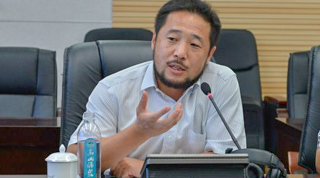
Hu Shisheng 胡仕胜 | China Institutes of Contemporary International Relations Institute of South and Southeast Asian and Oceanian Studies
Hu regularly talks up strategic communication between China and India at the leadership level, talking down mutual suspicion. He did, however, see the summer 2017 Doklam conflict on a level with the Sino-Indian war of the 1960s.
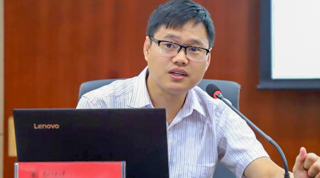
Lin Minwang 林民旺 | Fudan University Institute of International Studies
Lin adds to an extensive South Asianist academic background a stint in the political department of China’s Embassy to India. Relatively cautious on the prospects of the bilateral relationship, Lin has long focused on their differences over BRI. He finds India’s ‘strategic swing’ towards the US to have little historical basis, expressing rather a return to the diplomacy of ‘seeking advantage from both sides’ among major powers. It is with Russia that India has the deepest strategic ties; overall its strategic swing is in line with China’s agenda.
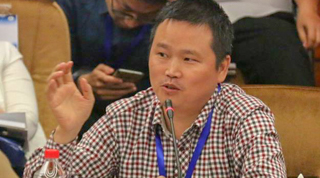
Long Xingchun 龙兴春 | Renmin University Chongyang Institute for Financial Studies
A widely published South Asianist with numerous institutional affiliations, Long is also director of the Centre for Indian Studies at China West Normal University. His tone is often sceptical of India’s ability, let alone willingness, to bandwagon against China. He agrees, for example, that in Indian eyes Moscow is more reliable than Washington.