key themes
- projecting confidence
- ‘three sieges’
- poverty alleviation
- pollution control
- managing financial risk
- Foreign Investment Law
- moving up the value chain
- health, education
projecting confidence
The Government Work Report delivered by Premier Li Keqiang 李克强 on 5 March was sombre, reporting lower growth and referring repeatedly to economic headwinds. The implied political ‘risks and concerns’ he references are more difficult to parse but refer to the social effects of continuing trade pressure and slow growth. Long-standing ambitious targets have not been abandoned, but are subject to modification in light of new political and economic realities.
The 2018 Two Sessions removed term limits from the Presidency and launched major bureaucratic restructuring. While streamlining and consolidating, that restructuring also empowered the Party across a previously unimagined range of government functions. One year later, assumptions have shifted: the 2019 edition is notably less triumphant.
But come what may, Beijing will project an image of confidence. The dominant role of the Party core under General Secretary Xi Jinping 习近平 was reaffirmed; policy initiatives associated with Xi were lauded, and where necessary reinforced against failure. Among the top rated of these were the ‘three sieges’. On the foreign policy stage, the Belt and Road Initiative (BRI), often styled a core foreign policy, was given favourable reference but downplayed in relative terms.
This year’s Two Sessions’ conveyed a new set of geopolitical and strategic undertones. While Wang Yi 王毅 Minister of Foreign Affairs joked about BRI being a ‘pancake’ rather than a debt trap for participants, commentators such as Ye Dabo 叶大波 CPPCC Foreign Affairs Committee member, voiced doubt about BRI accomplishments in the past year. This undercurrent aligns with an emerging cautious attitude towards BRI’s international reach.
Looking ahead at major power relations, Jin Canrong 金灿荣 RUC School of International Studies Associate dean argued China and the US should avoid starting a new Cold War or military conflict over Taiwan and the South China Sea. China–Japan relations are likely to improve, argues Jin, because it serves the national interests of both sides.
Optimism regarding a US–China trade deal was in the air. The two sides will eventually reach a deal on financial issues, opined Guo Shuqing 郭树清 China Banking Regulatory Commission president, as China continues liberalising the sector. Two facts keep Wang Shouwen 王受文 Vice Minister of Commerce optimistic for a win-win deal: consensus reached between the two presidents, and efforts by the negotiation teams. He emphasises that an enforcement mechanism should be two-way, fair and equal, rather than one-way punishment demanded by the US.
‘three sieges’
Framed in heroic terms, this policy focus is essentially corrective, addressing failures in the system. All of its elements—ending poverty, cleaning up the environment and reining in debt—are treated as nearing completion, though some commentary seems to permit doubts.
poverty alleviation
Integral to ending poverty, ‘rural revitalisation’ is often overlooked by outside media despite it being a key driving force behind a wide range of policy initiatives.
Ministry of Agriculture and Rural Affairs was set up at last year’s NPC, taking on a much broader set of development responsibilities than its predecessor, the former Ministry of Agriculture. The sheer scope of that new mission was on full display at this year’s NPC, as lawmakers reckoned with how to eliminate all remaining rural poverty and lay the foundations for revitalisation.
The rural economy has been held up as a bulwark against both domestic downturn and external pressure in recent months, and a commitment to prioritise agriculture and the rural economy over urban and industrial interests has become a mantra among top leaders, ag bureaucrats and even the financial sector. But delivering on these promises will be difficult. A newly revised Farmland Contract Law provides one critical piece of the puzzle, clarifying land rights and improving access to credit for upscaled farms. Further adjustments to rural land and asset ownership structures are promised in a draft Rural Revitalisation Promotion Law, but the timeline looks rushed, suggesting increased risk of unintended consequences.
Beyond land, issues with capital plague the farming sector, as noted in appeals from multiple delegates. Cheng Lihua 程丽华 Vice Minister of Finance notes budget allocation for ag, forestry and water issues reached C¥2.2 tn in 2019, an increase of 7.7 percent y-o-y. She heralds improvements in management of ag-related funds aimed at attracting more participation by private capital, but He Baoxiang 何报翔 NPC delegate and Hebei province vice governor observed that though state support for rural and agricultural development has grown continuously, it remains relatively scattered. He calls for further consolidation of fiscal funds to ensure efficient allocation.
pollution control
The state still considers fighting pollution a top priority, while acknowledging tough challenges in achieving further reductions. Continued central commitment strives to mitigate concerns that the state is backsliding on environmental regulation as economic pressure builds. Ministry of Finance pledged C¥60 bn for anti-pollution campaigns, a y-o-y increase of 35.9 percent; President Xi warns against pursuing economic growth at the expense of the environment when the economy is encountering difficulties. Beyond air pollution, 2019 work will focus on addressing water, soil and solid waste pollution. The state is also attempting to shift away from heavy-handed blanket measures, and be more responsive and less disruptive in implementation.
Stricter environmental regulations will continue to drive China's green and low-carbon energy transition. Rising coal consumption in 2018 serves as yet another reminder that the state needs to work harder on scaling clean energy. Unsurprisingly, 'optimising energy structure' and 'boosting renewable energy' were two new additions to the 2019 report. Growing dependency on oil and gas imports also raises concerns about energy security, and boosting upstream exploration tops the agenda. All three major oil and gas companies pledged to increase upstream investment. Reforming oil and gas pipelines is another key area; on 9 March, National Development and Reform Commission officially announced its plan to set up a national oil and gas pipeline company, although without providing details or committing to a set timeline.
managing financial risk
Calls for financial reform are dominated by the need to balance economic stimulus against debt management. At his closing press conference, Premier Li reiterated that China will not over-issue its currency, increase the deficit rate on a large scale, or engage in ‘big flood irrigation’ stimulus. Instead, it will invigorate markets with tax cuts and fee reductions.
Besides macroeconomic expansion strategies, the Two Sessions restated the need for supply-side structural reform of finance to better service the real economy without adding risk. Capital markets can anticipate a policy tailwind after being heavily featured in top-level reform agendas. As monetary and credit easing fails to reach the real economy, increasing direct financing through capital markets is a top priority, especially for sci-tech companies, argues Wang Jianhui 王建辉 Capital Securities chief economist. Interest rate marketisation was also highlighted, but unresolved problems still abound, says Sheng Songcheng 盛松成 People’s Bank of China (PBoC) counsellor.
The state boasted C¥2 tn total in tax and fee cuts, in addition to expanded infrastructure investment. VAT reduction was greater than expected, with total volume estimates of C¥700-800 bn. At the 15 March press conference, Premier Li emphasised that these moves cultivate future growth drivers. Echoing previous statements, he exhorted local governments to tighten their belts to overcome fiscal strains.
‘Employment first’ is the new macroeconomic mantra. Given mounting pressure, experts suggest services and the digital economy can create more jobs. However, a 21st Century Business Herald editorial argues that moving labour from manufacturing to services does not optimise the labour market: high-income service industries cannot create enough jobs to absorb workers from shrinking manufacturing sectors, and weakening manufacturing is not good for China’s international competitiveness.
Foreign Investment Law
The most anticipated legislative output of the Two Sessions, Foreign Investment Law is a unified response to a wide spectrum of economic concerns. Tacitly accepting the urgent need for foreign capital, it addresses China’s status as a market economy, underscoring earlier declarations of defiant ‘openness’ in contrast to populist protectionism abroad.
While international business complained of a rushed legislative process and lack of detail, state officials tried to drive home the law’s strength in ensuring fair and equal treatment of foreign investors through its 'pre-establishment national treatment + negative list' approach. This resonates with Premier Li’s mention of ‘competitive neutrality’ for all forms of business ownership. More effort will be made to attract foreign investment, says Li, including relaxing market access, shortening the negative list and allowing wholly foreign-owned firms to operate in more sectors. Ning Jizhe 宁吉喆 National Development and Reform Commission vice chairman says that ‘positive encouragement’ and ‘post-establishment national treatment’ should be included to form a four-pronged regulatory approach.
moving up the value chain
Innovation was given an unprecedented role in the 13th 5-year plan (2016-20), meant to drive China’s economic growth and move industries up global value chains, encapsulated in the Made in China 2025 program. For the first time since the program’s inauguration in 2015, it received no mention in the Government Work Report, supposedly due to dislike of it fueling US intransigence in the trade controversy.
Instead, Li called to link AI with a range of sectors, including manufacturing. Xu Xiaohui 余晓晖 Vice Minister of Industry and IT said MIIT will increase efforts to promote industrial internet. To develop digital technologies, NPC delegates pushed the state to share more data with companies, especially in areas like transportation and health. Although delegates mentioned privacy and data security, legitimising and encouraging data sharing and trade is a much greater focus.
Central sci-tech spending will grow 13.4 percent y-o-y in 2019 to reach C¥354 bn, estimated Liu Kun 刘昆 Minister of Finance. A pilot flat-rate contract responsibility system will simplify accounting and allow greater flexibility as research projects evolve. Responding to the Work Report’s call for extending pilots, Wang Zhigang 王志刚 Minister of Science and Technology explained that 60 research institutes were selected for the pilots, mostly in basic research and all with good track records. Wang lamented the lack of corporate investment in basic research, but NPC delegates from the private sector pointed to regulatory hurdles and asked authorities to make donations tax-deductible.
health, education
Set up at last year’s Two Sessions, the ’healthcare troika’ (National Health Commission, National Medical Product Administration and National Health Security Administration) vowed to eradicate healthcare access barriers. ‘Synergy’ was lauded as the means to wipe out treatment deficiency in malignant tumours, chronic illness, rare diseases, geriatric disorders and pediatric illness. NPC reps also proposed immediate action to ensure drug and vaccine safety, restore a multi-level healthcare delivery system, reform public hospitals, and adjust health insurance payment methods and reimbursement.
For the first time since 2014, the Work Report ranked education as 'the least satisfactory’ area for the general population, says Zhu Yongxin 朱永新 China Association for Promoting Democracy Central Committee vice president, identifying a quality-equity dilemma in which ‘there are not enough good schools to meet demand for skills’. The broad consensus is that vocational and adult education will enter a boom cycle, whereas after-school tutoring will retract; regulations will be put in place to protect teachers’ pay and curb excessive staff poaching among universities.
Lastly, the centre called for ‘full mobilisation of society’ to properly care for seniors and newborns by connecting social welfare to consumption-led growth. A robust 'grey economy' requires the elderly to have strong buying power guaranteed by pension payouts. Existing trials on pension fund-entrusted investments and a central pension adjustment regime will continue. He Yanzheng 何延政 Sichuan Health Commission director envisions a multi-tier system of geriatric hospitals and nursing homes comparable to the well-established maternal and child health system. Huang Xihua 黄细花 NPC Guangdong delegate pressed to protect the right of unmarried women to have children, in particular by removing restrictions preventing children born out of wedlock from receiving hukou. Pronatalists also pledged to address undersupply of kindergartens and early childhood care services, alongside income tax deductions for parents and subsidies for grandparents raising grandchildren.
profiled delegates
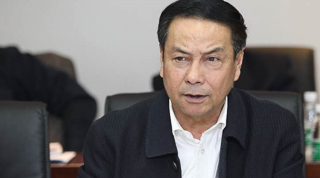
Chen Xiwen 陈锡文 | NPC Agriculture and Rural Affairs Committee chair
A highly respected expert on ag and rural affairs, Chen led the CPC Central Rural Work Leading Group until his semi-retirement in 2016. Renowned for his hands-on experience as an agricultural economist, he also served as deputy director of the CPC Central Economic Leading Group. Relatively conservative on collective rural land, his views have moderated in recent years, though he still opposes land privatisation. His March 2018 appointment to chair the NPC Ag and Rural Affairs Committee put him in a key role authoring rural legislation, including the recently adopted Farmland Occupation Tax Law and Rural Land Contract Law, as well as the forthcoming Land Management Law and Rural Revitalisation Promotion Law. During the 2018 Two Sessions, Chen also proposed a new Rural Collective Economic Organisation Law.
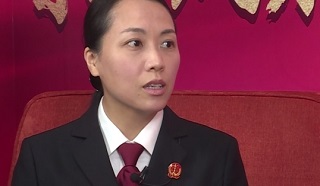
Chen Haiyi 陈海仪 | Guangzhou Juvenile Family Trial Court president
A well-credentialed specialist in juvenile crime and its origins, Chen was an early advocate of family and juvenile legal reform and helped build a unified national youth data platform to examine patterns in recidivism. While noting that technological advances allow people to view and participate in the legislative process online, Chen has also spoken of the need to examine psychological sources of youth crime, in recognition of the fact that poor mental and physical health can lead to law-breaking.
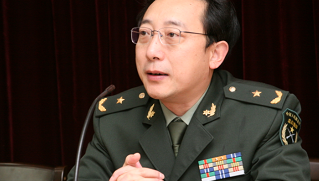
Cao Xuetao 曹雪涛 | Nankai University dean and Chinese Academy of Engineering academician
After graduating from the Second Military Medical University, Cao pioneered medical immunology in China, setting up a state key lab for it in 2006. In 2015, he became dean of the country’s top medical school, Peking Union Medical College. Cao moved to his current post as Nankai University dean in 2018, a position with vice-minister rank. At the Two Sessions, Cao recommended setting up a global network of China-foreign joint research centres at elite research universities, in the footsteps of the Chinese Academy of Medical Sciences Oxford Institute. Such centres would help China attract top talent and move to the global cutting edge. Reducing reliance on ‘stranglehold’ overseas technologies requires concerted plans for research projects, institutes, and human capital, concludes Cao.
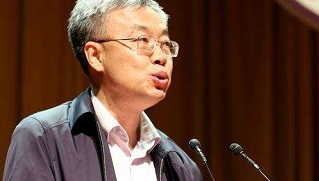
Lü Jian 呂建 | Nanjing University president
Lü was appointed to his post in January 2018 after eight years as vice president overseeing graduate student affairs. At the 2019 NPC, Luo Jun 罗俊 Sun Yat-sen University president proposed for the second time to increase the size of doctoral programs. By contrast, Lü pointed out that over 65 percent of doctoral candidates are unable to graduate on time and are at risk of marginalisation. To minimise delays, Lü insists that higher education institutes (HEIs) should trim program size and refine doctoral training, and not be afraid to dismiss incompetent candidates.