
signal
New measures to boost the housing rental market will struggle to overcome forces that favour leaving properties empty.
intent
China has a tight rental market, despite housing oversupply in small cities and empty housing in large-city property bubbles.
State Council issued opinions in early June 2016 to expand housing rental markets and make renting more attractive than buying. Calling for a ‘well-regulated, sustainable and fair’ market by 2020, these are the latest in a series of measures released over the last two years.
The opinions encourage
- developers to build homes with intent to let, rather than sell
- local governments to increase rental subsidies for low-income groups
- local governments to expand real estate investment trust (REIT) pilots
- individuals and sales agencies to let out housing
- urban planners to make rental housing core to city planning
- private or public-private management and funding for rental housing
The opinions will
- allow repurposing commercially zoned buildings as rental housing, maintaining commercial land-lease terms but offering residential rates for water, gas, electricity and heating
- standardise rental contracts and clarify landlord and renter responsibilities
- exempt individual homeowners earning under C¥30,000 per month from paying VAT on rental income until 2017
- lower VAT to 6 percent for housing rental agencies and 1.5 percent for individuals
outlook
Current policy is inadequate to reduce housing oversupply or slow down skyrocketing property prices in the foreseeable future. Leaving houses empty in top-tier megacities remains more attractive than letting them out
- sale revenue dwarfs rental income, and tenanted housing is harder to sell; sale prices in Beijing, Shanghai and Shenzhen rose 19.5, 27.7 and 53.2 percent respectively over the year to May 2016
- for developers, playing landlord means decades waiting to recoup original investments and foregoing immediate profits
Housing oversupply and low migration creates weak rental demand in smaller cities
- migrants have limited access to urban social services, especially if they do not buy housing in urban areas
Proposed rental taxes and subsidies will have little effect
- few individuals and rental agencies now pay any tax on rental transactions because much of the rental market is illegal
- middle-class homeowners oppose a property holding tax, needed to encourage the use of empty housing
- better property registration is needed for effective taxation
Short term, allowing vacant commercial property to become residential rentals may address high vacancy rates in large cities, which have increased with the rise of e-commerce over traditional retail.
More pilots signal a desire to promote REITs, but these require stable rental income to attract investors. Other barriers to real estate asset securitisation, like a lack of tax incentives and the 10 percent cap on public funds investing in unlisted commercial property, may soon be addressed.
context
3 Jun 2016: State Council issues ‘Opinions on promoting the residential rental market’
4 May 2016: State Council executive meeting calls for expanding the individual rental market to address oversupply and speed up urbanisation
15 Mar 2016: Chen Zhenggao 陈政高 MoHURD minister urges new policy to promote lagging rental markets
6 Feb 2016: State Council ‘Opinions on more deeply promoting creation of new-style urbanisation’ promote rental markets as an important step in integrating migrants into cities
24 Nov 2015: withdrawals from the housing fund to pay for rental fees become permissible
14 Jan 2015: MoHURD releases opinions to improve rental marketisation, regulation and legal framework by 2018
8 Nov 2014: Beijing, Shanghai, Guangzhou and Shenzhen announce pilot plan for REITs
May 2014: State Council proposes REIT as an area to consider in developing capital markets
2005: State Council calls for standardising and expanding rental housing supply to stabilise housing prices
2003: State Council notification raises rental market issues for the first time
roundtable
rental market reform an opportunity to regulate housing agencies
Du Xiao 杜晓 | Legal Daily
Policymakers must pay attention to the role of traditional housing agencies in promoting rental markets, says Du, especially in breaking through the agencies’ monopoly on rental information. Renters still rely heavily on agents to find housing. For the rental market to succeed, agency services and prices need to be set according to law. Housing agents face serious public and media criticism: unless their price manipulation ends, the housing rental market cannot grow.
pro-rental policy: not a result of destocking
Tan Haojun 谭浩俊 | China Economic Net
Pro-rental policy is about more than destocking: it can change ideas about consumption and investment. A better rental market can reduce social pressure and provide low-income residents an alternative to home-ownership. It can also change the culture of using housing speculation to drive the economy, which leads to bubbles. A larger rental market would thus reduce financial risk stemming from the property market.
long road ahead for REIT development
Liu Xiaoting 刘晓婷 | FT Chinese
In recent years, government officials, property companies and investors have promoted real estate investment trusts (REITs). Securitising can help resolve bad assets and promote economic restructuring. To be useful in China, however, REITs still need
- better tax incentives: REITs still need to pay all taxes, which could account for up to half of REIT rental income and thus make investment unattractive
- relaxed investment restrictions: public funds cannot invest more than 10 percent of net assets in REITs, while foreign investment in REIT and related products is as high as 75 percent of total real estate investment
- stronger investment management foundations: professionalising and expanding management capacity will also increase REIT yields
in the spotlight

Zhang Dawei 张大伟 | Centaline Property Agency Limited chief market analyst
Zhang is a prolific commentator on the housing market. First- and second-tier cities still have high demand for commercial property, says Zhang; re-zoning commercial space as residential rental space can have no great impact. Property owners also face risks if they try to convert buildings like shopping centres, hotels and offices into apartments: changing the facilities will be costly.
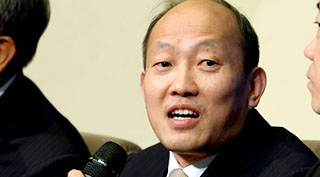
Chai Qiang 柴强 | China Institute of Real Estate Appraisers and Agents
Chai argues that the real estate market has reached a turning point. Property companies have moved from relying on construction revenue to investment and transaction revenue; developing a rental market signals that they are again shifting, this time depending on securitisation. Chai also calls for expanding the social credit system to the rental market to build trust, as well as a firmer role for property agent associations to help regulate middlemen.

Liu Hongyu 刘洪玉 | Tsinghua University Hang Lung Centre for Real Estate associate dean
A specialist in real estate economics, Liu wonders how the housing market will promote or hinder urbanisation. Lack of rental housing, he says, lowers the quality of urbanisation: students and migrants cannot find affordable places to live. The rental sector, argues Liu, is under-professionalised: State Council policies will increase the share of professional landlords closer to levels seen abroad where rental markets are more developed.