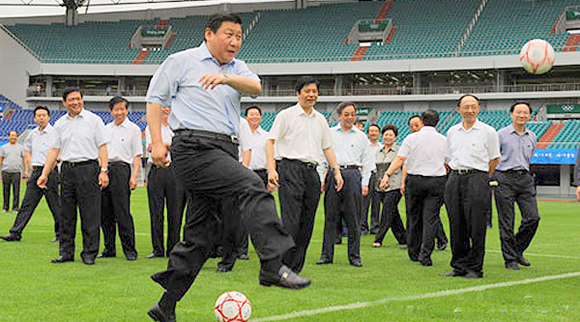
On 2 September 2009, Chinese football hit rock bottom. Second division Qingdao Hailifeng was leading Sichuan FC 3:0. Its owner had allegedly placed large bets overseas on a Qingdao win, with at least four goals scored. In the final minutes the Qingdao team tried to deliver on the bet with an own-goal. Thanks to the heroics of Hailifeng goalie Mou Pengfei 牟鹏飞, his teammates failed. Inured to disappointment and disgrace, China's football fans remain resilient. The China Super League CSL, the premier domestic competition, is the best attended in Asia, ranking 11th in the world. The international game also sustains China’s football passion; 600 million tuned in to the 2014 World Cup quarterfinal between France and Germany, while China is the English Premier League’s largest fan base. Spurred by this devotion, the local super-rich are investing heavily in foreign and domestic teams. Politicians are getting in on the act: Xi Jinping 习近平 has moulded an image for himself as a football diehard. His passion reportedly dates back to a 'moment of rage' when the Chinese national team lost 5-1 to Watford in a 1983 Shanghai friendly match. Xi confirmed his credentials in 2011, unveiling his ‘football dream’ of China qualifying for, hosting and winning the World Cup. The bureaucracy backed up Xi's passion with action, announcing a football reform package on 16 March 2015.
a champagne year
2014-15 has seen China's football move to the front foot. On 18 January 2014, Wang Jianlin 王健林, chairman of conglomerate Wanda Group and, since the 1990s, an on-and-off investor in the domestic game, bought a 20 percent stake in Spanish side Atletico Madrid. In June 2014 Jack Ma 马云, chairman of internet giant Alibaba, bought a 50 percent share of Guangzhou Evergrande from property magnate Xu Jiayin 许家印 for C¥1.2 billion. Xu reinvested this windfall in the Guangzhou Evergrande International Football School, a 2,400 student facility that opened on 18 June 2014. It has been a year not only of big business but of big results: at the 2015 Asian Cup, China's men's national team won three games on the trot before losing in the quarterfinals to eventual victors Australia. Having learned to keep expectations low, fans greeted the team’s performance with elation.
laying out the reform
The Xi administration is capitalising on this momentum. The State Council passed a draft National Football Comprehensive Reform Plan on 26 January 2015, which was reinforced at a 27 February meeting of the Leading Group on Deepening Reform, the new elite policy platform personally chaired by Xi. The State Council’s 16 March National Football Reform Development Plan lays out short- medium- and long-term goals: streamline football management; break men’s football into the Asian elite and return China's women’s football to the world top ten; and qualify for and host the World Cup. Steps towards these goals include:
- separating the China Football Association CFA from the General Administration of Sport GAS, dissolving its government identity and making it a civil organisation
- setting penalties for illegal playing contracts and failure to pay wages
- constructing two new training bases for the national team
- expanding the National Schools Football Program
There are currently 5,000 schools in the program; the reform increases schools to 20,000 by 2020 and 50,000 by 2025.
long ball game
Political obsession with football in the first half of 2015 is unprecedented, but the development of 'the people's game'—not least youth football—kicked off much earlier. A turning point came in 2009 when the GAS, inspired by the success of grassroots youth football in Japan, launched the National Schools Football Program. Tom Byer, who guided the Japanese program, has served as a formal advisor to the Beijing Bureau of Education as well as the Ministry of Education since 2012. Hence the current round of reform addresses a final kilometre: bringing long-term investment in youth football to fruition. However, warns Chen Changhong 陈长虹, National Youth School Football Program head coach, ‘paving this “final kilometre” is not without pitfalls’... regardless of the top-level design quality, failure to make it work at the grassroots will end in disappointment'.
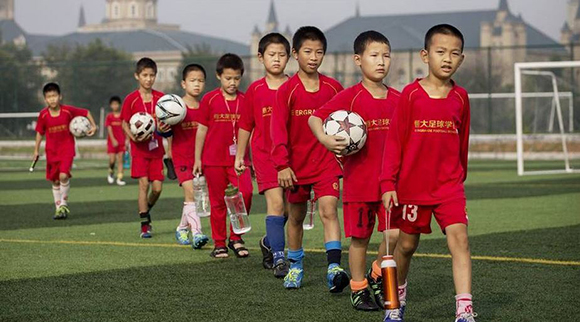 Young players at Evergrande Academy. Qingyuan, Guangdong Province, 18 June 2014
clubs mean business
Billionaire owners of CSL clubs have been juicing up football’s advance. Football impressario Xu Jiayin helped take Guangzhou Evergrande from relegation (due to matched fixing) to China League One, to running away with the CSL championship in 2011—and winning at the Asian Champions League in 2013. Under Xu, Evergrande has set a new standard of professionalism. Its ‘Three Fives’ code of conduct, mandatory for both players and club, has become an industry standard. Xu’s successful takeover of Evergrande translated into political clout. As a delegate to the 2013 annual meetings of China's legislators, the Two Meetings, he attacked bureaucracy hamstringing the development of football at all levels; the Ministry of Education MOE should, he insisted, be in sole command of the National Schools Football Program. This indeed happened when on 26 November 2014 the State Council transferred oversight of the program from the CFA to the MOE.
why now?
While plutocrats and popular commentators have long sought a football makeover, the state has called the shots. Why has it chosen this moment to set its seal on China's football renaissance? The surge in popular support for the game following the national team’s performance at the Asian Cup provided an opportunity. But the State Council’s 16 March 2015 announcement shows the reform has more than just football in its sights:
The sport of football has a broad impact on society and is widely enjoyed. Developing and revitalising it is of utmost importance for improving national physical health; enriching cultural life; promoting the spirit of patriotism and team work; nurturing sports culture; developing the sports industry; and realising the dream of sports power. And these in turn do wonders for economic, social and cultural development.
As growth rates ebb and environmental crises, property bubbles, income disparity and other worries rise, social cohesion is at a premium. High-profile, popular sports like football are low-risk channels of social cohesion at home—and bolster China's image overseas. The current sweeping anti-corruption campaign is also touching football. Betting scandals and match-fixing have afflicted the game in China even more than they have the international game. The turnaround in the national team’s performance at the Asian Cup was the result, claimed the Central Discipline and Inspection Commission, of its GAS corruption investigation. Removing the CFA from direct GAS oversight and transferring the National Schools Football Project to the MOE are held up by the Xi administration as successful shakeups of the bureaucracy.
pass the ball to the people
The political spotlight directed at football may be its undoing. CCTV sports presenter Zhang Bin 张 斌 warns ‘people hope this reform will come into effect quickly, but I myself think football generally takes its own course; a rigid development schedule may backfire'. With so much political capital now invested in football, there is not only immense pressure on the players; if the national team fails to produce on the pitch, support for grassroots programs may take a collateral hit. ‘There is no need,' advises Zhang, ‘to obsess over which government agency or group must achieve which results… The incentive should not be to host the World Cup or to win it, but to promote social development and progress'. Sports journalist Ma Dexing 马德兴 similarly argues that elevating the sport to a symbolic national project is the crux of the problem, inhibiting broad uptake. Successful sport school graduate and rising youth coach Li Shitao 李世涛 accords, attributing the world class success of countries like Brazil and Argentina to their organic street football cultures. A laissez-faire approach to Chinese football is not, however, on the cards. Football’s holy-grail status is hinted at in the reform formula. Subordinating the CFA Party Committee to that of the GAS belies their nominal separation and looks like a safety precaution: civil organisations are still high risk and must be supervised. Similarly, while the National Schools Football Project was transferred from GAS to the MOE, the National Schools Football Leading Group, to be chaired by MOE representative Wang Dengfeng 王登峰, will include reps from heavyweight state planning and propaganda agencies. Big wins at the 2015 Asian Cup relit a flame of public faith, convincing a nervous leadership that football could become a rallying point for a country facing uncertainty.
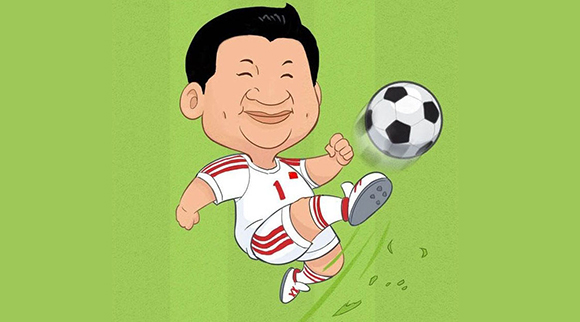 Chinese football's most valuable player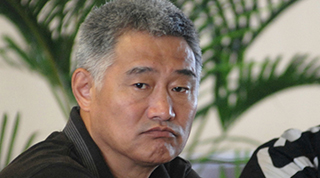
CHEN Changhong 陈长虹 | National Youth School Football Program head coach
Football reform's 'last kilometre'
2 March 2015
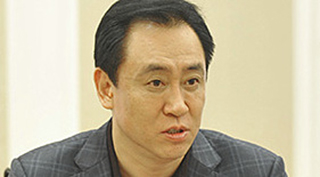
XU Jiayin 许家印 | Evergrande Group chairman and founder of Guangzhou Evergrande International Football School
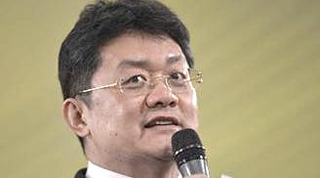
ZHANG Bin 张斌 | CCTV sports presenter
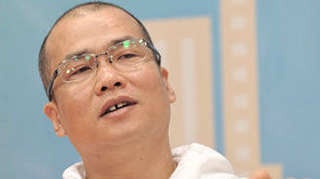
MA Dexing 马德兴 | sports journalist
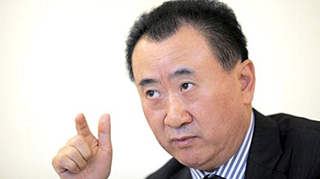
WANG Jianlin 王健林 | WANDA Group CEO
Atletico Madrid: China's Wang Jianlin buys 20 percent stake
21 January 2015
Copyright © 2015 China Policy, All rights reserved.