roundup from our portfolios
Public health and economic recovery, the Politburo insists, must proceed in lockstep. Policy-making is signalling ‘business as usual’, despite a suspected new wave of cases. Central agencies are on notice to regroup on curbing poverty.
The most powerful weapon against epidemics, proclaims Xi Jinping, is science and technology. Researchers are urged to master core technologies with independent IP. Major changes to science and innovation funding rolled out this month. An overhaul of appraisal procedures to reward originality and quality is heatedly debated. Research publications will be evaluated on quality and peer assessment, rather than quantity.
With prevention turning to imported cases, lockdowns are being eased in anticipation of a return to routine. With a record high jobless rate, ‘stabilising jobs’ has become imperative. Lessons from COVID-19 are filtering into policy, as central authorities announce sweeping healthcare insurance reforms.
Work kept resuming through March, with fear of COVID-19’s flattening effect on global demand the driving factor. Spurring consumption, cities and firms are issuing vouchers and vehicle subsidies. New and traditional infrastructure spending are being blended; but tight fiscal constraints amount to a loudly repeated ‘no stimulus here’... yet.
‘New infrastructure’ is a revived buzzword encompassing 5G, ultra-high voltage grid, intercity rail, NEV charging stations, big data centres, AI, and industrial IoT.
The economic path ahead is no bed of roses: trade volume suffered double-digit declines in Jan-Feb, with the worst yet to come. Securing supply chains despite the pandemic is the focus. ‘Stabilising trade’ has given way to ‘stabilising trade fundamentals’: adapting to potential domestic oversupply and evident falling overseas demand.
Contrary to official narratives, the epidemic is severely straining spring ag production. It has been blocking deliveries of inputs and upsetting planting and field management. Year-long food supply shortfalls will likely flow from this, to say nothing of fall armyworm and African swine fever depredations. Central emergency directives were issued, improving the flow of capital, labour and goods.
The anti-pollution drive shows little impact from COVID-19. Top-level measures emerging in March seek to ‘modernise environmental governance,’ and ‘build a beautiful (pollution-free) China’. As with environmental protection, solar emerges as one of the few sectors spared significant disruption. Early announcement of 2020 wind and solar regulations provide much-needed certainty to the sector.
job opportunities
If you want to work at the leading edge of policy analysis on China, please join our team! As we move to more remote work, embracing a team of analysts spread around the world, we are hiring an analyst for our health and education team. Residence in Beijing is not required. Please contact hr@policycn.com for information.
march policy movers
policy professionals in and out of the establishment
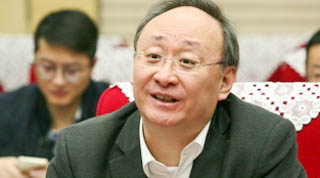
Yin Li 尹力 Sichuan governor
Health professional and medical policy veteran, Yin urges safeguards for 'black swans', low probability events, that have a habit of surfacing. He lauds Sichuan’s terminology
- find: use big data and ‘grid management’ to screen refugees from epidemic areas (while also checking on residents)
- manage: sort cases by their condition
- serve: beyond quarantining, provide daily help and amenities
Dividing Sichuan’s regions by the severity of the epidemic, notes Yin, strategies may be rolled out, tailored to specific needs, rather than ‘one size fits all’. He urges officials to mobilise social forces to help with governance in black swan moments.

Zhao Jian 赵建 | Atlantis Research Institute dean
Economic development is no simple matter of promoting ‘new infrastructure’ investment, argues Zhao: it requires reforming ‘soft infrastructure’ or institutions and their cultures (such as ‘rule of law’) that favour long-term economic growth. ‘New infrastructure’, he insists, differs from the old, both in its technical aspects and scalability: it makes little sense to build data centres in every city. Instead of state-led ‘new infrastructure’, localities should use their resources for tax cuts or subsidies, allowing private firms to take the lead.

Liu Yiyang 刘译阳 | China Photovoltaic Industry Association vice secretary
COVID-19’s impact on solar is mild, reports Liu. 80 percent of leading firms' capacity has been restored to normal levels. While concerned about the global pandemic, Liu is undaunted about the long term. Dismissing concern over the growing presence of SOEs, he claims they complement private firms. Given their financial strength and capacity to bear risk, SOEs are suited to developing solar power plant businesses. Private firms, he argues, should conversely capitalise on their advantages: innovation and sensitivity to market demand.
policy ticker highlights
gems from our feed of policy releases and domestic debate
global impact
getting ready for slump in exports
The Beijing News | 23 March
context: China saw a double-digit decline in trade volume in Jan-Feb 2020 due to COVID-19, and the worst is yet to come as the pandemic unravels. 'Stabilising the fundamentals of trade' has increasing prominence in official statements since early March.
Policy should shift from 'stabilising trade' to 'stabilising the fundamentals of trade', says Yu Chunhai 于春海 Renmin University of China School of Economics professor, by maintaining the fundamental function of trade in the economy which is to supplement domestic demand in achieving supply-demand balance.
It is unrealistic and unnecessary to aim for positive growth in export volumes, according to Yu. The pandemic is restraining China's exports in two ways: overseas demand is inevitably shrinking, while the pressure of containing imported cases of COVID-19 will also limit China's production output. China should not blindly stimulate capacity expansion and export growth, as this will result in overcapacity. Instead, it should adapt to domestic supply and overseas demand situations.
The focus now should be on securing import channels and supplies, which is crucial for 'new infrastructure' projects, adds Yu.
governance
commentary argues transparency stabilises public opinion
People's Daily | 23 March
context: The epidemic is deepening some policy debates, including the sensitive issue of information disclosure; what should be shared with the public and how best to present and package that knowledge.
Given that the number of COVID-19 cases among returnees has increased, a commentary in People’s Daily states that ensuring openness and transparency of information serve as the most effective 'disinfectants’.
Releasing authoritative information and responding to public concerns in a timely fashion, through press conferences, interviews with experts, and the like, all have a role to play in calming residents and providing emotional reassurance, as well as instilling confidence among the general public that they can overcome the epidemic. As the resumption of work and production accelerates, the risk of epidemic spread and diffusion cannot be ignored, and the comprehensive disclosure of information must continue, the commentary notes. Timeliness, as well as pertinence and professionalism, are crucial in defeating the epidemic.
macroeconomy
preparing for consumption rebound
21st Century Business Herald (1), 21st Century Business Herald (2) | 19 March
context: Facing severe economic slowdown inflicted by COVID-19, Beijing 'miraculously' contained the rapid spread of the virus and hustled its people and companies back to work. Still determined to meet set growth targets, more stimulus policies are expected to boost infrastructure investment and consumption.
Following a 13 Mar 2020 NDRC (National Development and Reform Commission) opinion, State Council on 18 Mar 2020 elaborated on consumption stimulus policies. Local governments in Jiangxi, Hunan, Jiangsu, and Zhejiang all issued documents encouraging spending.
COVID-19's negative impact on the economy is short-term, with the situation gradually improving as policies take effect, says Wang Bin 王斌 Ministry of Commerce. Lauding release of consumption vouchers in some localities, Ha Zengyou 哈增友 NDRC suggests such policies should consider local fiscal capacity and bring real benefits to the people.
Hospitality and other service industries are hurt by COVID-19
- National Bureau of Statistics (NBS) data show nationwide catering industry revenue dropped by 43.1 percent in Jan-Feb y-o-y. There was a C¥500 bn loss every 7 days, according to 21st Century Business Herald
- tourism was also hit hard, but as of 16 Mar 2020, over 30 percent of 3714 A-rated sites nationwide resumed business, and online tourism platform Qunar data showed recovery throughout the industry
- garment consumption dropped, says Ai Guoyong 艾国永 Macondo, with Jan-Feb sales abysmal, but beginning to improve in March
Hua Changchun 花长春 Guotai Junan says people were more prudent consumers during the lockdown, but suppressed demand would recover.
Scrap steel prices increased slightly as infrastructure and real estate construction slowly resumes, reports 21st Century Business Herald, with automobile and real estate sales rebounding from consumption stimulus policies and interest rates staying low. Liu Xuezhi 刘学智 Bank of Communications points out infrastructure investment would rebound thanks to expanding special-purpose bonds.
Mao Shengyong 毛盛勇 NBS says macroeconomic policies serve as hedge against internal and external risks.
agriculture
ensure spring planting on time
State Council | 3 March
context: Lockdowns on the movement of people to contain the spread of COVID-19 have raised fears that farmers will be unable to plough their fields and sow crops. To ensure food security, the Chinese government is now waging another battle, this one to secure the annual grain output.
On 3 Mar 2020, the Central Leading Group for Countering the COVID-19 Epidemic released 'Notice on Guiding the Spring Planting Work', asserting the determination to
- stabilise grain planting areas, by
- having provincial leaders take final responsibility for grain security
- incentivising farmers with minimum purchasing prices, production subsidies, and ag insurance
- guiding farmers to adjust planting structure, restore double-cropping rice in regions with suitable conditions, and expand planting areas of early season rice, as well as crop rotation
- restore spring planting adjusted to different scales of epidemic risk
- for low-risk areas: completely restore farming work while keeping an eye on introduced cases of COVID-19
- for medium-risk areas: take turns to do farm work while preventing introduced cases and the internal spread of COVID-19
- for high-risk areas: prioritise disease prevention before gradually restoring ag production
- tailor spring planting preparations and water management to the needs of production areas, covering
- rice seedling and transplanting in southern early rice areas
- wheat field management in summer grain areas
- rice seedling in the Yangtze River central rice area
- land preparation in north China
- irrigation arrangement and preparation in all areas
- ensure ag input supplies by restoring production and transportation, as well as market supervision and product quality inspection
- update irrigation facilities
- strengthen the capability of meteorological- and bio-disaster forecasting, prevention and control
- provide technical support for rural labour and agribusiness entities
- make plans for ag machinery cross-regional operations and ensure testing and maintenance services
society
healthcare insurance reforms set the tone for next decade
Weixin, National Business Daily, Yicai | 5 March
context: Healthcare insurance reforms have garnered much high-level attention, and NHSA has again been given the power to push through new reforms, this time joined by other healthcare authorities.
Although CCP Central Committee and State Council’s 5 Mar 2020 measures are branded as insurance reforms, they touch on all aspects of healthcare reform and will set the tone for the next decade, observes 8am Health Insight. It is partly a recognition of the work of NHSA (National Healthcare Security Administration) since its establishment in 2018. The four major areas of future measures include welfare, financing, payment and supervision. These will be supported by healthcare services and drug reforms, overseen by National Health Commission and National Medical Products Administration.
There are several notable innovations. Outpatient expenses will be gradually covered by coordinating BMI (Basic Medical Insurance) personal accounts, 8am Health Insight points out. BMI funds will also be coordinated at higher levels, and there have been calls for a central adjustment system.
Zhu Minglai 朱铭来 Nankai University Research Centre for Health Economics and Medical Insurance director notes that ‘healthcare mutual assistance’ has been mentioned for the first time. It is expected many existing programs will be absorbed into the social insurance system, National Business Daily reports. Zhu also lauds the move to unify BMI contribution policies, which will ensure full coverage and equality.
‘Internet + healthcare’ has also received central support, notes Yicai. But several problems remain. For example, it is unclear how BMI spending by online platforms will be budgeted. Varying local policies will also make reimbursements and supervision of national platforms difficult.
Some traditional themes remain unchanged, such as continuing centralised drug procurement, promoting high quality generic drugs and Reimbursable Drug List adjustments. Drug price reductions will be followed by increasing doctors' pay, says 8am Health Insight.
energy and environment
top-level guidelines on environmental governance
State Council | 3 March
context: Environmental protection is a key part of Xi Jinping's overall focus on governance reform, stressed at the Central Committee 4th Plenum. This much-anticipated policy document embodies changes in the way the state perceives and structures environmental regulations, rooted in a fundamental shift in how it envisions the relationship between man and nature (i.e., ecological civilisation). This includes developing long-term structural solutions and promoting environmentalism as part of high-quality growth.
CCP Central Committee and State Council issued 'Guidelines on building modern environmental governance system', specifying
- targets
- by 2025, setting up an effective, sound and interactive environmental governance system that
- stresses
- responsibilities of corporations and governments at all levels
- participation of citizens
- enhances environmental supervision, legislation, market operation and credit scoring
- stresses
- by 2025, setting up an effective, sound and interactive environmental governance system that
- state responsibilities
- improving government working structures in which
- CCP Central Committee and State Council oversee overall planning and goals, and formulate Party and state institutions' environmental protection responsibilities
- provincial governments take overall responsibility
- city and county-level governments are in charge of implementation
- clarifying central and local governments' respective spending responsibilities
- rolling out evaluation
- deepening environmental inspection
- improving government working structures in which
- corporate responsibilities
- implementing pollutant discharge permit
- greening production and services
- improving pollution treatment
- disclosing environmental treatment information
- citizens' participation
- strengthening public supervision
- enhancing involvement of social groups
- improving citizens' environmental literacy
- environmental supervision
- strengthening enforcement, legal support and monitoring capacity
- environmental market
- building a transparent and fair market
- boosting environmental industry
- scaling up innovation in critical technologies and products
- fostering a number of leading firms
- supporting a number of specialised SMEs
- promoting third-party pollution treatment
- improving pricing mechanisms based on 'polluter pays' principle
- environmental credit scoring
- strengthening government affairs integrity building
- improving corporate environmental credit evaluation
- environmental legislation
- improving laws, regulations and standards
- enhancing fiscal, tax and financing support
- ensuring sustained and stable funding from central and local governments
- improving ecological compensation scheme
- releasing policies conducive to upgrading industry, energy, transport and land use structures
- strictly enforcing Environmental Protection Tax Law
- setting up a national green development fund
- promoting environmental liability insurance, which should be mandatory in regions with high environmental risks
- encouraging major environmental equipment leasing
- speeding up building provincial soil pollution prevention and control funds
- standardising green bonds
science and innovation
centralise biosecurity data and draft ethical principles
The Beijing News | 13 March
context: A draft biosecurity law, under NPC review since October 2019, is on track for 2020 issuance. COVID-19 raised its importance, recognised Xi Jinping at a 14 Feb 2020 meeting. High-level coordination is needed, given the number of agencies involved and the low status of National Biosafety Management Office under Ministry of Ecology and Environment.
The China Biodiversity Conservation and Green Development Foundation offered recommendations on the Biosecurity Law to the NPC (National People's Congress) legislative work committee, reports Beijing News.
- centralise biosecurity information
- collect monitoring data from all agencies and localities in a biosecurity big data platform
- provide real-time risk monitoring, identification, screening and early-warning
- give the governing agency equal power to current biosecurity regulators so that it can coordinate emergency responses
- clamp down on illegal online trade
- step up inspections of logistics, especially in border regions, to halt illegal trade in wild animals, ivory, plants and microorganisms
- although China signed the 'Convention on Biological Diversity' and the 'Cartagena Protocol on Biosafety', they can only be implemented if domestic laws are changed
- improve public consultation
- allow experts to analyse and recommend amendments, to ensure the law is scientifically sound
- set up a biosecurity expert database
Throughout the legislative process, several commentators called for a biosecurity ethics committee, says the report. Principles are needed to set clear boundaries, says Du Qun 杜群 Beihang University Law School professor (Note: similar to those for AI). Scientists should be allowed to experiment, but they should follow ethical guidelines and should not risk humanity's future, says the report, referring to scandals with faulty vaccines, gene-edited babies and BGI Genomics (Note: which illegally exported human genetic resources in 2015).
The illegal export of Chinese genetic material and biological data is loss of a national resource, says Ma Yong 马勇 China Biodiversity Conservation and Green Development Foundation secretary general.