prioritising scitech
The top task of GWRs (Government Work Reports) is usually to steer the macro-economy. Not 2024's. Instead, as we forecast, fostering ‘new productive forces' and modernising industry ranks first. ‘Invigorating China through science and education’ comes second. ‘Expanding domestic demand’, 2023's top goal, now comes in third.
This is no surprise. Modern, resilient and self-reliant industrial chains, SEIs (strategic emerging industries) and FIs (future industries) have topped Beijing’s agenda for months, not least at the Central Economic Work Conference in late 2023.
budgeting up
The 2023 Two Sessions restructured state agencies devoted to scitech; 2024 sets the stage for them to enact plans and make tangible progress.
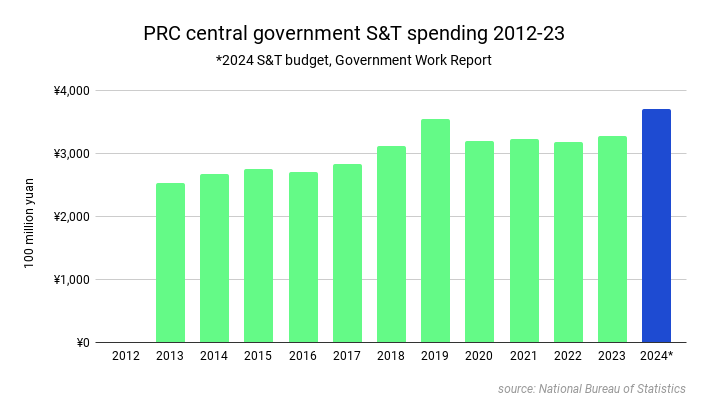
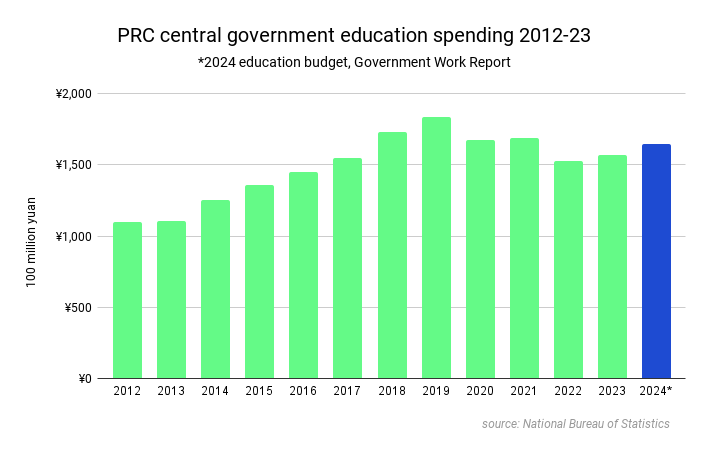
The state is following through, committing
- C¥371 bn to scitech, up 10 percent
- C¥165 bn to education, up 5 percent
- C¥12 bn in central subsidies for basic ed in county high schools
- C¥31 bn for a ‘modern vocational education quality improvement plan’
- C¥40 bn for university reform
Crucially, some C¥100 bn for basic research—chronically underfunded—up over 13 percent.
‘invigorating China through science and education’
The GWR talks up cohesive policy with ‘combination effects’, integrating innovation, industry, education, capital, and talent. Previous work reports dispersed these elements sector by sector, notes Zhou Hongyu 周洪宇 NPC Standing Committee and Central China Normal University National Institute of Education Governance dean.
‘Invigorating China through science and education’ is no new idea (see timeline), but 2024’s is the first GWR to rank it so near the top; also picking out 'fostering talent domestically' as imperative. For three decades, efforts to lure emigré scientists back to the PRC have been widely criticised as tacit IP theft. With PRC students and scholars under intensified scrutiny abroad, harvesting research capacity from overseas is ever less viable.
Homegrown sourcing of talent, from K-12 to PhD, is hence a long-term vision of the GWR.
‘invigorating China through science and education’
a short history
- 1978: Deng Xiaoping hails ‘scitech as a productive force’: ‘intellectuals are part of the working class’. He rehabilitated scientists’ status after the Cultural Revolution
- 1988: Deng proclaims 'scitech the primary productive force’
- 1995: Jiang Zemin’s ‘national invigoration through science and education’ blends tech and education in a unified strategy
- 2001: Jiang proclaims ‘scitech is the primary productive force, talent the primary resource’
- 2005: Qian Xuesen 钱学森, US-trained physicist and rocket scientist, quizzes then-Premier Wen Jiabao 温家宝, ‘Why do PRC schools fail to produce outstanding scitech talent?’
- 2006: domestic innovation is made key focus of the ‘National scitech medium- and long-term development program (2006-20)’
- 2021: extending ‘self-reliance’ to research talent, Xi Jinping urges, ‘Competition is ultimately about talent and education. Independently cultivating our own talent deserves greater emphasis’
- 2024: ‘national invigoration through science and education’ becomes a key focus in the GWR
it’s the talent, stupid
In their Two Sessions media performances, Ministry heads joined the ‘talent first’ chorus.
- Yin Hejun 阴和俊 MoST minister promised thorough implementation of support policies for young scientists announced in 2023
- Zhang Yuzhou 张玉卓 SASAC director highlighted the critical role SOEs play in developing talent at his press conference and hosted a meeting on SASAC’s talent development plans. Central SOEs invested C¥1.07 tr in R&D in 2023, almost one-third of the country’s total, and are home to over 1.2 million researchers
- Wang Xiaoping 王晓萍 Minister of Human Resources and Social Security, proclaimed talent key to developing ‘new productive forces’. She announced initiatives to cultivate skilled talent needed for the ICT sector, advanced manufacturing and state-of-the-art services, and build several high-skill talent training bases
- Huai Jinpeng 怀进鹏 Minister of Education, noted that cultivating talent mainly focuses on a range of fields in basic research. Multi-party collaboration in talent training is needed to improve tech transfer and commercialisation. Classification will allow universities to develop niche strengths, vital in transforming ‘elite’ to ‘universal’ education
delegates weigh in
The GWR addresses several long-standing pain points: flawed evaluation metrics for awards and R&D grants, bad work-life balance for scientists, financial support for education in under-developed regions, enterprise-campus disconnects in state-funded R&D projects, and long-awaited State Key Lab reform.
Delegates are asking for more fundamental rethinking: innovation fails to thrive when all actors are under intense pressure, argues Yuan Yaxiang 袁亚湘 CAS (Chinese Academy of Sciences). The PRC’s academic censorship deters foreign students, points out Jia Qingguo 贾庆国 Peking University.
A major reform shaking up 20 percent of university majors is already underway. But overemphasis on universities, say some, is flawed outright.
Tech workers lack social status, says Ma Guibang 马贵帮 NPC deputy and Foxconn employee. Bestowing undergrad degrees on some vocational school graduates might be an option. Accepted in principle, continuing education credentials are typically devalued in practice—despite a projected shortfall of some 30 million tech workers in manufacturing by 2025.
Over-reliance on public institutions sets vocational education back, laments Fan Chunhai 樊春海 CPPCC member and CAS academician. Poor division of responsibilities between education and HR departments causes disconnects between pre-employment education, post-employment training and continuing education.
common tech prosperity?
Massive inequity lurks in the background: compared to their urban peers, high school diplomas, vocational college degrees, and BAs or above are respectively some 3, 6, and 14 times fewer in rural areas. As of 2020, 80 million PRC residents were illiterate, 90 percent of them rural.
The GWR pledges ‘urban-rural integration of compulsory ed’. But teachers are lacking—and ageing. Some 9 percent of teachers in rural areas are 55 or above, warn Wu Zhihui 邬志辉 Northeast Normal University Institute of China Rural Education Development. The disparity with urban schools (where they are just 3.3 percent) will only worsen as they retire.
As money is poured into high-stakes ‘future industries’, where is a still massive, poorly educated workforce left? To futureproof it, MoE bets on AI-related training from as early as primary school. Rural vocational ed strives to embrace the tech boom with state of the art skills like training for agricultural drone navigation.
State of the art is a risky descriptor: which state, of which art, and for how long? Whether initiatives referencing it can keep pace with white-hot tech development is a deep question.
profiles
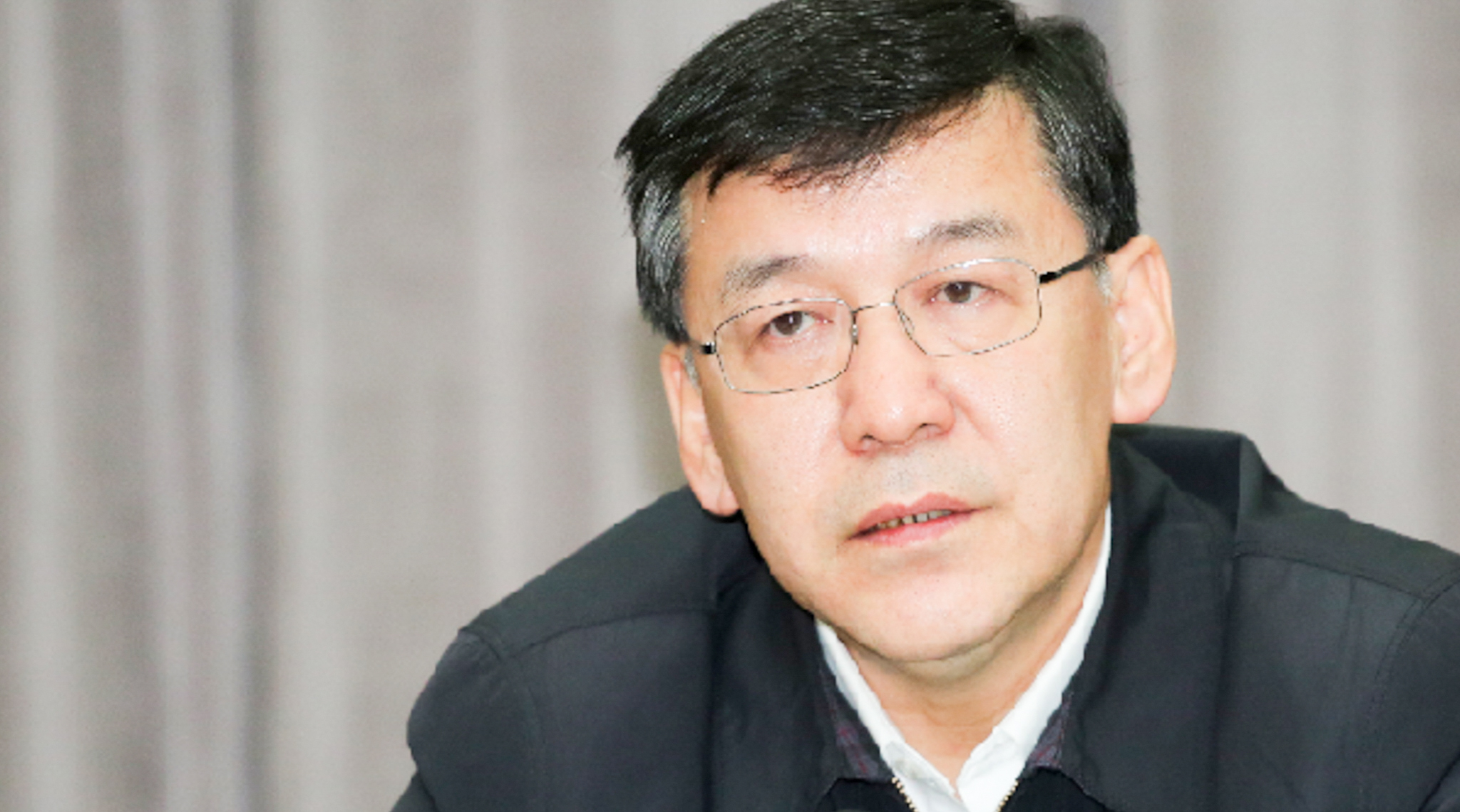
Yin Hejun 阴和俊 | Ministry of Science and Technology minister
‘Boldly deploy and train talent’, Yin told his Two Sessions press conference, his first in office. A support policy package for young scientists emerged from MoST in 2023. They are expected to fully focus on research and spend less time on admin. Quality of life issues, such as salary, family welfare, and physical and mental health are addressed. Meticulous rollout will be MoST’s 2024 focus.
Training talent will be a key metric in State Key Lab evaluations; MoST will provide more openings for young talent in state-funded R&D projects.
Since MoST’s restructure at the 2023 Two Sessions, adds Yin, it now spearheads the ‘new nationwide system’. Macro-coordination is its key task, which includes ‘six coordinations’ across
- strategic planning
- policy
- major R&D projects
- R&D resource coordination
- resource platforms
- regions
Born 1964, Yin was a CAS (Chinese Academy of Sciences) vice president until his October 2023 promotion to MoST minister. A physicist and mathematician by training, he took a PhD from the CAS Institute of Electrics in 1995, working his way up there since. Yin was a vice minister in MoST and in Beijing and Tianjin governments.
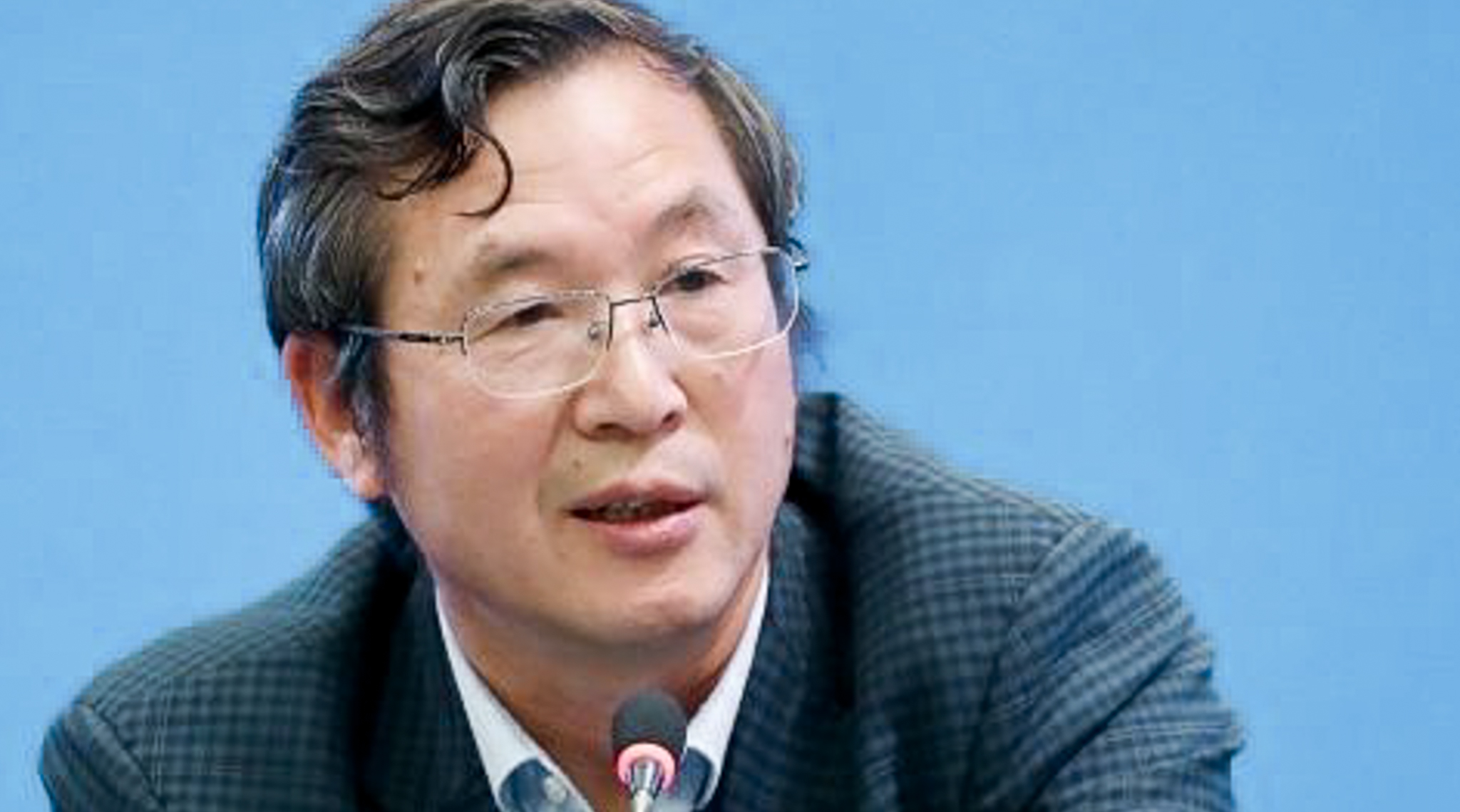
Yuan Yaxiang 袁亚湘 | CAS (Chinese Academy of Sciences) academician, China Association for Science and Technology vice chair and CPPCC (National Committee of the Chinese People's Political Consultative Conference) member
The national research environment, placing all under intense pressure, is not conducive to groundbreaking innovation, argues Yuan. Four campaigns to reduce burdens on young scientists have been launched, in 2018, 2020, 2022 and 2023. Enactment was poor, observes Yuan (who first raised concerns at the 2018 Two Sessions). Despite efforts to reduce a fetish on 'five onlys' (papers, honours, professional titles, education background and awards), he notes, the situation has in fact worsened. Promotions and access to funding depend ever more on ‘hat' projects—honours, titles, awards and ‘special projects’.
Academic leaders, he laments, typically also hold administrative roles. This distracts from scholarly pursuits. It also impedes international exchanges: researchers become subject to the same constraints as cadres. Academic leaders should, Yuan proposes, be able to choose whether or not they assume administrative rank.
Renowned mathematician Yuan was born in 1960, Taking a PhD from the University of Cambridge, he returned to China in 1988 to work on computer maths at CAS.
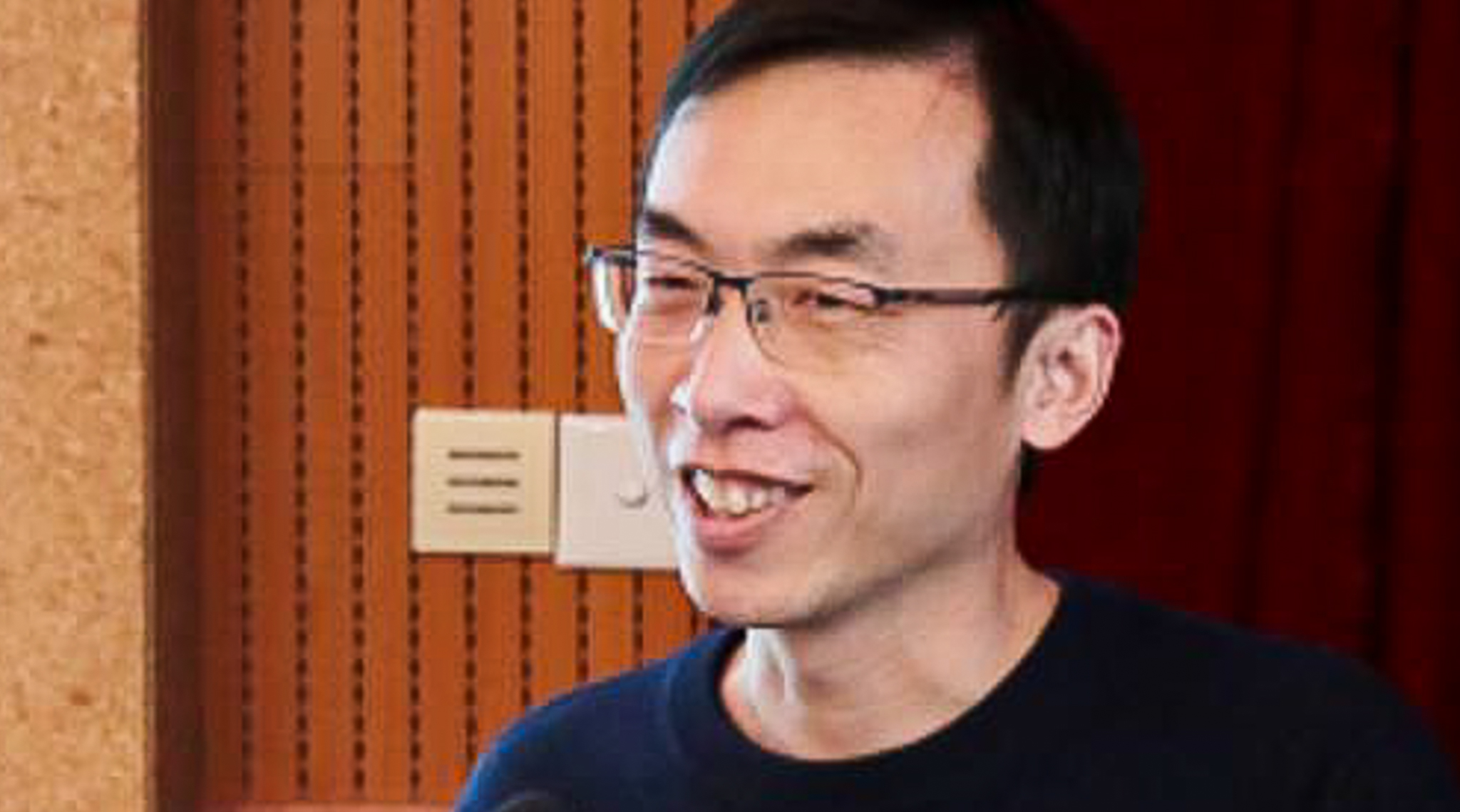
Fan Chunhai 樊春海 | CPPCC (Chinese People's Political Consultative Conference) National Committee member, CAS (Chinese Academy of Sciences) academician and Shanghai Jiao Tong University professor
A pivotal issue in PRC voc ed, says Fan, is overreliance on public institutions, and stark divides between pre- and post-employment training and continuing ed. Caused by disparate divisions of labour between education and HR departments, and inconsistency in formal education and training, the result is fragmented HR management. This hampers allocation and mobility of talent.
Fan hence urges embedding voc training within higher education to underline professional skills as essential. Stronger school-enterprise partnerships are needed, not least in tech fields within engineering and agriculture, aligning education more closely with industry. Mutual recognition of vocational qualifications and academic courses is another issue, easing acceptance of vocational ed in college entrance criteria, making high school curricula professionally relevant and rewarding campuses for admitting students based on vocational criteria.
A biochemist, Fan is a CAS academician, and dean of Shanghai Jiaotong University’s School of Chemistry and Chemical Engineering. Specialised in biosensors, DNA nanotechnology and DNA computing and biophotonics, he took a PhD at Nanjing University, with postdoc work at the University of California, Santa Barbara.