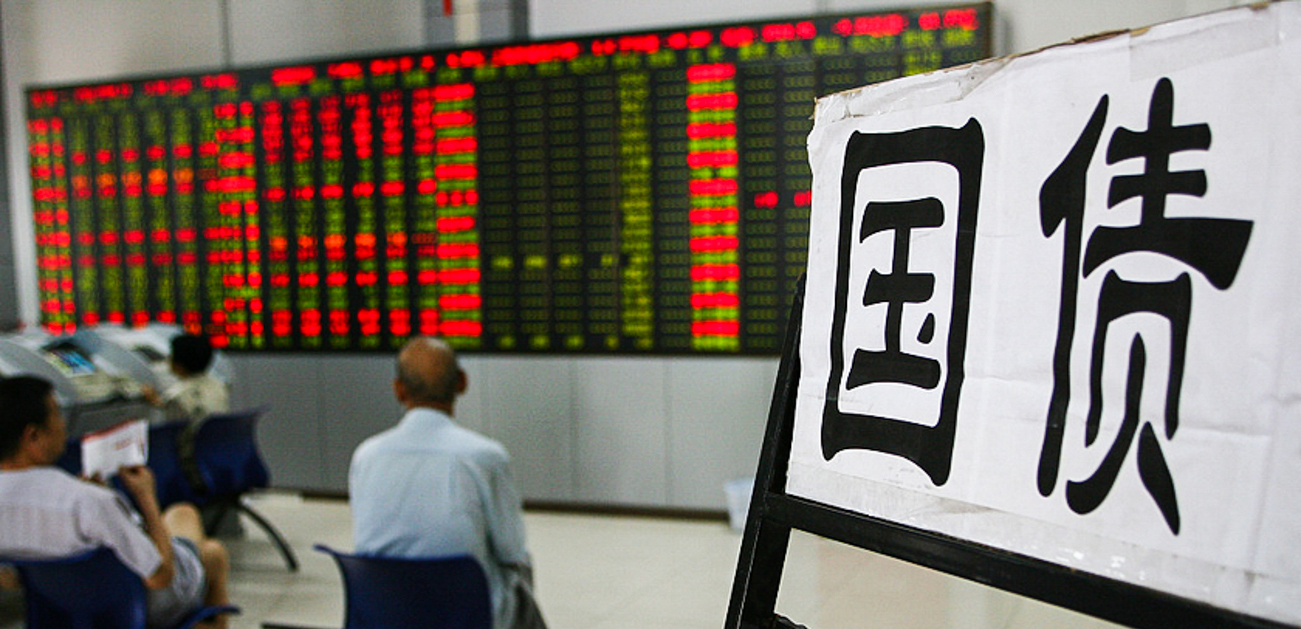
Investors, primarily institutional, have enjoyed two decades of high-yield assets in real estate and LGFV (local government financing vehicle) debt. As real estate unwinds and LGFVs deleverage, those assets have dried up. Rather than look for returns in riskier ventures like the so far untamed equity markets, investors opt for government bonds, the most stable asset available. But with Beijing's annual deficit standing at some 3 percent of GDP, supply is restricted (deficits are financed through bonds), prices rise, and yields fall.
PBoC (People’s Bank of China) has wrestled with bond markets for months. On 9 August, the central bank warned investors that high-return/low-risk assets do not exist, a direct reference to an unprecedented bond rally. Days later, PBoC-run Financial News wrote that bond investors must be reasonable, implying their current frenzy over bond purchases was not in line with the centre’s intentions.
An asset famine now strikes the domestic financial sector. Yields on both 30- and 10-year central government bonds had, by the end of July 2024, fallen over 40 basis points, driven by an unprecedented rally. (As demand pushes prices up, returns fall) But the market is still hot: when MoF (Ministry of Finance) offered 2024’s first batch of ultra long-term special bonds on 17 May, there were four times more bidders than offerings.
Given slowing growth, this ‘asset famine’ demonstrates falling risk tolerance, weak confidence and uncertainty dragging down returns, warns Li Xunlei 李迅雷 Zhongtai Securities' chief economist. In theory, long-term bond yields should reflect economic growth potential, which is the pattern in advanced economies like the US.
Falling bond yields, indeed, worry PBoC (People’s Bank of China), whose Q1 Monetary Policy Committee meeting (29 March) urged a close watch on long-term rates tied to bond yields. PBoC revealed their fears of elevated credit risk due to falling yields to Financial News in April: a sharp turnaround in bond prices could lead to Silicon Valley Bank-like collapses. Bank officials were mulling direct bond purchase/sale in secondary markets, guiding their prices for the first time in over two decades, following months of rumours that quantitative easing was imminent.
PBoC launched formal sovereign bond operations on 1 July: it would borrow bonds from qualified institutions to buy and sell regularly (its balance sheet only had C¥1.52 tn worth of bonds by the end of July 2024, insufficient for staring down markets). Intervening in debt markets comes as monetary policy is being overhauled for the transition. More directly addressing uncertainty dragging down prices is on the cards.
starved for assets
Superficially, investors are snapping up bonds for three main reasons, explains Li Xianglong 李相龙 Great Wall Securities
- high demand from insurance funds, non-bank financial institutions and outsourced bank funds like wealth management
- loose monetary policy, plus expectations of further rate cuts, drive investors to seek locked-in returns
- declines in equity prices shift capital towards bonds
Given its engorged money supply, PRC growth rates have instead far exceeded 10-year bond returns for decades, explains Li. This is still the case now, albeit reversed. Yet low yields further dampen expectations, meriting the centre’s attention.
If investors remain conservative—hunting low-risk assets and avoiding equities—matters are unlikely to improve, argues Yang Xiang 杨祥 Tsinghua University. To profit, institutions must diversify their assets, seeking exposure to growing sectors: i.e., tech and manufacturing. Policy support would, if sufficient, see more good enterprises created, but they must be deemed worthy of pursuit by investors.
a new regime
PBoC’s intervention in bond markets signals a new monetary regime emerging. The PRC currently uses quantitative tools to impact money supply, as well as price-setting measures that impact interest rates, explains Pan Gongsheng 潘功胜 PBoC governor; advanced economies focus on prices. PRC authorities are slowly weakening quantitative tools, mainly influencing macro conditions through guiding prices.
Given the transition to price-setting, falling interest rates weaken Beijing’s policy tools, and above all, its MLF (medium-term lending facility). It is falling into disuse, having been 30 basis points above market rates since February 2024, giving borrowers little incentive to tap it. In theory, even the LPR (loan prime rate) guiding long-term borrowing costs far exceeds the sub-2 percent interest some SOEs now pay on loans. This tangle of ineffective rates needs to be straightened out, insists Postal Bank research. The disconnect of medium-term lending rates from the MLF means there will be less of a need to set it in future, an unnamed regulator told Caixin, noting that advanced economies mostly use short-term rates.
Monetary policy is in transition to a state of play whereby the seven-day repo rate provides the markets’ primary price signal. Narrowing the interest rate band on seven-day repo operations on 8 July 2024, PBoC hopes to guide markets closer to officially preferred rates. It seeks to control bond markets, an unnamed trader told Jiemian, preventing rates from straying from the established band.
Controlling differences between short- and long-term rates will be critical, notes Jin Yi 靳毅 Guotai Securities, preserving the positive sloping yield curve PBoC deems necessary to incentivise future investment.
This is where PBoC’s bond operations come in: making monetary policy effective by ensuring long-term yields better match PRC growth potential, explains Ren Zeping 任泽平 Soochow Securities. Operations, however, should be limited to signalling markets, as too much intervention would cause significant reduction in liquidity.
finance chiefs

Pan Gongsheng 潘功胜 | PBoC governor
Interest rates need further marketising, with policy rates guiding them more directly. Too complex, the policy rate regime needs simplifying. The maturity of the PRC bond market makes this an optimum time for the PBoC to start guiding rates. Transparency and liaison with markets, emulating the US Fed’s forward guidance, must be improved in the interests of effective policy.
Working in the banking sector for two decades, Pan rose to leading roles at Agricultural Bank of China and Industrial and Commercial Bank of China before joining PBoC. A vice governor since 2012, Pan’s directorship of SAFE in early 2016 came as a surprise, given his lack of forex experience. His global communication skills were noted in English. Pan urges boosting the market’s role in setting interest rates and prices as well as lifting restrictions on capital and current account convertibility.
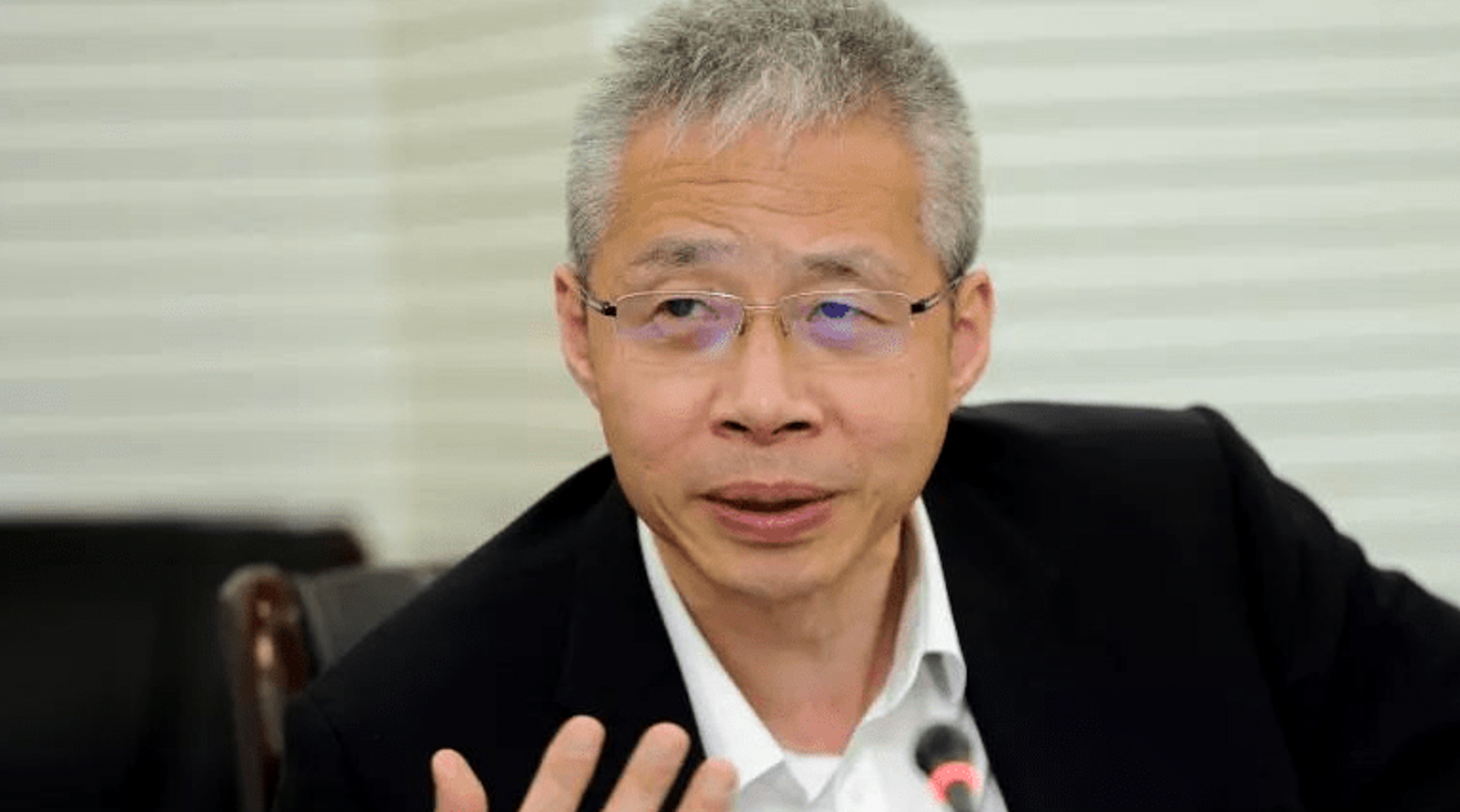
Li Xunlei 李迅雷 | Zhongtai Securities chief economist
The ‘asset famine’ speaks to falling risk tolerance, reflecting falling returns both in the real economy and in private investment. Beyond famine, assets are in a panic: investors are desperate for safe returns. Equities likewise: high-dividend SOEs and bank stocks are doing quite well but small, less profitable companies are suffering as investors shun them.
A response must start by bolstering demand. This means dealing with structurally weak income growth. Yet cyclical factors are also at play (above all the decline in real estate), requiring fiscal spending and loose monetary policy. This response has been echoed by many since the pandemic ended: the central government must borrow to boost consumption while further cutting interest rates.
A Shanghai University of Finance and Economics alumnus, Zhejiang native Li is a columnist on all things financial. He has worked for over two decades in securities and is a member of the Jiusen Society, one of the PRC's satellite parties.