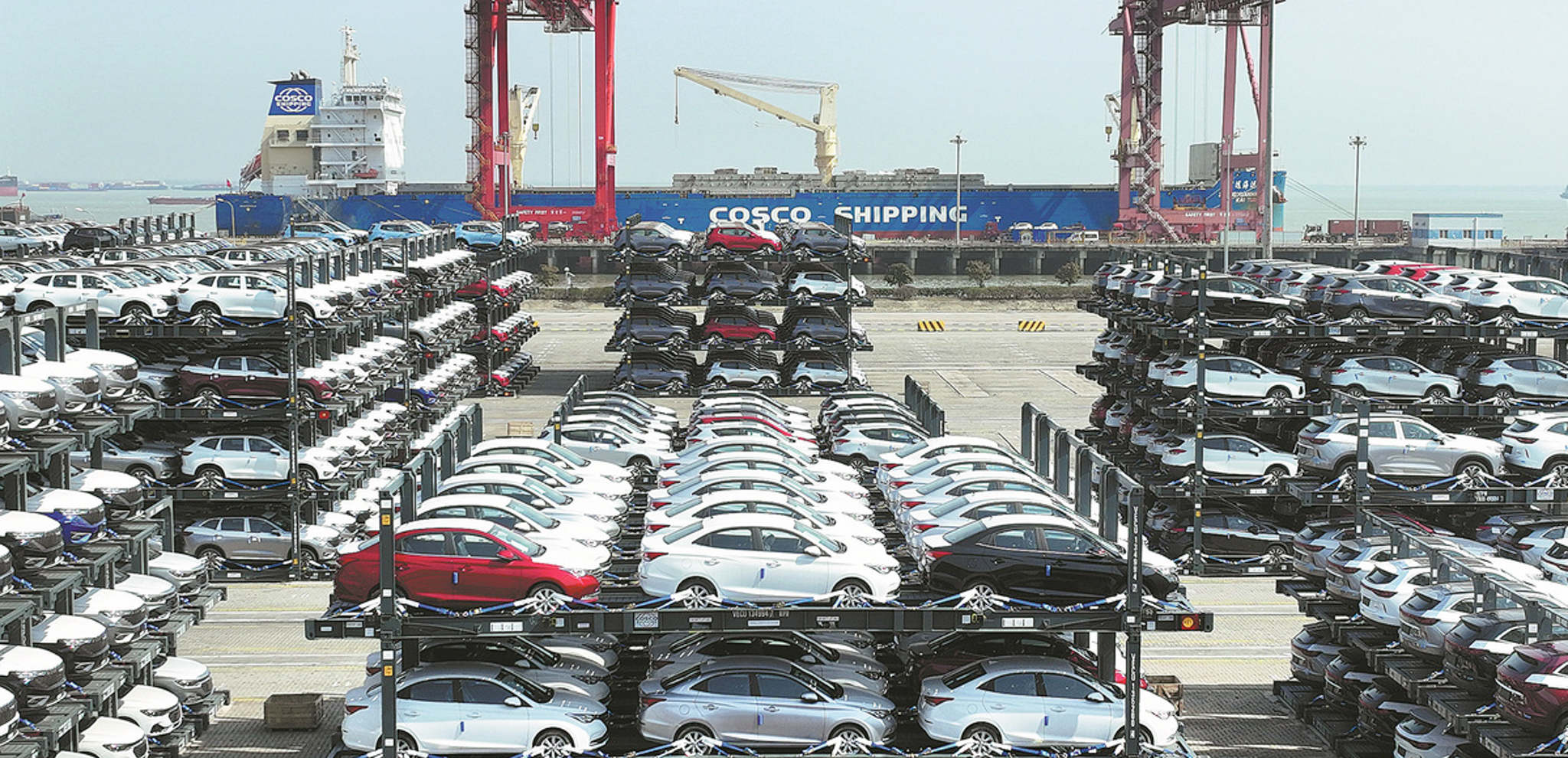
EU targets PRC electric vehicles—how is this shifting policy?
- protectionism irritates Beijing; expedites its new playbook
- support for global auto exports step up ahead of expected EU tariffs
- PRC BEV firms boost investment in Europe and step up foreign takeovers
PRC-made BEVs (battery electric vehicles) are squarely in Europe’s trade defence crosshairs as clean energy tech exports become targets of anti-subsidy investigations.
Depending on the outcomes, these probes may lead to the EU imposing countervailing duties on PRC imports. This pricks Beijing’s ambitious global vision for its burgeoning low-carbon industries, as it triggers more plans for relocating production offshore.
the new cars on the block
The market share of PRC imports in Europe’s BEV sector is low but climbing rapidly. EU authorities fret over the impact on local manufacturing, given that the auto industry represents over 8 percent of all European manufacturing jobs.
PRC-made models held 8 percent of the EU passenger vehicle market in 2022 and may account for 15 percent of sales by 2025, reports KPMG. Roughly two-thirds of the imports are from EU and US firms manufacturing in China (e.g. Tesla, BMW, Renault), but PRC brands are rapidly expanding their market share year after year.
This blazing growth is fuelled by state subsidies that artificially keep Chinese BEV costs down. This allows them to undercut EU manufacturers by some 20 percent, insists the European Commission.
The Commission announced an anti-subsidy probe into imported PRC-made passenger BEVs on 4 October 2023.
To impose countervailing duties and level the playing field between PRC- and European-made vehicles, the probe must show that PRC exporters are advantaged by subsidies, putting local carmakers at risk.
the case to be made
Countervailing duties on PRC-made BEVs are, claim insiders, nigh-inevitable.
Massive state support is easily provable on both the production and consumption sides. Evidence of subsidies cited in the European Commission’s notice includes cheap loans from state-owned banks, tax exemptions, and state-provided goods, services and land at below-market rates.
Unlike previous EU probes into PRC-made solar panels and tyres, this one will also seek evidence of subsidies in upstream firms and projects in the BEV supply chain—batteries and critical mineral extraction and processing included.
The examination excludes global firms and joint ventures. It will scrutinise only SAIC (see profile), Geely and BYD, the EU revealed on 25 October. In the first eight months of 2023, these three companies exported 69,000 (under the MG marque), 25,000 (under Polestar) and 8,000 units to the EU, respectively, ranking first, second and third among PRC-branded BEV exports, according to Cui Dongshu 崔东树 CPCA (China Passenger Cars Association).
If (or rather when) imposed, countervailing duties on imports of PRC-owned brands will likely be in the 15-20 percent range, whereas those on BMW, Tesla, et al. will be ‘symbolic’—in the single digits, according to a senior figure in the European auto industry.
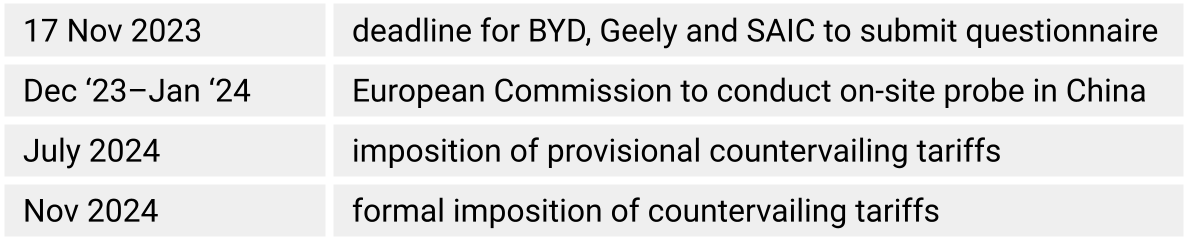
The timeline of the investigation, according to Beijing law firm Jingtian & Gongcheng, is likely to be
impact on PRC industry
Mature, profitable, and buoyed by ambitious climate targets, the EU market is deemed an attractive option by PRC BEV firms to absorb industry overcapacity amid fierce domestic price wars. But suppose even 10 percent tariffs are introduced. In that case, the business model of manufacturing in China and exporting to Europe will no longer be sustainable, reckons Shi Qingke 史青科 Great Wall Motors vice president.
Despite industry chatter being alert to the possibility of such an investigation for the best part of a year, it presents a wake-up call to PRC firms that have prioritised speed and scale of expansion at the expense of strategy, argues senior figures in the PRC auto industry.
The probes and tariffs will speed up the industry’s pivot away from vehicle exports towards overseas investment and local production, consolidating firms’ resolve to build Europe-based manufacturing facilities. This is the long-term direction for the global development of the PRC auto industry, predicts Zhu Yulong 朱玉龙, an automobile engineering veteran.
The auto sector accounted for 53 percent of PRC investment in Europe in 2022, up from 20 percent in 2021, and should remain high, provided Europe welcomes PRC capital.
Many automakers have begun preparing for this: Great Wall, SAIC and BYD all recently tabled plans to open passenger vehicle production lines in Europe, with the latter two currently weighing up site selection. Six Chinese battery makers have built or plan to build European factories, led by CATL’s expansion to Hungary in 2022.
Acquisition of foreign brands is on the cards for some firms. This was successful in the cases of SAIC’s buyout of MG—the PRC’s best-selling BEV in Europe—and Geely’s of Volvo. PRC brands struggle with recognition in Europe, and this option presents a workaround.
Relocating production will not entirely take the heat off PRC firms, however. If they still receive subsidies from Beijing, they may be targeted under the EU’s new foreign subsidies regulation.
The investigation will seek to map firms’ entire supply chains. Firms are mindful that, based on what the probe turns up, other non-tariff headaches may be incurred: PRC firms are less meticulous with their compliance work than their European counterparts, according to a BYD employee.
simmering tensions
With a finger in every global low-carbon trade pie, Beijing has an arsenal of potential retaliatory tools; the question becomes whether and which to use. But its sights may be set on the longer-term game of becoming a leading global automaker.
Tightening of graphite export controls in October 2023, while not a direct response to the EU’s probe per se, underscores that should foreign markets begin to be sealed off, Beijing will seek to remind them of their reliance on PRC supply chains, and the range of options it has to do so.
Europe’s growing interest in protectionism is, indeed, raising concern in Beijing. Besides the bloc’s anti-subsidy investigation, France and Italy are weighing up modifying their BEV incentive policies to favour models with smaller carbon footprints, explicitly countering the PRC advantage. Anti-dumping measures against PRC BEVs are also possible, foresee trade analysts.
And BEVs are just the start; the EU will reportedly initiate similar probes into PRC-made wind turbines and steel. If Europe continues to whittle away at PRC exports, Beijing will not simply sit back.
car and battery makers
SAIC Motor | 上汽集团
State-owned behemoth SAIC, via its MG marque, is the biggest PRC exporter of BEVs to Europe. This dominance positions SAIC as the chief target of the EU’s anti-subsidy probe. The firm—China’s biggest car manufacturer and exporter—is planning a strategic pivot towards the NEV (new energy vehicle) market. One in five SAIC vehicles sold in 2022 were NEVs (below the national average), but the company aims to lift that proportion to one in two by 2025. Despite JVs with Volkswagen and General Motors, SAIC intends to shift its business structure towards self-owned brands: it hopes that self-owned brands will account for 60 percent of sales by 2025, up from 52.5 percent in 2022.
SAIC is the foremost beneficiary of subsidies, receiving government support for passenger BEVs to the tune of C¥2 bn in 2022, per its annual report. SAIC is yet to comment publicly on the EU anti-subsidy investigation as of 28 Oct 2023.
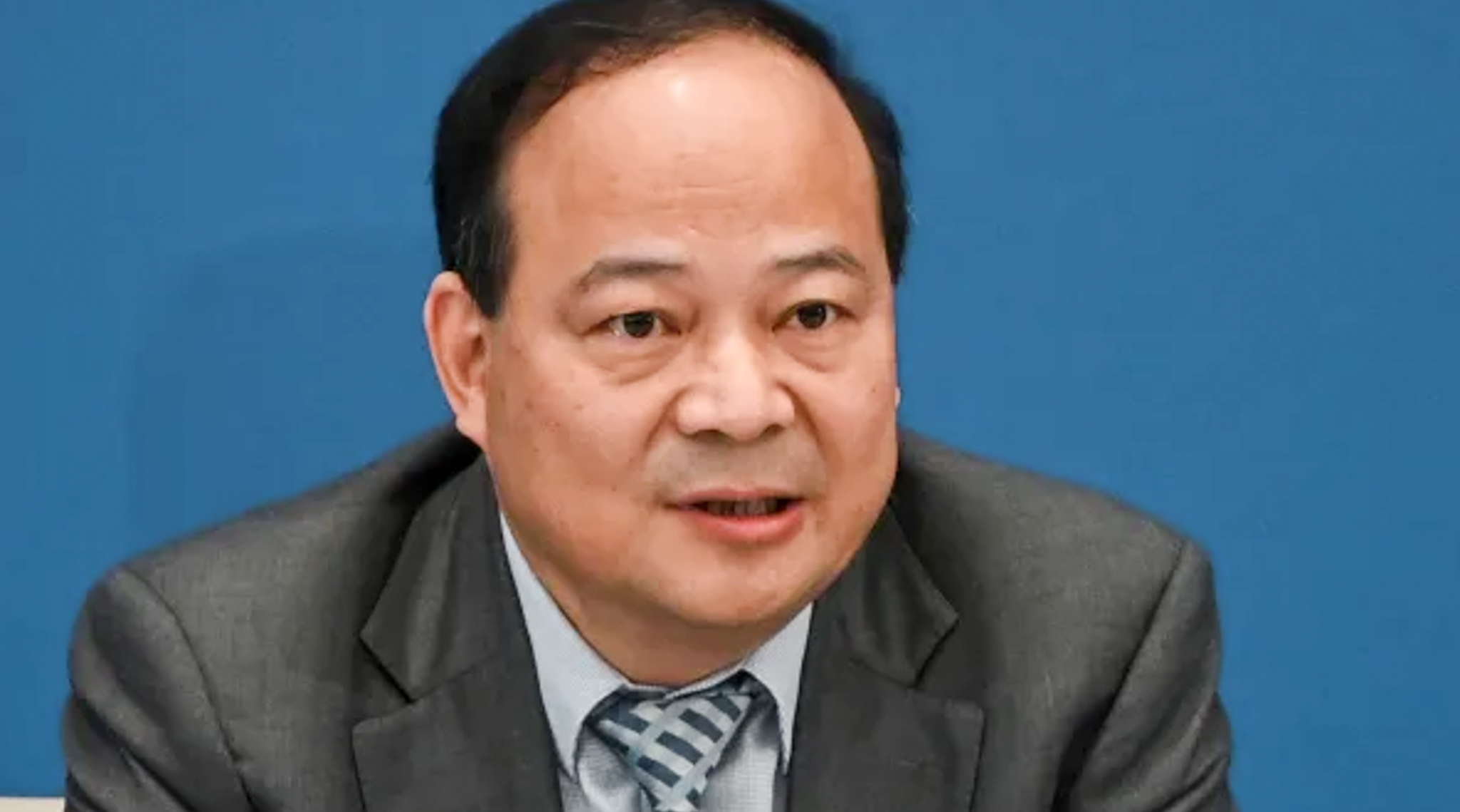
Zeng Yuqun 曾毓群 | CATL founder and chairman
Zeng and his company CATL, the world’s largest car battery maker, faced considerable criticism at the 2022 World Battery Conference from PRC EV firms for ‘hogging profits’. Zeng told the 2021 Two Sessions that his firm had aimed to command the heights of the global NEV (new energy vehicle) battery sector and now controls 37 percent of the worldwide market. ‘I worry’, he said, ‘about fear of a sudden uproar, where everyone jumps on the bandwagon at first but ultimately disperses just as quickly'.
Now advising the state, not least as a CPPCC delegate and vice chairman of the All-China Federation of Industry and Commerce, Zeng rose from humble beginnings in the countryside of Ningde, Fujian. After graduating in marine engineering from Shanghai Jiaotong University, he initially worked in a state-owned enterprise before switching to a Japanese firm. Zeng and co-founders created Amperex Technology Limited (ATL) with Japanese investors in Guangdong in 1999, focusing on battery tech. Setting up a research department in Ningde in 2008 under Zeng’s leadership and co-ownership, ATL spun off and reformed in Ningde as CATL, with ATL holding only 15 percent.