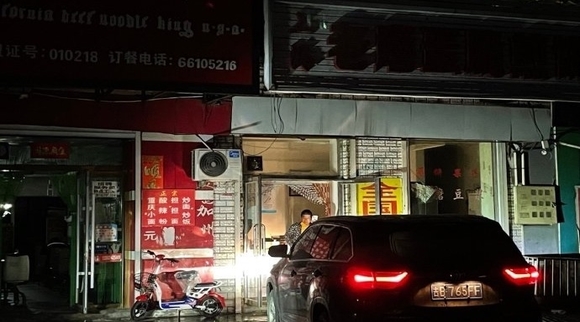
until a diversified energy mix emerges, coal will continue to be China’s backstop
Wobbling for the last six months, power generation in the PRC has collapsed since mid-September. Factories have shut and lights gone out across 20 provinces as Beijing struggles to balance energy security, economic growth and emissions reduction, dubbed China’s energy trilemma by Ma Linwei 麻林巍 Tsinghua University.
Multiple factors are in play: a policy-induced supply and demand mismatch, a wayward power market, over-reliance on coal and, not least, Xi Jinping’s pledge to reduce emissions.
The latest energy formula emerging from the State Council on 8 October—scale up coal supply, better manage prices, install more solar and wind—will have little immediate impact.
fragmented coal policy
- supply-side structural reform: 1 bn tonnes capacity cut since 2015
- crackdowns on illegal overproduction
- forced closures for safety and environment breaches
- declining imports (down 19.7 percent y-o-y in H1 2021), largely owing to bans on Australian coal for geopolitical messaging
Plants now flounder as prices double y-o-y. They hit C¥1,086 per tonne (5,500 kcal, CECI [China Electricity Coal Index] coastal index) on 24 September; at northern ports, spot prices are reportedly nudging C¥1,600 (anecdotally coal power plants are in the red when prices top C¥600). Plants are operating at losses with critically low inventories, confirm southern (Guangdong) and northern (Liaoning) plant workers. Many have temporarily shut, unable to pass on costs due to rigid state-set power tariffs. Lower wind power due to calm weather worsened critical shortages in the northeast. Coal supply remains tight nationwide.
power politics
The PRC power market’s inefficiencies are on open view. Power prices are set by the state, coal costs by the market. Freeing up prices has long been politically loaded, an arena of vested economic interests and family dynasties. Floating prices were mooted by State Council in 2020, but provinces balked at any rises. Now wedged, power plants lobby to revisit contracts—or simply switch off.
- directing mines to produce more coal
- loosening imports
- reopening shuttered sites
- approving new mines
- keeping close watch on price indices
But market fundamentals have yet to be overcome. Domestic production grew 6.4 percent y-o-y in H1 2021, while demand jumped 10.7 percent.
squaring the power policy circle
Reducing energy consumption to meet NDRC’s (National Development and Reform Commission) 'dual control’ targets (energy intensity and total consumption) underpins Xi’s climate agenda and industrial restructuring. Latching onto this policy, some provinces, e.g. Yunnan, Zhejiang and Jiangsu, have excused haphazard power rationing as a logical step towards carbon neutrality. This comes despite repeated Politburo and NDRC warnings to avoid drastic moves just to meet ‘dual control’ targets.
so how green is China's power future?
As Xi clears a path to lifetime tenure and the chance for the PRC to stage a global triumph at the Glasgow climate summit (end October) approaches, his pledges on carbon peaking by 2030 and neutrality by 2060 show no signs of shifting
- managing demand will stay, taking a greater toll of high energy- and emissions-intense projects
- replacing coal power with renewables faces less, not more, resistance
Before the end of 2021, Beijing will launch its detailed roadmap to peak carbon emissions before 2030. It should reveal whether the current power crunch has had any impact on resolve at the top. While exposing the need to increase coal supply and manage power demand, the 'trilemma' gives no sign of slowing the power sector’s green transition.
domestic and global impact
Could the current disaster, the severity of which has not been seen in over a decade, trigger stepped-up reform? Freeing markets looks ever more viable as a solution to the PRC's energy puzzle. Moves hinting at it have been swift, albeit improvised
- allowing power prices to fluctuate up to 20 percent from benchmarks (as per the 8 October State Council decree)
- coupling power prices to fuel prices
- expanding spot markets
- linking power trading to provincial ‘dual control’ targets
But shortages are likely to persist through the peak demand period (winter 2021–22) even as coal supply and power tariffs are raised in a scramble. Already high, imports will keep climbing.
profiles
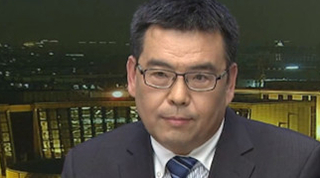
Li Yanbin 李彦斌 | Northeast Electric Power University School of Economics and Management dean
Grid companies opted to ration power, argues Li, largely due to mismatched supply and demand rather than ‘dual control’ energy targets alone. The two factors were in synergy with the sector required to (1) meet ‘dual control’ energy consumption targets and (2) manage potential shortages. The effective solution was to force rationing onto energy-intensive industries. Disruption to civilian life and major industries, argues Li, would otherwise have been worse.

Ma Linwei 麻林巍 | Tsinghua University Department of Energy and Power Engineering associate professor
A ‘trilemma’ of energy security, economic growth and emissions reduction efforts ended in crisis, wrote Ma in a popular blog post, 5 Oct 2021. Three inconsistencies, he argued, set the table. (1) Energy policy vs. economic development: supply and demand have long lacked guidance; energy, emissions and planning are under fragmented regulation. (2) Energy out of step with infrastructure: renewables are crowding in, without storage or grid service support. (3) Energy fragmented among regions: each province optimises its own energy mix. Resulting national-scale inefficiencies, Ma adds, were laid bare by the recent power crunch.

Han Xiaoping 韩晓平 | China Energy Network chief researcher
Touching power prices, argues Han, would rock the entire economy. Rises would fuel inflation, he claims, threatening civilians; planners have hence been hesitant. Efficiency, security and emissions curbs must, in Han’s view, be the core of power system reform. Marketising the sector must proceed, provided energy security is guaranteed. Widespread rationing is caused, he argues, by a range of factors. Meeting ‘dual control’ targets was the main factor in some provinces; structural shortages were critical in the northeast. Lead researcher and co-founder of China Energy Network, Han is a veteran of national-level energy conclaves and has consulted for many in the energy industry.
context
23–25 Sep 2021: low coal supply forces power cuts in the northeast